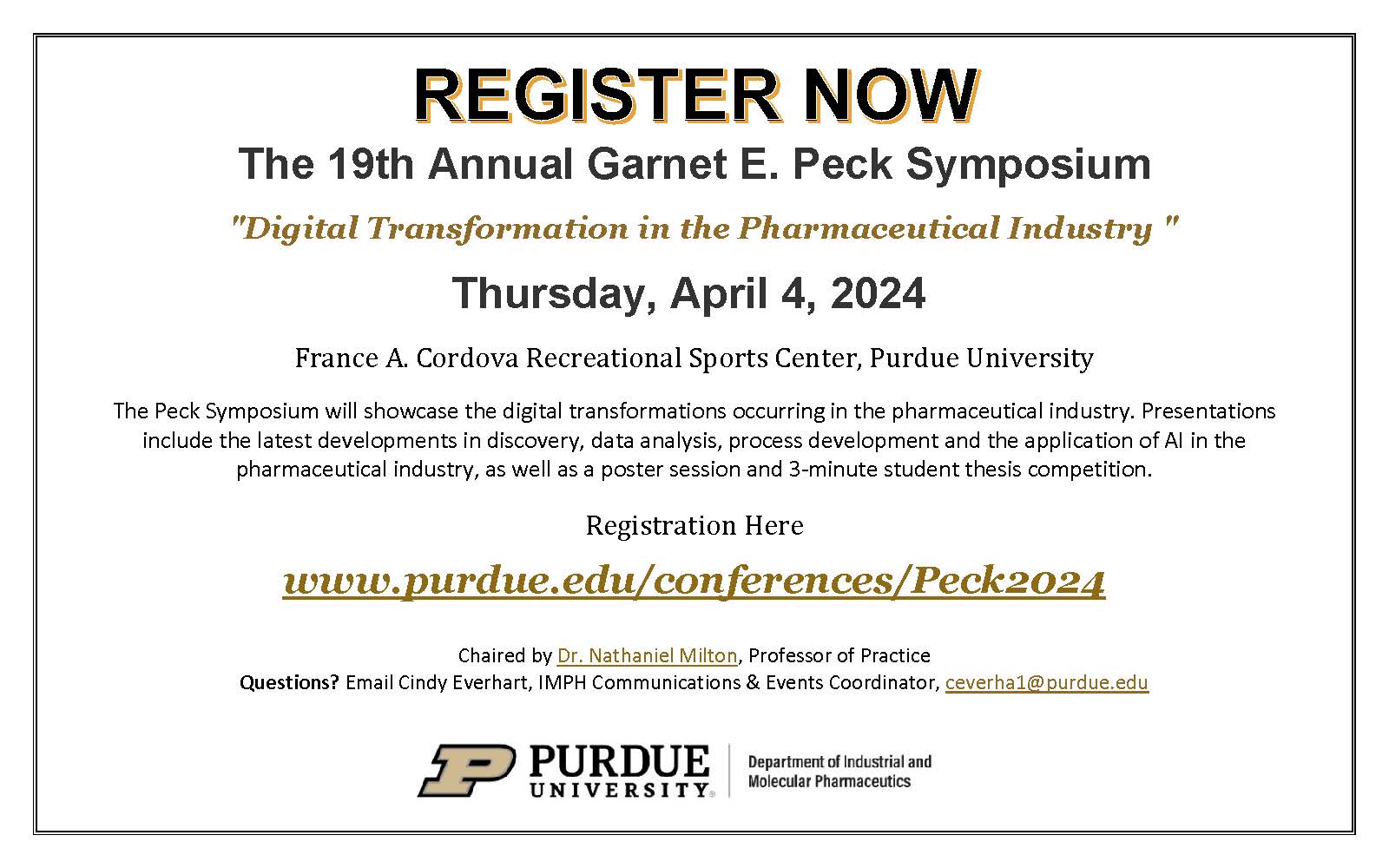
[cid:image001.jpg@01DA5F26.7730E520] BME WEEKLY ROUNDTABLE February 12, 2024 INTERIM HEAD’S NOTE * On behalf of the department, I want to start this note by welcoming the three newest members of the Weldon family. They are Cory Wilfong, Senior Program Assistant, Ali Acosta and Lora McDaniel, Research Technologists. They all started on Monday (2/12). Welcome! * On behalf of the department, I sent out courtesy appointment offer letters to a number of University Tenure faculty members affiliated with Purdue BME Indy site. I am glad that a few of them have signed the letter and returned it to me with their acceptance. * In last Friday’s faculty meeting, we welcomed Kimberly Dixon and Chloe Cronk, Business Managers, Engineering Administration. They have officially replaced Ben Overly. From now on, please direct your business management related questions to them. They now spend a few days each week in our building (MJIS 3001). * A “Teaching Load Working Group” is being formed and we invite all faculty who are not already involved and would like to be to join. Vitaliy and I would hope to have representation from faculty of all ranks. Please email vrayz@purdue.edu<mailto:vrayz@purdue.edu> by tomorrow to be added to the group. I will work Vitaliy to finalize the composition of this working group within a week after tomorrow. * Finally, for those who celebrated the Lunar New Year last weekend, I hope you enjoyed it immensely. UPCOMING IMPORTANT DATES Week of February 12 Wed., Feb. 14: BME Distinguished Seminar Series, 9:30 a.m., MRGN 121 and via Zoom. Donny Hanjaya-Putra, Assistant Professor of Aerospace and Mechanical Engineering, University of Notre Dame will present “Designing Biomaterials to Deliver Stem Cells and Therapeutics.” Thurs., Feb. 15: Seminars in Hearing Research, 12:00 noon, LYLE 1160. Lisa Goffman, PhD (SLHS Distinguished alum) will present “A developmentally grounded account of sequential pattern learning deficits in developmental language disorder.” MJIS ALERT MJIS Freight Elevator DOWN, Wed., Feb. 14 and Thurs., Feb. 15 for critical repairs and maintenance. Researchers will need to make sure that any and all lab materials that need to be moved via elevator are completely covered. Safety protocols prohibit the transfer of any lab materials via stairwells. When using elevators these two days to transfer lab materials between floors, you must alert any and all passengers that there are lab materials (and possible allergens) on the elevator. If you have any questions, contact Susan Hardy. We will alert everyone when the repairs are complete, and the prohibition of moving lab materials via the passenger elevator returns to enforcement. MJIS Air Handling Shutdown, Tues., March 12 beginning at 7:30 AM and lasting until approx. 3:00 PM for preventative maintenance of the building’s air systems. This includes air ventilation supplies to all public, classroom and research areas, including chemical fume hoods. There should be NO chemicals used anywhere! All chemical fume hood activity should terminate by 5 PM Monday March 11th. You must make sure all chemical containers are sealed at that time. Chemical fume hoods will have notices posted - do not resume activity until BME staff have verified that work is complete, and have removed postings. 2024 BME Research Symposium: Innovations in Biomedical Engineering BMEGSA is excited to announce the 2024 BME Research Symposium to be held on April 16th, 2024 in the Hall for Discovery Learning Research (DLR) in Room 131 from 9:30 a.m. – 4:30 p.m. Abstracts submissions are now open! All BME-affiliated undergraduate, post-bacs, and graduate students are welcomed to submit an abstract. The submission is open to both West Lafayette and Indianapolis campus. All abstract submissions are due by March 19th at 11:59pm on the submission portal<https://nam04.safelinks.protection.outlook.com/?url=https%3A%2F%2Fdocs.google.com%2Fforms%2Fd%2Fe%2F1FAIpQLSfAtf86rbfKIGbZ_WYcSve0OOwQn0ZoXOmb6VwO86nO5YVJ_A%2Fviewform%3Fusp%3Dsf_link&data=05%7C02%7Cbmeroundtable-list%40ecn.purdue.edu%7C0ec503118672487e29f008dc2d679d32%7C4130bd397c53419cb1e58758d6d63f21%7C0%7C0%7C638435171169932919%7CUnknown%7CTWFpbGZsb3d8eyJWIjoiMC4wLjAwMDAiLCJQIjoiV2luMzIiLCJBTiI6Ik1haWwiLCJXVCI6Mn0%3D%7C0%7C%7C%7C&sdata=P02Whn7lhJffxFORjkQmYarnxbM9ypNBIrwV3HEKNus%3D&reserved=0>. We encourage all students to apply, and please ensure your abstract follows the directions provided in this email. There will be cash prizes and awards for the top oral and poster presentations! For all attendees, please complete the registration form for the BME Symposium, which can be found here<https://nam04.safelinks.protection.outlook.com/?url=https%3A%2F%2Fdocs.google.com%2Fforms%2Fd%2Fe%2F1FAIpQLSdllfpzKnZOEpL3LyIio8TwFl1XvSLBLWPyuaCUmKIe4fRuvg%2Fviewform%3Fusp%3Dsf_link&data=05%7C02%7Cbmeroundtable-list%40ecn.purdue.edu%7C0ec503118672487e29f008dc2d679d32%7C4130bd397c53419cb1e58758d6d63f21%7C0%7C0%7C638435171170089200%7CUnknown%7CTWFpbGZsb3d8eyJWIjoiMC4wLjAwMDAiLCJQIjoiV2luMzIiLCJBTiI6Ik1haWwiLCJXVCI6Mn0%3D%7C0%7C%7C%7C&sdata=4veVvVtCxM7UbmZ4i5sudDwnlO2aLI%2FRwCB4ZzL2WbM%3D&reserved=0>. There is no cost to register for the symposium. If you have any questions, please reach out to Brendan (bbkazu@purdue.edu<mailto:bbkazu@purdue.edu>) or Lizzy (frazie34@purdue.edu<mailto:frazie34@purdue.edu>) via email. Graduate Recruiting Purdue’s College of Engineering Graduate Recruitment office will be recruiting in Colombia from February 18th to March 1st. Colleen Coulter, Assistant Director of Graduate Recruitment, plans to visit Bucaramanga, Pereira, and Bogota with a group from EducationUSA. She will connect with Purdue-specific partners in Barranquilla (U. Del Norte), Cali (ICESI U.), and Medellín (U. EAFIT). If you have faculty and/or students in Colombia that you want Colleen to connect with during this trip, please alert her by email: clc@purdue.edu<mailto:clc@purdue.edu>. Virtual Workshop Series on Mastering Grant Writing Tommy Sors, Director of Scientific Strategy and Relations, invites you to elevate your research potential by registering to be part of our exclusive workshop series, meticulously designed to guide you through the competitive landscape of NIH funding and the art of grant writing. Each session builds on the next, so you want to make sure to catch all sessions because they offer the knowledge and tools to craft winning proposals. Sessions ran on Thursdays from 2:00-3:00 p.m. November 30 – December 14 and will continue Tuesdays 10:00-11:00 a.m. January 9-Feb. 13. Register at https://purdue.ca1.qualtrics.com/ife/form/SV_01WMuhATStggQOW<https://nam04.safelinks.protection.outlook.com/?url=https%3A%2F%2Fpurdue.ca1.qualtrics.com%2Fife%2Fform%2FSV_01WMuhATStggQOW&data=05%7C02%7Cbmeroundtable-list%40ecn.purdue.edu%7C0ec503118672487e29f008dc2d679d32%7C4130bd397c53419cb1e58758d6d63f21%7C0%7C0%7C638435171170089200%7CUnknown%7CTWFpbGZsb3d8eyJWIjoiMC4wLjAwMDAiLCJQIjoiV2luMzIiLCJBTiI6Ik1haWwiLCJXVCI6Mn0%3D%7C0%7C%7C%7C&sdata=a1wtPfX2wtYa78QlZv9oBoFG66UHGB%2BgRdggSGMV1VM%3D&reserved=0> Career Resources: Purdue Lecture Hall Series and Pathfinder Podcasts [A white and black logo Description automatically generated] Purdue Lecture Hall Series: A Global Scientific Journey What's Inside: This series showcases the diverse and fascinating journeys of graduate students and postdocs at Purdue University as they navigate the world of scientific research. Why Watch: Each lecture is not just a story of scientific inquiry, but a tale of personal and cultural enrichment, highlighting the global nature of our scientific community. Share with Students: These narratives offer invaluable insights and inspiration for anyone embarking on a career in science. Explore the Series: With over 30 lectures already available and many more to come, there’s a wealth of knowledge to be discovered. 📺 Watch Here: Purdue Lecture Hall Series on YouTube<https://nam04.safelinks.protection.outlook.com/?url=https%3A%2F%2Fyoutube.com%2Fplaylist%3Flist%3DPLf9Gk4Qp10iOFkQdQ8T2peLTzszyI9EGD%26si%3DuTukf6lpNKFmcO8P&data=05%7C02%7Cbmeroundtable-list%40ecn.purdue.edu%7C0ec503118672487e29f008dc2d679d32%7C4130bd397c53419cb1e58758d6d63f21%7C0%7C0%7C638435171170089200%7CUnknown%7CTWFpbGZsb3d8eyJWIjoiMC4wLjAwMDAiLCJQIjoiV2luMzIiLCJBTiI6Ik1haWwiLCJXVCI6Mn0%3D%7C0%7C%7C%7C&sdata=%2FKeZqShx2kOc4pRSuxVkxBmtZH2O8R1JHiHMxy9%2FJMo%3D&reserved=0> [A qr code on a white background Description automatically generated] Pathfinder Podcast: Navigating Careers Beyond Academia What's Inside: In our Pathfinder series, we delve into the lives of individuals working in life sciences companies, exploring the various career paths and successes achievable beyond the academic realm. Why Listen: These interviews provide rare insights into industry careers, offering guidance and motivation for those considering or preparing for a transition from academia to industry. A Resource for Aspiring Scientists: Many of our interviewees express wishing they had access to such insights during their graduate studies. This series is a perfect tool to broaden your students' understanding of potential career trajectories in life sciences. 📺 Watch Here: Pathfinder on YouTube<https://nam04.safelinks.protection.outlook.com/?url=https%3A%2F%2Fyoutube.com%2Fplaylist%3Flist%3DPLf9Gk4Qp10iNdt_FmjM4AR_evvr95yTrw%26si%3DX6Fk1L94Gdqi-ypb&data=05%7C02%7Cbmeroundtable-list%40ecn.purdue.edu%7C0ec503118672487e29f008dc2d679d32%7C4130bd397c53419cb1e58758d6d63f21%7C0%7C0%7C638435171170089200%7CUnknown%7CTWFpbGZsb3d8eyJWIjoiMC4wLjAwMDAiLCJQIjoiV2luMzIiLCJBTiI6Ik1haWwiLCJXVCI6Mn0%3D%7C0%7C%7C%7C&sdata=fm0vWgh67Cisjssil%2Fw4Df8xulGVpfCo3CbEVnjaSoU%3D&reserved=0> Upcoming important deadlines and information Mon., Feb. 19 – Fri., Feb. 23: Fulbright Week. Purdue's Fulbright Week will start you on your way to applying for the Fulbright U.S. Student Program. Fulbright U.S. Student Grants offer a fully funded post-baccalaureate year to study, research, or teach abroad. Sessions will be held in-person with a virtual option unless otherwise noted. Sessions are a mix of in-person and remote offerings. See below for details. Tues., Feb. 20: Purdue Engineering Distinguished Lecture Series, Lecture at 1:30 p.m. and Panel at 2:30 p.m., ARMS Atrium. Russell Allgor, Vice President and Chief Scientist, Worldwide Operations at Amazon.com will present “Structuring Amazon’s outbound network to scale.” Hosted by the College of Engineering and the School of Industrial Engineering. Register here: https://purdue.ca1.qualtrics.com/jfe/form/SV_7P75FDaroDkuwVo?utm_source=delivra&utm_medium=email&utm_campaign=PEDLS%20-%20Russell%20Allgor%20-%20Feb%2020%2C%202024&utm_id=45804663<https://nam04.safelinks.protection.outlook.com/?url=https%3A%2F%2Fpurdue.ca1.qualtrics.com%2Fjfe%2Fform%2FSV_7P75FDaroDkuwVo%3Futm_source%3Ddelivra%26utm_medium%3Demail%26utm_campaign%3DPEDLS%2520-%2520Russell%2520Allgor%2520-%2520Feb%252020%252C%25202024%26utm_id%3D45804663&data=05%7C02%7Cbmeroundtable-list%40ecn.purdue.edu%7C0ec503118672487e29f008dc2d679d32%7C4130bd397c53419cb1e58758d6d63f21%7C0%7C0%7C638435171170089200%7CUnknown%7CTWFpbGZsb3d8eyJWIjoiMC4wLjAwMDAiLCJQIjoiV2luMzIiLCJBTiI6Ik1haWwiLCJXVCI6Mn0%3D%7C0%7C%7C%7C&sdata=sc98CU72%2BrpesnyBKjBI4TFvtrNWkm%2Fr%2B02Pb0ErjNM%3D&reserved=0> Wed., Feb. 21: BME Distinguished Seminar Series: 9:30 a.m., MRGN 121 and via Zoom. Leonardo A. Rivera-Rivera, PhD, Associate Scientist, Department of Medicine and Medical Physics, Wisconsin Alzheimer’s Disease Research Center, University of Wisconsin – Madison will present “Elucidating cerebrovascular disease pathways to cognitive decline with neurofluid imaging.” Wed., Feb. 21: Purdue Engineering Distinguished Lecture Series. Russell Allgor, Vice President and Chief Scientist, Worldwide Operations at Amazon.com will present “Logistics and Fulfillment Systems for E-Commerce.” This seminar is hosted by the College of Engineering, and School of Industrial Engineering. Register at bit.ly/pedls-allgor Wed., Feb. 21: Seminar for Neurotrauma and Diseases, 4:00-5:00 p.m., DLR 131 and via Zoom. Vijay Rangachari, PhD, Professor of Biophysical Chemistry, University of Southern Mississippi will present “α-synculein modulates TDP-43 phase transitions to induct heterotypic amyloids – Implications in Neurodegenerative diseases.” Zoom link: http://bit.ly/42hhhJG<https://nam04.safelinks.protection.outlook.com/?url=http%3A%2F%2Fbit.ly%2F42hhhJG&data=05%7C02%7Cbmeroundtable-list%40ecn.purdue.edu%7C0ec503118672487e29f008dc2d679d32%7C4130bd397c53419cb1e58758d6d63f21%7C0%7C0%7C638435171170089200%7CUnknown%7CTWFpbGZsb3d8eyJWIjoiMC4wLjAwMDAiLCJQIjoiV2luMzIiLCJBTiI6Ik1haWwiLCJXVCI6Mn0%3D%7C0%7C%7C%7C&sdata=imJemRsBrlBQ3CJ5DcTbvfGz9B2YvQVuPvF%2FO5N%2Fw%2BI%3D&reserved=0> The seminar series is sponsored by the Center for Paralysis Research and Plexon. Thurs., Feb. 22: BME PhD Defense Announcement for Neal Patel (V. Rayz, Chair), 10:30 a.m., MJIS 2001 and via Zoom. Title: Characterization of Neurofluid Flow using Physics-Guided Enhancement of 4D flow MRI. Wed., Feb. 28: BME Distinguished Seminar Series, 9:30 a.m., MRGN 121 and via Zoom. John Oshinski, Professor of Radiology & Imaging Sciences and Biomedical Engineering, Emory University/Georgia Tech will present “Measuring Neural Dynamics with MRI.” Thurs., Feb. 29: Purdue University 3rd Annual Health Equity Summit, 8:00 am to 3:00 pm, PMU North and South Ballrooms. Hosted by Dr. Jerome Adams and Purdue’s Health Equity Initiatives Team with Indiana CTSI. Fri., March 1: Indiana Human-Centered Design for Health Seminar Series, 12:00 p.m. via Zoom. Lean about research and best practices in HCD and health, promote the diverse HCD expertise in Indiana, and build a community of HCD researchers and practitioners focused on health, in Indiana and beyond. The speaker will be Andrew Miller, Associate Professor and Chair, Department of Hunan-Centered Computing, IUPUI. Register and learn about upcoming seminars at healthtechquitylab.org/hcd-seminar Wed., March 6: Purdue Engineering Distinguished Lecture Series. Karen Willcox, Director, Oden Institute for Computational Engineering and Sciences, Associate Vice President for Research, and Professor of Aerospace Engineering and Engineering Mechanics, The University of Texas at Austin will present “From Reduced-Order Modeling to Scientific Machine Learning: How Computational Science is Enabling the Design of Next-Generation Engineering Systems.” This seminar is hosted by the College of Engineering, and School of Mechanical Engineering. Register at bit.ly/pedls-willcox Fri., March 8: Bottorff Graduate Fellowship Program Applications due. Please see the attached Bottorff Fellowship application form for Summer 2024. The Bottorff Graduate Fellowship Program is designed to increase the number of Purdue doctoral engineering students focused on medical technology innovation and clinical translation. Funds to support a summer clinical immersion experience are available to help students gain clinical exposure at the Indiana University School of Medicine (IUSM). This full-time 8-week summer clinical immersion experience will be followed by a fall class focused on biomedical product translation (BME 56100 Preclinical and Clinical Study Design or BME 59500 Biomedship). Finally, a spring Regulatory class will help fellows understand the workings of the US FDA and other regulatory agencies and the steps needed for clinical translation. Applications are due by Friday, March 8th. Contact Aaron Lottes (lottes@purdue.edu<mailto:lottes@purdue.edu>) or Craig Goergen (cgoergen@purdue.edu<mailto:cgoergen@purdue.edu>) for questions about the program. Mon., March 11 – Friday, March 15: Spring Break. Tues., March 12: MJIS Air Handling Shutdown, beginning at 7:30 AM and lasting until approx. 3:00 PM for preventative maintenance of the building’s air systems. This includes air ventilation supplies to all public, classroom and research areas, including chemical fume hoods. There should be NO chemicals used anywhere! All chemical fume hood activity should terminate by 5 PM Monday March 11th. You must make sure all chemical containers are sealed at that time. Chemical fume hoods will have notices posted - do not resume activity until BME staff have verified that work is complete, and have removed postings. Mon., March 18: Engineering in Medicine Pediatrics Research Symposium, 10:00 am – 3:00 pm, Joseph E. Walther Hall, R3 C203, 980 W. Walnut St, Indianapolis. The day will include scientific sessions, networking, a poster session and expert panels on industry partnerships, leveraging resources, and success stories. Register by March 7th: https://redcap.link/nixel8sz<https://nam04.safelinks.protection.outlook.com/?url=https%3A%2F%2Fredcap.link%2Fnixel8sz&data=05%7C02%7Cbmeroundtable-list%40ecn.purdue.edu%7C0ec503118672487e29f008dc2d679d32%7C4130bd397c53419cb1e58758d6d63f21%7C0%7C0%7C638435171170089200%7CUnknown%7CTWFpbGZsb3d8eyJWIjoiMC4wLjAwMDAiLCJQIjoiV2luMzIiLCJBTiI6Ik1haWwiLCJXVCI6Mn0%3D%7C0%7C%7C%7C&sdata=uGC6uo9ZFBbItdlhxb9x6bKjS7wMQxEgCK%2BPp%2FVWfZ8%3D&reserved=0> The Symposium is sponsored by Crossroads Pediatric Device Consortium, The Indiana University School of Medicine, and Purdue University College of Engineering. Tues., March 19: Abstracts submissions for the 2024 BME Research Symposium: Innovations in Biomedical Engineering are due by March 19th at 11:59pm on the submission portal<https://nam04.safelinks.protection.outlook.com/?url=https%3A%2F%2Fdocs.google.com%2Fforms%2Fd%2Fe%2F1FAIpQLSfAtf86rbfKIGbZ_WYcSve0OOwQn0ZoXOmb6VwO86nO5YVJ_A%2Fviewform%3Fusp%3Dsf_link&data=05%7C02%7Cbmeroundtable-list%40ecn.purdue.edu%7C0ec503118672487e29f008dc2d679d32%7C4130bd397c53419cb1e58758d6d63f21%7C0%7C0%7C638435171170089200%7CUnknown%7CTWFpbGZsb3d8eyJWIjoiMC4wLjAwMDAiLCJQIjoiV2luMzIiLCJBTiI6Ik1haWwiLCJXVCI6Mn0%3D%7C0%7C%7C%7C&sdata=JbqKXcwXS4HripRtKbPZ5pownAQD%2BqF6SpXPi%2FJ8Xts%3D&reserved=0>. All BME-affiliated undergraduate, post-bacs, and graduate students are welcomed to submit an abstract. The submission is open to both West Lafayette and Indianapolis campuses. We encourage all students to apply, and please ensure your abstract follows the directions provided in this email. There will be cash prizes and awards for the top oral and poster presentations! The Symposium will take place on April 16 in the Hall for Discovery Learning, Room 131. If you have any questions, please reach out to Brendan (bbkazu@purdue.edu<mailto:bbkazu@purdue.edu>) or Lizzy (frazie34@purdue.edu<mailto:frazie34@purdue.edu>) via email. Thurs., April 4: 19th Annual Garnet E. Peck Symposium, France A. Cordova Recreational Sports Center. Registration now open: www.purdue.edu/conferences/Peck2024<http://www.purdue.edu/conferences/Peck2024> . The Peck Symposium will showcase the digital transformations occurring in the pharmaceutical industry. Presentations include the latest developments in discovery, data analysis, process development and the application of AI in the pharmaceutical industry, as well as a poster session and 3-minute student thesis competition. Chaired by Dr. Nathaniel Milton, Professor of Practice. Questions? Email Cindy Everhart, IMPH Communications & Events Coordinator, ceverha1@purdue.edu<mailto:ceverha1@purdue.edu> Sat., April 6: E-Waste Day, 8:00 a.m. – 2:00 p.m., Tippecanoe County Fairgrounds (1190 Teal Road, Lafayette). Our bi-annual e-waste event is back on April 6th from 8am-2pm at the Tippecanoe County Fairgrounds! This event includes FREE electronics recycling, paper shredding, and medicine disposal for Tippecanoe County residents! Details on E-waste Recycling: Tippecanoe County residents may bring in electric and electronic devices such as TVs, computers, laptops, vacuum cleaners, printers, etc. for recycling at no charge. We will NOT accept items with refrigerant such as AC units, refrigerators, dehumidifiers, or freezers. We will NOT accept large appliances such as washing machines or stoves. Those can be recycled at Oscar Winski Scrap Metal at 2407 N 9th St. All attendees must show proof of Tippecanoe County residency to receive free service. Details on paper shredding: A paper shredding truck will be on-site to accept up to two banker boxes of paper to shred and recycle from each car. Just pull up, dump your box in the bin, and that's it! Paper clips, staples, folders, and file tabs are A-OK! Please remove binders and alligator clips. Details on medicine take-back: The Tippecanoe County Sheriff's Department will also be here to accept any unused or expired medicines. Over-the-counter and prescription (including controlled substances) are accepted. It will be dumped out onsite, so bring it loose if possible! All of your medicines will be destroyed and disposed of safely. We will not take liquids, needles of any kind, insulin, or powders. We will have volunteers on hand to unload your electronics. Please have them packed in your vehicle in an easy-to-unload manner so that we can keep the line of cars moving. Wed., April 10: Purdue Engineering Distinguished Lecture Series. Jeffrey Dean, Google Senior Fellow and SVP of Google Research and Google Health, Google Research will present “Machine Learning, AI and Applications of AI.” This seminar is hosted by the College of Engineering, and Elmore Family School of Electrical and Computer Engineering. Register at bit.ly/pedls-dean Fri., June 7: Indiana Human-Centered Design for Health Seminar Series, 12:00 p.m. via Zoom. Lean about research and best practices in HCD and health, promote the diverse HCD expertise in Indiana, and build a community of HCD researchers and practitioners focused on health, in Indiana and beyond. The speaker will be Youngbok Hon, Professor, Herron School of Art and Design, IUPUI. Register and learn about upcoming seminars at healthtechquitylab.org/hcd-seminar Resources and further information Mon., Feb. 12: Biological Sciences Seminar Series, 11:30 a.m., DLR 131. Joseph Mougous, PhD, University of Washington, Seattle and Howard Hughes Medical Institute will present “Mechanisms and Consequences of Interbacterial Warfare.” Abstract: Interbacterial antagonism is one of the most ancient and prolific biological processes on earth. Discovering the myriad mechanisms underlying this process and defining their physiological significance are primary focuses of my laboratory, and in this seminar I will highlight examples of our contributions in the area. This will include our discovery that the type VI secretion system mediates interbacterial antagonism via the delivery of a cocktail of mechanistically distinct toxins and our recent identification of a structurally novel antibacterial particle produced by Streptomyces and related Actinobacteria. Wed., Feb. 14: BME Distinguished Seminar Series, 9:30 a.m., MRGN 121 and via Zoom. Donny Hanjaya-Putra, Assistant Professor of Aerospace and Mechanical Engineering, University of Notre Dame will present “Designing Biomaterials to Deliver Stem Cells and Therapeutics.” Abstract: Stem cells respond to many cues from their microenvironment, which may include chemical and mechanical signals. These important cues can be incorporated into biomaterials to control stem cell differentiation and morphogenesis. Here, we discuss our recent efforts to design synthetic biomaterials as a modular platform to direct stem cell fate and morphogenesis into the blood and lymphatic vasculatures. First, we have used multilamellar lipid nanoparticles to rejuvenate vascular progenitor cells and improve their therapeutic potential. By controlling the release kinetic of various bioactive molecules to the surface of vascular progenitor cells, we not only improve cell migration, but also augment their angiogenic potential in vitro and in vivo. Second, we have used hyaluronic acid (HA)-based hydrogels to promote lymphatic network formation. By tuning the mechanical properties of the hydrogels, we have demonstrated that HA-hydrogels preserve key lymphatic phenotypes and matrix stiffness primes lymphatic tube formation directed by VEGF-C. Finally, we have utilized alternating current (AC) electrospray to encapsulate stem cells and produce granular hydrogels. The electrically induced “tip streaming” mode has enabled high-throughput encapsulation of stem cells with high efficiency and universality. Collectively, these recent advances in biomaterials design and fabrication provides us the opportunity to control stem cell differentiation and morphogenesis for a range of biomedical applications. Biography: Donny Hanjaya-Putra is an Assistant Professor in the Department of Aerospace and Mechanical Engineering, Bioengineering Graduate Program, and member of the Harper Cancer Research Institute at the University of Notre Dame. His research focuses on the study of thrombosis and hemostasis, stem cell engineering, vascular and lymphatic morphogenesis, as well as synthesis of bio-inspired materials and tissue-engineered constructs. His lab is interested to understand what governs the formation of blood and lymphatic vessels from stem cells and how these insights can be used to develop novel therapies. He has received numerous awards, including NIH Maximizing Investigator’s Research Award R35, NSF CAREER Award, Career Development Award from American Heart Association, CMBE Young Innovator Award, and Siebel Scholar Award. Research projects in his lab are currently being supported by both federal and private funding agencies, including NSF, NIH, American Cancer Society, DoD Advanced Regenerative Manufacturing Institute (ARMI) / BioFab USA, and American Heart Association. ~ BME Host: Taimoor H. Qazi ~ ZOOM LINK: https://purdue-edu.zoom.us/j/95943871353?pwd=eUdrd1pxVzRhTUlsdzM5ZGJma2o4UT09<https://nam04.safelinks.protection.outlook.com/?url=https%3A%2F%2Fpurdue-edu.zoom.us%2Fj%2F95943871353%3Fpwd%3DeUdrd1pxVzRhTUlsdzM5ZGJma2o4UT09&data=05%7C02%7Cbmeroundtable-list%40ecn.purdue.edu%7C0ec503118672487e29f008dc2d679d32%7C4130bd397c53419cb1e58758d6d63f21%7C0%7C0%7C638435171170089200%7CUnknown%7CTWFpbGZsb3d8eyJWIjoiMC4wLjAwMDAiLCJQIjoiV2luMzIiLCJBTiI6Ik1haWwiLCJXVCI6Mn0%3D%7C0%7C%7C%7C&sdata=gtHrytmY8AiB7revmOlf1sZwCO%2BOv8u7Udx9%2BTcDj4s%3D&reserved=0> Students registered for the seminar are expected to attend in-person. Thurs., Feb. 15: Seminars in Hearing Research, 12:00 noon, LYLE 1160. Lisa Goffman, PhD (SLHS Distinguished alum) will present “A developmentally grounded account of sequential pattern learning deficits in developmental language disorder.” Abstract: Infants are able to learn sound patterns that obligate local sequential dependencies that are no longer readily accessible to adults (Gerken et al., 2019). However, adults can learn similar patterns that do not require attention to sequential dependencies. Interestingly, the sound pattern learned so readily by infants is the second most frequent morphophonological pattern across human languages: thus, infants’ ability to learn this pattern may underlie the observation that acquiring a language early in life is important for the development of mature performance. This surprising developmental trajectory, in which infants and young children show learning skills that adults do not, also raises intriguing questions about learning in a group of children characterized by their language difficulties—those with developmental language disorder (DLD). Children with DLD show deficits in the organization of sequential patterns in both language production and non-linguistic motor skill. Thus, DLD does not appear to be a disorder of speech, language, or motor skill, but rather an impaired ability to detect and deploy sequential dependencies over multiple domains. We propose that sequential dependency learning is required for frequently encountered phonological and morphosyntactic patterns in natural language as well as other domain general abilities, and deficits in children with DLD interfere with learning of these sequential dependencies. However, patterns that do not rely on sequential dependencies are learnable by children and adults with DLD. This year’s SHRP schedule is available here: https://purdue.edu/TPAN/hearing/shrp_schedule<https://nam04.safelinks.protection.outlook.com/?url=http%3A%2F%2Fogww.mj.am%2Flnk%2FAU8AAEukm7AAAchk2HAAALFJlZgAAYCsFQMAnDnUAATD7ABh_T90ybQipdUVQZ20y9CAzjYFPgAEkSo%2F5%2FVzPUtXKo0Dowllp_TK_BrQ%2FaHR0cHM6Ly9wdXJkdWUuZWR1L1RQQU4vaGVhcmluZy9zaHJwX3NjaGVkdWxl&data=05%7C02%7Cbmeroundtable-list%40ecn.purdue.edu%7C0ec503118672487e29f008dc2d679d32%7C4130bd397c53419cb1e58758d6d63f21%7C0%7C0%7C638435171170089200%7CUnknown%7CTWFpbGZsb3d8eyJWIjoiMC4wLjAwMDAiLCJQIjoiV2luMzIiLCJBTiI6Ik1haWwiLCJXVCI6Mn0%3D%7C0%7C%7C%7C&sdata=NDLsf6LQCFIV6%2B1jMjseO%2BDIf3JJSfwNSbmf5XSBEnI%3D&reserved=0> Titles and abstracts of all SHRP talks are here: https://purdue.edu/TPAN/hearing/shrp_abstracts<https://nam04.safelinks.protection.outlook.com/?url=http%3A%2F%2Fogww.mj.am%2Flnk%2FAU8AAEukm7AAAchk2HAAALFJlZgAAYCsFQMAnDnUAATD7ABh_T90ybQipdUVQZ20y9CAzjYFPgAEkSo%2F6%2Fa2vUEcd_J6SQbZdR8Ley5Q%2FaHR0cHM6Ly9wdXJkdWUuZWR1L1RQQU4vaGVhcmluZy9zaHJwX2Fic3RyYWN0cw&data=05%7C02%7Cbmeroundtable-list%40ecn.purdue.edu%7C0ec503118672487e29f008dc2d679d32%7C4130bd397c53419cb1e58758d6d63f21%7C0%7C0%7C638435171170089200%7CUnknown%7CTWFpbGZsb3d8eyJWIjoiMC4wLjAwMDAiLCJQIjoiV2luMzIiLCJBTiI6Ik1haWwiLCJXVCI6Mn0%3D%7C0%7C%7C%7C&sdata=bEYHkBKt3mX9TmggtDxG1cHLRTO%2BuNpymmm9KOWejMM%3D&reserved=0> Mon., Feb. 19 – Fri., Feb. 23: Fulbright Week. Purdue's Fulbright Week will start you on your way to applying for the Fulbright U.S. Student Program. Fulbright U.S. Student Grants offer a fully funded post-baccalaureate year to study, research, or teach abroad. Sessions will be held in-person with a virtual option unless otherwise noted. Sessions are a mix of in-person and remote offerings. Mon 2/19 Kickoff Event HCRN 1066 6-7:30pm Giant Leaps Toward a (Ful)Bright Future: Celebrating 10 Years of Fulbright Success through NISO Tues 2/20 Information Sessions HCRS 1076 1:30pm Fulbright for Graduate Students 2:30pm 2025-26 English Teaching Assistant Grants 5:30pm 2025-26 Research and Study Grants Wed 2/21 Information Sessions HCRS 1054 4:30pm 2025-26 Research and Study Grants 5:30pm 2025-26 English Teaching Assistant Grants 6:30pm Fulbright for STEM majors Thurs 2/22 Duhme Hall Living Room 6-7:30pm Fulbright: Around the World in 90 Minutes Fri 2/23 WALC 2051 10:00-11:00 am Fulbright Scholar Grants (Faculty only) All sessions are 45 minutes unless noted Additional information available at: https://www.purdue.edu/niso/fulbright/fulbrightweek.html Wed., Feb. 21: BME Distinguished Seminar Series: 9:30 a.m., MRGN 121 and via Zoom. Leonardo A. Rivera-Rivera, PhD, Associate Scientist, Department of Medicine and Medical Physics, Wisconsin Alzheimer’s Disease Research Center, University of Wisconsin – Madison will present “Elucidating cerebrovascular disease pathways to cognitive decline with neurofluid imaging.” Abstract: While Alzheimer’s disease (AD) is the most prevalent cause of dementia, postmortem examinations reveal that at least half of clinically diagnosed AD patients exhibit cerebrovascular disease (CVD), potentially contributing to cognitive impairment and dementia. Despite this association, the mediation pathways between AD, related dementias, and vascular disease remain poorly understood, and treatments often overlook the multi-etiological nature of dementia. To provide insights into AD and CVD relationships, non-invasive Magnetic Resonance Imaging (MRI) is being utilized in longitudinal studies involving AD risk-enriched populations. However, current clinically available MRI techniques lack sensitivity and specificity to address key vascular hypotheses in such studies. MRI methods commonly employed today, such as fluid attenuation and susceptibility imaging only indirectly characterize CVD and cannot inform on the dynamic neurofluid flow and vascular motion phenomena that are hypothesized to interact with AD related pathology. This presentation will introduce a variety of MRI strategies designed to improve the characterization of CVD in the context of aging and AD, including a description of challenges associated with technical and physiological variability. Findings from risk-enriched populations and biomarker-confirmed AD patients will also be presented. Biography: I obtained a Bachelor of Science in Applied Physics from the University of Puerto Rico – Humacao. Subsequently, I completed my Ph.D. in Physics at UW-Madison, focusing on the optimization of MRI methods for assessing cerebrovascular hemodynamics under the guidance of Dr. Oliver Wieben. Following my doctoral studies, I pursued a post-doctoral fellowship at the same institution, where I worked on accelerated Non-Cartesian sampling acquisition and constrained image reconstruction methods for neuroimaging. This included work on motion-encoded pulse sequences and contrast-enhanced MRI, supervised by Dr. Kevin M. Johnson. Currently, I serve as an Associate Scientist at the Wisconsin Alzheimer’s Disease Research Center at UW-Madison. In this role, I collaborate closely with investigators from the Departments of Medical Physics, Radiology, Medicine, and Kinesiology. My research interests revolve around the development of sensitive markers for the characterization of cerebrovascular health, employing innovative MRI methods across various stages from data acquisition and image reconstruction to post-processing strategies. ~ BME Host: Vitaliy Rayz ~ Zoom link: https://purdue-edu.zoom.us/j/98045041653?pwd=S3E4czF3d2RWNkdybUtWbzJ5MHpZQT09<https://nam04.safelinks.protection.outlook.com/?url=https%3A%2F%2Fpurdue-edu.zoom.us%2Fj%2F98045041653%3Fpwd%3DS3E4czF3d2RWNkdybUtWbzJ5MHpZQT09&data=05%7C02%7Cbmeroundtable-list%40ecn.purdue.edu%7C0ec503118672487e29f008dc2d679d32%7C4130bd397c53419cb1e58758d6d63f21%7C0%7C0%7C638435171170245466%7CUnknown%7CTWFpbGZsb3d8eyJWIjoiMC4wLjAwMDAiLCJQIjoiV2luMzIiLCJBTiI6Ik1haWwiLCJXVCI6Mn0%3D%7C0%7C%7C%7C&sdata=izr9fGL0U6PgTiBDtJSu9dUFkrTDMl07s0l%2Fb9FKANU%3D&reserved=0> Note: Students registered for the seminar are expected to attend in-person. Thurs., Feb. 22: BME PhD Defense Announcement for Neal Patel (V. Rayz, Chair), 10:30 a.m., MJIS 2001 and via Zoom. Title: Characterization of Neurofluid Flow using Physics-Guided Enhancement of 4D flow MRI. Thesis Committee: Dr. Vitaliy Rayz (Chair), Dr. Edward Delp, Dr. A.J. Schwichtenberg, and Dr. Michael Markl Abstract: Cerebrospinal fluid (CSF) plays a diverse role within the skull including cushioning the brain, regulating intracranial pressure, and clearing metabolic waste via the glymphatic system. Disruptions in CSF flow have long been investigated for hydrocephalus-related diseases such as idiopathic normal pressure hydrocephalus (iNPH). Recently, changes in CSF flow have been implicated in neurodegenerative disorders such as Alzheimer’s disease (AD) and Parkinson’s disease. It remains difficult to obtain in vivo measurements of CSF flow which contribute to disease initiation, progression, and treatment. Three-directional phase-contrast MR imaging (4D flow MRI) has been used to measure CSF velocities within the cerebral ventricles. However, there remain challenges in balancing acquisition time, spatiotemporal resolution, and velocity-to-noise ratio. This is complicated by the low velocities and long relaxation times associated with CSF flow. Additionally, flow-derived metrics associated with cellular adaptations and transport rely on near-wall velocities which are poorly resolved and noisy. To address these challenges, we have applied physics-guided neural networks (PGNN) to super-resolve and denoise synthetic 4D flow MRI of CSF flow within the 3rd and 4th ventricles using novel physics-based loss functions. These loss functions are specifically designed to ensure that high-resolution estimations of flow fields are physically consistent and temporarily coherent. We apply these PGNN to various test cases including synthetically generated 4D flow MRI in the cerebral ventricles and vasculature, in vitro 4D flow MRI acquired at two resolutions in 3D printed phantoms of the 3rd and 4th ventricles, and in vivo 4D flow MRI in a healthy subject. Lastly, we apply these physics-guided networks to investigate blood flow through cerebral aneurysms. These techniques can empower larger studies investigating the coupling between arterial blood flow and CSF flow in conditions such as iNPH and AD. Zoom link: https://iu.zoom.us/j/88597603864<https://nam04.safelinks.protection.outlook.com/?url=https%3A%2F%2Fiu.zoom.us%2Fj%2F88597603864&data=05%7C02%7Cbmeroundtable-list%40ecn.purdue.edu%7C0ec503118672487e29f008dc2d679d32%7C4130bd397c53419cb1e58758d6d63f21%7C0%7C0%7C638435171170557956%7CUnknown%7CTWFpbGZsb3d8eyJWIjoiMC4wLjAwMDAiLCJQIjoiV2luMzIiLCJBTiI6Ik1haWwiLCJXVCI6Mn0%3D%7C0%7C%7C%7C&sdata=7bTqmLTuKPwwoHJcKfw1zmkNi1nKvjDYs6bdMyXPShM%3D&reserved=0> Wed., Feb. 28: BME Distinguished Seminar Series, 9:30 a.m., MRGN 121 and via Zoom. John Oshinski, Professor of Radiology & Imaging Sciences and Biomedical Engineering, Emory University/Georgia Tech will present “Measuring Neural Dynamics with MRI.” Abstract: Brain tissue and cerebral spinal fluid (CSF) move in response to changes in blood pressure/flow over the cardiac cycle. This is referred to as Neural Dynamics. Magnetic resonance imaging (MRI) can be used to study CSF flow pulsations using phase contrast magnetic resonance (PCMR). We have recently developed an MRI method to measure motion of the brain parenchyma using displacement encoding with simulated echoes (DENSE). We applied PCMR and DENSE to look at coupling of CSF flow and brain motion in the setting of Chiari Malformation, a disease where the cerebellar tonsils drop below the foramen magnum. MRI scans were performed in a series on 100+ Chiari Malformation patients where ~half underwent treatment by posterior fossa decompression surgery. We examined changes in neural dynamics (CSF flow and brain motion) between healthy subjects and Chiari Malformation patients, and in Chiari Malformation patients before and after surgery. The goal of the project is to: 1) understand pathophysiology of Chiari Malformation, 2) predict effects of surgery on neural dynamics, and 3) develop better methods of selecting patients for surgical treatment. Biography: John Oshinski, PhD is a Professor of Radiology & Imaging Sciences at Emory and Biomedical Engineering at Emory University and Georgia Tech. He was trained as a mechanical Engineer and has spent 25 years using imaging and experimental and computational fluid mechanics to study the relationship between hemodynamics and vascular disease in the clinical environment. His research program focuses on developing new imaging and modelling applications that improve the diagnosis of cardiovascular disease, influence patient care decisions, and enable a better understanding of basic cardiacvascular physiology and pathophysiology. Dr. Oshinski also serves as director of the Emory Center for Systems Imaging (CSI), and integrated core facility that houses all the research imaging equipment in the Emory school of Medicine (3T and 7T human MRI scanners, human PET/CT and PET/MR scanners, animal MRI and PET/CT, cyclotron, and Radiopharmacy). ~ BME Host: Vitaliy Rayz ~ Zoom link: https://purdue-edu.zoom.us/j/99721542345?pwd=SnpHdjhWWlFWTmVMSzd1WS9teC9NZz09<https://nam04.safelinks.protection.outlook.com/?url=https%3A%2F%2Fpurdue-edu.zoom.us%2Fj%2F99721542345%3Fpwd%3DSnpHdjhWWlFWTmVMSzd1WS9teC9NZz09&data=05%7C02%7Cbmeroundtable-list%40ecn.purdue.edu%7C0ec503118672487e29f008dc2d679d32%7C4130bd397c53419cb1e58758d6d63f21%7C0%7C0%7C638435171170557956%7CUnknown%7CTWFpbGZsb3d8eyJWIjoiMC4wLjAwMDAiLCJQIjoiV2luMzIiLCJBTiI6Ik1haWwiLCJXVCI6Mn0%3D%7C0%7C%7C%7C&sdata=BMPfA%2BoInv5QYKFHazHdl47wJk34xFyxQpcg0vsCEQc%3D&reserved=0> Note: Students registered for the seminar are expected to attend in-person. Thurs., Feb. 29: Purdue University 3rd Annual Health Equity Summit, 8:00 am to 3:00 pm, PMU North and South Ballrooms. Hosted by Dr. Jerome Adams and Purdue’s Health Equity Initiatives Team with Indiana CTSI. The event will feature Francis S. Collins, MD, PhD, Senior Investigator at the National Human Genome Research Institute and former Director of the National Institutes of Health. What to expect: Lunch and collaborative opportunities at NO cost, innovative health equity topics, and poster session with awards ceremony. Register for the event today at https://web.cvent.com/event/aa2fe096-8206-4093-85f2-6c22e8baad1c/summary<https://nam04.safelinks.protection.outlook.com/?url=https%3A%2F%2Fweb.cvent.com%2Fevent%2Faa2fe096-8206-4093-85f2-6c22e8baad1c%2Fsummary&data=05%7C02%7Cbmeroundtable-list%40ecn.purdue.edu%7C0ec503118672487e29f008dc2d679d32%7C4130bd397c53419cb1e58758d6d63f21%7C0%7C0%7C638435171170557956%7CUnknown%7CTWFpbGZsb3d8eyJWIjoiMC4wLjAwMDAiLCJQIjoiV2luMzIiLCJBTiI6Ik1haWwiLCJXVCI6Mn0%3D%7C0%7C%7C%7C&sdata=icPoXdGrQnv4kGTiHmYEOOnr7YQhG9FpvogLTzFsiAg%3D&reserved=0> BME Distinguished Seminar Series, 9:30 a.m., MRGN 121 (NOTE LOCATION CHANGE) or via Zoom. Zoom link: https://purdue-edu.zoom.us/j/5593290378?pwd=eFBOZFlNTU50ZDA2S2gwcnpyOWIwUT09<https://nam04.safelinks.protection.outlook.com/?url=https%3A%2F%2Fpurdue-edu.zoom.us%2Fj%2F5593290378%3Fpwd%3DeFBOZFlNTU50ZDA2S2gwcnpyOWIwUT09&data=05%7C02%7Cbmeroundtable-list%40ecn.purdue.edu%7C0ec503118672487e29f008dc2d679d32%7C4130bd397c53419cb1e58758d6d63f21%7C0%7C0%7C638435171170557956%7CUnknown%7CTWFpbGZsb3d8eyJWIjoiMC4wLjAwMDAiLCJQIjoiV2luMzIiLCJBTiI6Ik1haWwiLCJXVCI6Mn0%3D%7C0%7C%7C%7C&sdata=9jCJJ%2F8DDCKV95Hvxu8iQhiOqA0Przcyz%2FGT8vzpdns%3D&reserved=0> Note: Students registered for the seminar are expected to attend in-person. Week # Date Speaker Title Host Website 6 2/14/2024 Donny Hanjaya-Putra Assistant Professor, Aerospace and Mechanical Engineering, U of Notre Dame Taimoor Qazi https://dhplab.nd.edu/<https://nam04.safelinks.protection.outlook.com/?url=https%3A%2F%2Fdhplab.nd.edu%2F&data=05%7C02%7Cbmeroundtable-list%40ecn.purdue.edu%7C0ec503118672487e29f008dc2d679d32%7C4130bd397c53419cb1e58758d6d63f21%7C0%7C0%7C638435171170557956%7CUnknown%7CTWFpbGZsb3d8eyJWIjoiMC4wLjAwMDAiLCJQIjoiV2luMzIiLCJBTiI6Ik1haWwiLCJXVCI6Mn0%3D%7C0%7C%7C%7C&sdata=j7gNKu5Prv7mMGAcyLc7kcMuAliN7Rx819JKl6KJ%2FLg%3D&reserved=0> 7 2/21/2024 Anne Robertson Distinguished Service Professor, Department of Mechanical Engineering and Materials Science, Swanson School of Engineering, University of Pittsburgh Vitaliy Rayz https://www.engineering.pitt.edu/people/faculty/anne-robertson/<https://nam04.safelinks.protection.outlook.com/?url=https%3A%2F%2Fwww.engineering.pitt.edu%2Fpeople%2Ffaculty%2Fanne-robertson%2F&data=05%7C02%7Cbmeroundtable-list%40ecn.purdue.edu%7C0ec503118672487e29f008dc2d679d32%7C4130bd397c53419cb1e58758d6d63f21%7C0%7C0%7C638435171170557956%7CUnknown%7CTWFpbGZsb3d8eyJWIjoiMC4wLjAwMDAiLCJQIjoiV2luMzIiLCJBTiI6Ik1haWwiLCJXVCI6Mn0%3D%7C0%7C%7C%7C&sdata=n67Z4VBfYCtOzqAVwCF5M%2Btw5AGDbf4elh8jkEWEROM%3D&reserved=0> 8 2/28/2024 John Oshinsk Professor in the Emory/Georgia Tech Department of Biomedical Engineering and Department of Radiology and Imaging Sciences, Emory University School of Medicine Vitaliy Rayz https://www.cores.emory.edu/csic/about/faculty-staff/oshinski-john.html<https://nam04.safelinks.protection.outlook.com/?url=https%3A%2F%2Fwww.cores.emory.edu%2Fcsic%2Fabout%2Ffaculty-staff%2Foshinski-john.html&data=05%7C02%7Cbmeroundtable-list%40ecn.purdue.edu%7C0ec503118672487e29f008dc2d679d32%7C4130bd397c53419cb1e58758d6d63f21%7C0%7C0%7C638435171170557956%7CUnknown%7CTWFpbGZsb3d8eyJWIjoiMC4wLjAwMDAiLCJQIjoiV2luMzIiLCJBTiI6Ik1haWwiLCJXVCI6Mn0%3D%7C0%7C%7C%7C&sdata=m2O%2BVg8mHuQ5sm3jrvLAg%2FbySpIRQ2Wfd3tqrlgX0ZU%3D&reserved=0> 9 3/6/2024 Melissa Kemp Carol Ann and David D. Flanagan Professor, Georgia Cancer Coalition Distinguished Cancer Scholar, Georgia Tech Elsje Pienaar https://bme.gatech.edu/bme/faculty/Melissa-Kemp<https://nam04.safelinks.protection.outlook.com/?url=https%3A%2F%2Fbme.gatech.edu%2Fbme%2Ffaculty%2FMelissa-Kemp&data=05%7C02%7Cbmeroundtable-list%40ecn.purdue.edu%7C0ec503118672487e29f008dc2d679d32%7C4130bd397c53419cb1e58758d6d63f21%7C0%7C0%7C638435171170714233%7CUnknown%7CTWFpbGZsb3d8eyJWIjoiMC4wLjAwMDAiLCJQIjoiV2luMzIiLCJBTiI6Ik1haWwiLCJXVCI6Mn0%3D%7C0%7C%7C%7C&sdata=4UcqphFYO0A%2BOQT44xOWFTlN3haHSHYvmnZByyyJSFg%3D&reserved=0> 10 3/20/2024 Jerome Mertz Professor, Biomedical Engineering, Boston University Krishna Jayant https://www.bu.edu/csn/profile/jerome-mertz/<https://nam04.safelinks.protection.outlook.com/?url=https%3A%2F%2Fwww.bu.edu%2Fcsn%2Fprofile%2Fjerome-mertz%2F&data=05%7C02%7Cbmeroundtable-list%40ecn.purdue.edu%7C0ec503118672487e29f008dc2d679d32%7C4130bd397c53419cb1e58758d6d63f21%7C0%7C0%7C638435171170714233%7CUnknown%7CTWFpbGZsb3d8eyJWIjoiMC4wLjAwMDAiLCJQIjoiV2luMzIiLCJBTiI6Ik1haWwiLCJXVCI6Mn0%3D%7C0%7C%7C%7C&sdata=YwrGF86W3nxOjmOpvV2pHxTxjqAy5riJBvlh8JbB1kU%3D&reserved=0> 11 3/27/2024 Mikhail G. Shaprio Professor of Chemical Engineering, Caltech Krishna Jayant https://cce.caltech.edu/people/mikhail-g-shapiro<https://nam04.safelinks.protection.outlook.com/?url=https%3A%2F%2Fcce.caltech.edu%2Fpeople%2Fmikhail-g-shapiro&data=05%7C02%7Cbmeroundtable-list%40ecn.purdue.edu%7C0ec503118672487e29f008dc2d679d32%7C4130bd397c53419cb1e58758d6d63f21%7C0%7C0%7C638435171170714233%7CUnknown%7CTWFpbGZsb3d8eyJWIjoiMC4wLjAwMDAiLCJQIjoiV2luMzIiLCJBTiI6Ik1haWwiLCJXVCI6Mn0%3D%7C0%7C%7C%7C&sdata=5c8trJwBwXgQMbcaMevCCB%2BEYJN%2BZtnXTiVwYX90tr4%3D&reserved=0> 12 4/3/2024 Jennifer Linderman Pamela Raymond Collegiate Professor of Engineering, University of Michigan Kinzer-Ursem Pienaar https://che.engin.umich.edu/people/linderman-jennifer/<https://nam04.safelinks.protection.outlook.com/?url=https%3A%2F%2Fche.engin.umich.edu%2Fpeople%2Flinderman-jennifer%2F&data=05%7C02%7Cbmeroundtable-list%40ecn.purdue.edu%7C0ec503118672487e29f008dc2d679d32%7C4130bd397c53419cb1e58758d6d63f21%7C0%7C0%7C638435171170714233%7CUnknown%7CTWFpbGZsb3d8eyJWIjoiMC4wLjAwMDAiLCJQIjoiV2luMzIiLCJBTiI6Ik1haWwiLCJXVCI6Mn0%3D%7C0%7C%7C%7C&sdata=zp4AIcgkOQPh8GmAQkY7z258j7FVvlgIKTxB9sNL23s%3D&reserved=0> 13 4/10/2024 Victor Barocas Professor, Department of Biomedical Engineering, University of Minnesota Deva Chan https://cse.umn.edu/bme/victor-barocas<https://nam04.safelinks.protection.outlook.com/?url=https%3A%2F%2Fcse.umn.edu%2Fbme%2Fvictor-barocas&data=05%7C02%7Cbmeroundtable-list%40ecn.purdue.edu%7C0ec503118672487e29f008dc2d679d32%7C4130bd397c53419cb1e58758d6d63f21%7C0%7C0%7C638435171170714233%7CUnknown%7CTWFpbGZsb3d8eyJWIjoiMC4wLjAwMDAiLCJQIjoiV2luMzIiLCJBTiI6Ik1haWwiLCJXVCI6Mn0%3D%7C0%7C%7C%7C&sdata=%2FAVjgrbQOSzDGcnqt0O8JpkwwSuwYaMouPmwlt3eZvE%3D&reserved=0> 14 4/17/2024 Kim “Avrama” Blackwell Professor and DEO of Roy J. Carver Department of Biomedical Engineering Kinzer-Ursem https://ibi.gmu.edu/faculty-directory/kim-avrama-blackwell/<https://nam04.safelinks.protection.outlook.com/?url=https%3A%2F%2Fibi.gmu.edu%2Ffaculty-directory%2Fkim-avrama-blackwell%2F&data=05%7C02%7Cbmeroundtable-list%40ecn.purdue.edu%7C0ec503118672487e29f008dc2d679d32%7C4130bd397c53419cb1e58758d6d63f21%7C0%7C0%7C638435171170714233%7CUnknown%7CTWFpbGZsb3d8eyJWIjoiMC4wLjAwMDAiLCJQIjoiV2luMzIiLCJBTiI6Ik1haWwiLCJXVCI6Mn0%3D%7C0%7C%7C%7C&sdata=8mW%2BvCs0%2BM8hEfx3uMvmRZhhRnhSxJJ%2BZ%2BDtHFqb6Ps%3D&reserved=0> 15 4/24/2024 Stacey Finley Nichole A. and Thuan Q. Pham Professor and Associate Professor of Biomedical Engineering, Chemical Engineering and Materials Science, and Quantitative and Computational Biology, USC Kinzer-Ursem Pienaar https://viterbi.usc.edu/directory/faculty/Finley/Stacey<https://nam04.safelinks.protection.outlook.com/?url=https%3A%2F%2Fviterbi.usc.edu%2Fdirectory%2Ffaculty%2FFinley%2FStacey&data=05%7C02%7Cbmeroundtable-list%40ecn.purdue.edu%7C0ec503118672487e29f008dc2d679d32%7C4130bd397c53419cb1e58758d6d63f21%7C0%7C0%7C638435171170714233%7CUnknown%7CTWFpbGZsb3d8eyJWIjoiMC4wLjAwMDAiLCJQIjoiV2luMzIiLCJBTiI6Ik1haWwiLCJXVCI6Mn0%3D%7C0%7C%7C%7C&sdata=3gf5dYeJ%2B1M0gp6jKs08Qtb8HV6C5bhEVz7Xzpv5XzY%3D&reserved=0> [A close-up of a register Description automatically generated] Postdoctoral Fellow Opportunity – IUSM Emergency Medicine The laboratory of Dr. Nathan J. Alves, PhD, within the Department of Emergency Medicine at the Indiana University School of Medicine (IUSM), is seeking a highly motivated and independent post-doctoral research fellow. Dr. Alves is a Chemical and Biomolecular Engineer, Associate Professor and the Director of Translational Research for the Department of Emergency Medicine in addition to having an affiliate faculty appointment at Purdue University in Biomedical Engineering. The Alves Lab explores highly interdisciplinary research interests applying engineering and biophysical principles and designs to create translational technologies and treatments in the area of blood coagulation and fibrinolysis. The primary focus of research in the laboratory is to develop targeted clot digesting therapeutic agents to more safely digest clinically relevant blood clots to treat pulmonary embolism (PE, blood clots in the lungs), deep vein thrombosis (DVT), and ischemic stroke. This interdisciplinary research utilizes diverse enzyme assays, chemical synthesis, blood clot formation and digestion assays under shear, and other novel testing/delivery platforms that include multivalent branched molecules and nanoparticle drug delivery systems. Projects Include: (1) Leveraging multivalency to modulate enzyme activity and improve inhibitor selectivity (nanoparticle drug delivery and targeting). (2) Ex-vivo flowing models of clot digestion under shear using in-vivo like fluorescently labeled blood clots from human whole blood. (3) Development of novel fibrinolytic diagnostics tools to assess coagulation state. (4) Mouse models of clot formation/targeting/digestion utilizing intravital microscopy. (5) Study the effects of environmental microplastic exposure on coagulation/fibrinolysis. Projects are funded both externally and internally. For additional information and to apply, go to: https://indiana.peopleadmin.com/postings/19651<https://nam04.safelinks.protection.outlook.com/?url=https%3A%2F%2Findiana.peopleadmin.com%2Fpostings%2F19651&data=05%7C02%7Cbmeroundtable-list%40ecn.purdue.edu%7C0ec503118672487e29f008dc2d679d32%7C4130bd397c53419cb1e58758d6d63f21%7C0%7C0%7C638435171170714233%7CUnknown%7CTWFpbGZsb3d8eyJWIjoiMC4wLjAwMDAiLCJQIjoiV2luMzIiLCJBTiI6Ik1haWwiLCJXVCI6Mn0%3D%7C0%7C%7C%7C&sdata=2LNDt2NtDgwgqS50xIP4uiRmTmuobcieh82BhcZD094%3D&reserved=0> Attachments: BME_Symposium_Flyer 2024 03 18 EiM symposium flyer -- Bmeroundtable-list mailing list Bmeroundtable-list@ecn.purdue.edu https://engineering.purdue.edu/ECN/mailman/listinfo/bmeroundtable-list