[Bmeroundtable-list] BME 3rd year PhD Seminar Series: Friday 11-1

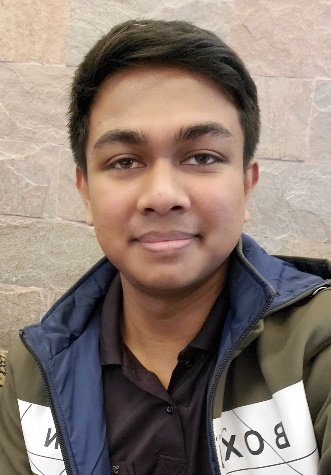
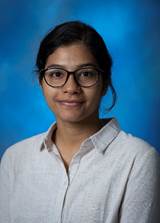
[cid:image001.jpg@01DB26E9.08FB6450] BME 3rd Year Seminar Series Friday, November 1st, 2024 1:30 - 2:30 PM EST MJIS 1001 Evaluation links: Md Foysal Rabbi: https://purdue.ca1.qualtrics.com/jfe/form/SV_0xgocn3ljAGc99k<https://nam04.safelinks.protection.outlook.com/?url=https%3A%2F%2Fpurdue.ca1.qualtrics.com%2Fjfe%2Fform%2FSV_0xgocn3ljAGc99k&data=05%7C02%7Cbmeroundtable-list%40ecn.purdue.edu%7C716e315b7f924d440f6508dcf74e9e5f%7C4130bd397c53419cb1e58758d6d63f21%7C0%7C0%7C638657165164802636%7CUnknown%7CTWFpbGZsb3d8eyJWIjoiMC4wLjAwMDAiLCJQIjoiV2luMzIiLCJBTiI6Ik1haWwiLCJXVCI6Mn0%3D%7C0%7C%7C%7C&sdata=ItJJsWkAsJh6waBr3IcmVWRgGxyyFXBD%2FgGrrrCT0UQ%3D&reserved=0> Madhurima Patra: https://purdue.ca1.qualtrics.com/jfe/form/SV_8Bo7knZ2GnvYvdk<https://nam04.safelinks.protection.outlook.com/?url=https%3A%2F%2Fpurdue.ca1.qualtrics.com%2Fjfe%2Fform%2FSV_8Bo7knZ2GnvYvdk&data=05%7C02%7Cbmeroundtable-list%40ecn.purdue.edu%7C716e315b7f924d440f6508dcf74e9e5f%7C4130bd397c53419cb1e58758d6d63f21%7C0%7C0%7C638657165164802636%7CUnknown%7CTWFpbGZsb3d8eyJWIjoiMC4wLjAwMDAiLCJQIjoiV2luMzIiLCJBTiI6Ik1haWwiLCJXVCI6Mn0%3D%7C0%7C%7C%7C&sdata=hZVMc2oUa7Zk5JVhOWce9xuIwTzZ%2FAdNx1%2F%2BdwTKdyc%3D&reserved=0> Evaluation surveys should only be completed after the seminar has taken place, and only by those who attended the seminar. Title: Roles of Catch-Slip Bond Dynamics at the Cytoskeleton, Cell, and Tissue Levels Md Foysal Rabbi (Taeyoon Kim, advisor) [cid:image002.jpg@01DB26E9.08FB6450] Abstract: Cytoskeletal networks, composed of actin filaments (F-actins) interconnected by actin crosslinking proteins (ACPs), play a crucial role in cellular scaffolding and numerous physiological processes. Most ACPs in the cytoskeleton dissociate from F-actins as either catch or slip bonds, resulting in a highly adaptive and transient network capable of exhibiting structural remodeling and distinct mechanical responses. Unlike slip bonds, which weaken under tension, catch bonds strengthen and increase their lifetime under tension. Interestingly, some ACPs, such as α-actinin, can switch between these behaviors in a tension-dependent manner, functioning as catch-slip bonds. Despite prior studies showing that networks with catch-slip bonds exhibit greater mechanical strength than those with slip bonds, the underlying mechanisms remain poorly understood. In this study, using computational models, we investigated the importance of catch-slip bond dynamics at cytoskeletal, cellular, and tissue levels. First, we studied how network connectivity and the force-dependent behavior of ACPs affect network strength. We found that ACPs with the nature of catch-slip bonds are redistributed toward high-force regions, reinforcing the network, whereas ACPs with the nature of slip bonds move toward low-force regions, leading to weaker networks. Second, we demonstrated that catch-slip-bond ACPs enhance the contractile force generated by myosin motors and propagate forces over longer distances than slip-bond ACPs. This force propagation was influenced by the size and number of myosin motors; fewer and longer motors allowed networks with catch-slip-bond ACPs to withstand higher forces. Finally, we explore how catch bonds impact interactions between cells and extracellular matrices, which is essential for matrix remodeling and cell migration. Our findings provide critical insights into understanding the multi-scale roles of catch-slip bonds in biological systems, revealing how their dynamics contribute to mechanical stability, force transmission, and cellular behaviors at the cytoskeletal, cellular, and tissue levels. Neural Correlates of Spectro-Temporal Modulation Detection: Insights from Cross-Species EEG studies Madhurima Patra (Michael Heinz, advisor) [cid:image006.jpg@01DB26EA.AF7FC270] Abstract: Although listeners with sensorineural hearing loss often communicate well in quiet, they typically struggle to understand speech in noisy environments (e.g., restaurants). Natural sounds exhibit spectro-temporal variations in intensity that fluctuate simultaneously across both time and frequency domains. Selective tuning to specific spectro-temporal modulations (STMs) enhances our understanding of naturalistic sounds, and preservation of these modulations across frequency channels is essential for speech intelligibility in noise. Studying limitations of missing perceptual information is particularly important for aging populations and hearing-aid recipients. Recent studies suggest STM stimuli can provide a reliable non-language-specific predictor for speech-in-noise intelligibility, which is the basis for a recent commercial clinical test. However, the mechanistic basis for this predictive power is unknown. Our work focuses on using STM stimuli composed of dynamically modified parameters in the stimulus space for studying behavioral and electroencephalographic (EEG) signatures responsible for perceptual differences across both populations. To gain mechanistic insights, animal models (specifically chinchilla lanigera) have served as indispensable pre-clinical tools to explore auditory functions at cellular and sub-cortical levels, with experimentally controlled hearing-loss conditions. Recent development of a multi-channel mini-EEG cap used with chinchillas in a light-sedation protocol has facilitated acquiring reliable cortical responses. Leveraging this and utilizing a stimulus paradigm similar to ones used for human behavior and EEG experiments will equip us with an informative dataset to foster a comprehensive understanding of the divergent aspects of auditory processing mechanisms across both species. Preliminary data suggest variations in STM characteristics are differentially represented across various EEG frequency bands. Notably, transitions between low and high signal-to-noise ratio (SNR) stimulus blocks are encoded more efficiently than transitions between blocks with similar SNR levels. A major strength of this cross-species approach is the ability to directly link analogous responses and comparative analyses across species on a perceptual level, thus enhancing translational potential. Liz Rowen She/Her Graduate Program Assistant Weldon School of Biomedical Engineering Martin C. Jischke Hall of Biomedical Engineering 206 S. Martin Jischke Drive West Lafayette, IN 47907-2032 o: 765-494-1197 [7054E290]<https://www.purdue.edu/?utm_source=signature&utm_medium=email&utm_campaign=purdue> -- Bmeroundtable-list mailing list Bmeroundtable-list@ecn.purdue.edu https://engineering.purdue.edu/ECN/mailman/listinfo/bmeroundtable-list


participants (1)
-
 Siemers, Tammy R