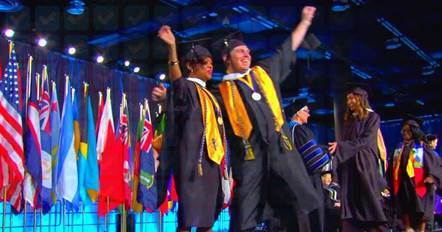
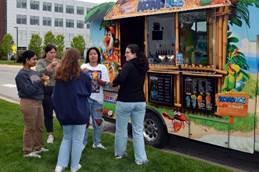
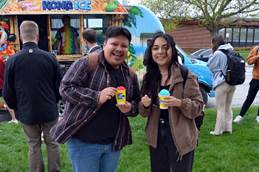
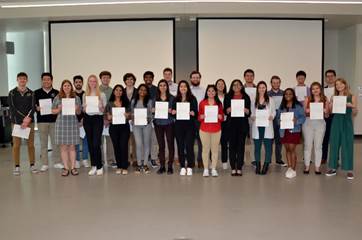
[cid:image009.jpg@01D98188.2EE5D590] BME MONDAY ROUNDTABLE May 8, 2023 DEPUTY HEAD'S NOTE Dear all, I hope your semester has ended well. For some of the faculty/staff, there may be one more day of work to turn in the grades by Tuesday (5/9) at 5 pm. So good luck! For those of you who have started traveling, have fun and enjoy the summer. We have had some good weather in the past weekend. * Recently, a video shoot was completed that will showcase the new undergraduate depth areas, design labs, and six student spotlights. They will soon be added to the "new and improved" BME undergraduate website to be completed later this summer. Please check it out when it is completed. Comments are welcome. * A group of BME undergraduate students have left for Japan on a study abroad trip led by Yunjie Tong and Aaron Lottes. A few such trips will take place during the summer. We love to see our BME students visit every corner of the world, representing our university and the Weldon School. * I am excited about the Spring 2023 commencement. For our Weldon undergraduate students, it will be in Division II on Friday (5/12) at 2:30 p.m., Edward C. Elliott Hall of Music. They will be marching through the campus along with students from a few other engineering departments. For our PhD graduates, the hooding ceremony will be on Sunday (5/14) at 7 pm, Edward C. Elliott Hall of Music. I am so proud of these students. Congratulations to faculty who have been their faculty mentors. Job well done. Big accomplishments. * Please go on to take a look at these wonderful pictures taken in the BMEGSA and BMES joint end-semester celebration. Congratulations to all the award winners. Celebrating Our Students! Last Friday, BMEGSA and BMES hosted a celebration for all of our BME students. Here are just some of the photos from that day: [cid:image010.jpg@01D98188.2EE5D590][cid:image011.jpg@01D98188.2EE5D590] [cid:image012.jpg@01D98188.2EE5D590] Important MJIS Alert Starting Tuesday, May 16th (NOTE new date!), Martin Jischke Drive will be CLOSED to all traffic. The university will be performing infrastructure repairs in the area. The street will be closed to traffic for most, if not all of the summer. When the street reopens, bike lanes will replace the on-street parking, although we do not currently have details/confirmation on the entire process yet. Stay tuned for additional details. UPCOMING IMPORTANT DATES Week of May 8 Mon., May 8: BME PhD Preliminary Exam Announcement for Brendan K. Ball (D. Brubaker, advisor), 11:00 a.m., MJIS 2001 and via Zoom. Title: Alzheimer's Disease Pathology Driven by Orexin and Type 2 Diabetes. Wed., May 10: Diabetes Research Virtual Seminar Series, 2:00 p.m., via Zoom. Katalin Susztak, MD, PhD, Professor of Medicine & Genetics, Director of Penn/CHOP Kidney Innovation Center, University of Pennsylvania, will present "Shifting Focus in Diabetes Care: Moving from Glucose Control to Complications Prevention." Wed., May 10: BME PhD Defense Announcement for James K. Nolan (H. Lee, advisor), 1:30 p.m., DLR 131. Title: Multi-Analyte Biosensing with Enzymatic Electrochemical Sensors. Wed., May 10: BME PhD Preliminary Exam Announcement for Michael Zimmerman (A. Chubykin and K. Jayant, co-advisors). Everyone is invited to attend the public presentation beginning at 2:00 pm in LILY G456 and via Zoom. Title: Understanding Learning and Memory: The Role of Neural Oscillations. Thurs., May 11: BRAG Session, 11:30 a.m., MJIS 2001. We cordially invite you to our upcoming BRAG session featuring Dr. Nan Kong, Professor and Deputy Head, Weldon School of Biomedical Engineering and Associate Director for Health Systems and Marta E. Gross Fellow, Regenstrief Center for Healthcare Engineering, Purdue University. During this session, Professor Kong will be sharing newly gained insights from his position as a Deputy Department Head with a talk titled, "What should you really "BRAG" about in faculty job search and offer negotiation". Mark your calendars for Thursday, May 11, from 11:30 am to 12:30 pm, and join us in MJIS 2001 for a productive lunch session. If you have any dietary restrictions, please let us know in advance. Please RSVP to the Outlook invitation sent following this email or directly to us (Kaisa Ejendal, Monisha Elumalai and Linlin Li. We welcome all attendees and encourage you to bring a Postdoc/Visiting scholar/Research engineer friend along with you!!!! Fri., May 12, Spring Commencement, Engineering Undergraduate Students, 2:30 p.m., Edward C. Elliott Hall of Music. Fri., May 12: Diabetes Data and Hypothesis Hub (D2H2) Seminar, 12:00 p.m., via Zoom. Dr. Avi Ma'ayan will present "The Diabetes Data and Hypothesis Hub (D2H2) and the Playbook Partnership Workflow Builder (PPWB): Bioinformatics Tools for Hypothesis Generation via Data Integration." Register here: https://scgcorp.zoom.us/webinar/register/WN_YgWw6WDTRX6TfaugZ3OBXg Fri., May 12-Sat., May 13: Inaugural Krannert Cardiovascular Research Center Biennial, sponsored by the Indiana University School of Medicine at the JW Marriott and Eiteljorg Museum, Indianapolis, IN. Krannert is conducting a nationally recognized CME event May 12-13 (Fri-Sat) on Myocardial Infarction & Reperfusion Injury. We cordially invite you to join us if possible. We have a strong line up of speakers on the topic who are renowned for their decades of contributions to the field. We are hoping for an event that would capture almost 50 years of activity in the field of ischemia/reperfusion and place it in a context to chart the course forward with the goal of improving care for heart attack patients. This is a great opportunity to meet thought leaders, engage in transformative science, and hopefully be part of a journey to advance CV research. For Program Agenda & Registration, please follow the link: https://medicine.iu.edu/institutes/cardiovascular/research/biennial Sun., May 14: Spring Commencement, Master's and Doctor of Philosophy Students (all colleges/schools), 7:00 p.m., Edward C. Elliott Hall of Music. Upcoming Opportunity for Fun! Do you play a band instrument? Purdue Bands and Orchestras has just opened registration for the 2023 Purdue University Summer Band! This ensemble is open to all area musicians that are high school age and up. Participation in Purdue's Summer Band is FREE to all. We plan to begin rehearsals on Tuesday, June 20, and rehearse on Tuesday and Thursday afternoons from 4:00-5:30 PM in Hagle Hall, Room 178. Our concert will be held on Thursday, July 20, 6:30 PM at Columbian Park Memorial Island Amphitheater immediately prior to a performance by the Lafayette Citizens' Band. Register Here: https://docs.google.com/forms/d/e/1FAIpQLSd8v47EEuzyl070XPk4QyH0fIBflpdLywlC... Upcoming important deadlines and info. Wed., May 17: BME Summer Seminar Series, 9:30 a.m., via Zoom. The BME Summer Seminar Series will run from May 17th - August 9th. The first week's speakers will be Ruhi Sharmin and Brendan Ball. Full schedule is attached. Fri., May 19: BME PhD Preliminary Exam Announcement for Shulan Xiao (K. Jayant, advisor), Everyone is invited to attend the presentation beginning at 11:00 a.m. in MJIS 2001 and via Zoom. Title: The Biophysical Basis of Sensory Feature Binding in Cortical Pyramidal Neurons. Thurs., May 25: Application Deadline for Trailblazers in Engineering workshop, to be held on the Purdue campus July 25-26. Trailblazers in Engineering (TBE) is a multi-day workshop focused on preparing future outstanding engineering scholars for future engineering faculty careers who are also committed to increase the success of underrepresented communities of engineers. Trailblazers in Engineering Fellows are selected not only for their outstanding scholarly achievements but also for their potential impact in expanding representation and diversity in engineering. See attached flyer for application instructions. Committee Updates Academic Programs Update Fall 2023 Course Schedule is attached to this email. Drop-in virtual help sessions can assist faculty with end-of-semester Brightspace, other instructional technology - Purdue University Online - Purdue University<https://discover.online.purdue.edu/news/2023/04/05%20-%20Drop-in%20virtual%20help%20sessions%20can%20assist%20faculty%20with%20end-of-semester%20Brightspace,%20other%20instructional%20technology.php?image> Full Term (16 Weeks) and Second Eight-Week Session grade entry (meeting between March 6 and May 6) begins at 8 a.m. April 21 and ends promptly at 5 p.m. May 9. 1. Now is the perfect time for faculty to take the 15 minutes to get all their required certifications up to date BEFORE the deadline approaches. * FERPA * GLBA * Data Handling * Protecting SSNs 2. This page<https://www.purdue.edu/registrar/faculty/grading/PWL-grade-entry-update.html> provides myPurdue grade entry instructions. 3. This page<https://www.purdue.edu/brightspace/Docs/Grades/SubmitFinalGradesToBanner.php> provides BrightSpace final grade submission instructions. 4. Those not making the deadline can use the Grade Change Workflow. * Instructions may be found here<https://www.purdue.edu/registrar/faculty/grading/Grade_Change_Workflow.html>. Graduate Office Update Dear BME Faculty, Weldon BME PhD students performing research in one of these areas - cardiovascular devices, implantable biomaterials design, drug-delivery systems, or biochemical sensors - are eligible for nomination for the Ronald W. Dollens Scholarship. For the nomination, we will need from you a short description (less than 250 words) of an outstanding, current graduate student in your lab who is excelling in research performance and service to the department. In your description, please mention/include the following: * Student's year in the PhD program (1st year, 2nd year, etc.) * Brief description of outstanding research performance * Brief description of service to the department * Mention of recent awards, presentations made at conferences, papers authored, etc., that you think help describe the student's contributions * Student's CV Please send the nomination to tsiemers@purdue.edu<mailto:tsiemers@purdue.edu> by Sunday, May 21st. The Ronald W. Dollens Scholarships in Life Sciences will be awarded based on academic merit to two deserving graduate students in the Weldon School of Biomedical Engineering who meet the criteria and are selected. The scholarship award is $5,000 with half being awarded in the Fall 2023 semester and half in the Spring 2024 semester. If you have any questions, please don't hesitate to reach out. New Course for Fall 2023: BME 69500 Pediatric Medical Devices (CRN 14011). Details below. Research Update To safeguard our valuable work and bolster Weldon's standing, it is important that we exercise caution with predatory journals and "hidden" predatory journals. We are collaborating with the Purdue library to organize a session. Stay tuned. https://www.science.org/content/article/fast-growing-open-access-journals-st... https://retractionwatch.com/2023/03/21/nearly-20-hindawi-journals-delisted-f... Participants needed for a Motor Function Study, "Development of a Diagnostic System for Assessment of Motor Impairment," IRB# IRB-2022-1299. See below for details. Resources and further information BME PhD Preliminary Exam Announcement for Brendan K. Ball (D. Brubaker, advisor), Mon., May 8, 11:00 a.m., MJIS 2001 and via Zoom. Title: Alzheimer's Disease Pathology Driven by Orexin and Type 2 Diabetes. Committee Members: Doug Brubaker, Ph.D. (Chair), Elizabeth Proctor, Ph.D., Deva Chan, Ph.D., Tamara Kinzer-Ursem, Ph.D., Brendan Lucey, M.D. Abstract: Alzheimer's disease (AD) is the most common form of dementia and is often presented with aggregates of amyloid-β and intracellular tau proteins in the brain, which leads to downstream progressive memory loss and cognitive impairment. Multiple risk factors for AD development include age, genetics, and other pre-existing diseases such as type 2 diabetes (T2D). While up to 81% of people with AD may have T2D or impaired glucose levels, the biological mechanisms by which T2D exacerbates AD pathology are not well-understood. Previous studies shown that orexin, a neuropeptide responsible for appetite, arousal, and wakefulness, to be involved in AD and T2D pathology, which may be a potential link between the two diseases. We propose that protein aggregation in the brain, and metabolic processes regulated by the orexin network and T2D exacerbates AD pathology. To test this idea, we will first identify functional and biological associations of gene expressions via protein interaction networks and gene set enrichment analysis. Second, we will incorporate publicly available mouse, post-mortem human brain tissue, and human cell line transcriptomic data into our computational model to characterize pathways by which proteinopathy, T2D and orexin are predictive of human neuropathological status. Finally, we will quantify neuroinflammatory cytokines and gene expression by performing multiplexing assays and RNA sequencing of primary neuron samples after stimulation with disease-associated metabolites and orexin antagonist. Upon completion of this study, we will have improved our understanding on biological mechanisms in which orexin and T2D exacerbates AD pathology, which may introduce avenues for disease-directed therapeutics. Zoom Link: https://purdue-edu.zoom.us/j/5554725555 BME PhD Defense Announcement for James K. Nolan (H. Lee, advisor), Wed., May 10, 1:30 p.m., DLR 131. Title: Multi-Analyte Biosensing with Enzymatic Electrochemical Sensors. Committee: Hyowon Lee, Chair; Aaron B. Bowman; Chi Hwan Lee; Jacqueline Linnes Abstract: Electrochemical biosensor arrays been integrated into microfluidic cell culture platforms have measured metabolic markers, proteins, and nucleic acids. There is a gap for electrochemical biosensor lab on a chip for simultaneously monitoring multiple neurotransmitters, such as glutamate and dopamine, while compatible with recombinant fluorescent neurotransmitter and epigenetic biosensors. A microfluidic neuronal cell-culture platform with these capabilities would be a valuable tool for quantifying phenotypes of PD-linked epigenetic change resulting from environmental chemical exposure. To this end, we aim to develop arrays of enzymatic electrochemical sensors for multi-analyte biosensing. We have developed sensors using direct ink writing robotic printing and conventional thin film processing that can simultaneously measure neurotransmitters (glutamate) and metabolic biomarkers (glucose and lactate) together simultaneously in cell culture media. We have also shown the biocompatibility of theses sensors for neuronal cell culture. What remains to do is verify their stability during many weeks exposure to cell culture conditions and to demonstrate glutamate measurement from glutaminergic neurons in a microfluidic chip. BME PhD Preliminary Exam Announcement for Michael Zimmerman (A. Chubykin and K. Jayant, co-advisors). Everyone is invited to attend the public presentation on Wed., May 10, beginning at 2:00 pm in LILY G456 and via Zoom. Title: Understanding Learning and Memory: The Role of Neural Oscillations. Committee: Dr. Alexander Chubykin (Primary advisor), Dr. Krishna Jayant (Co-advisor). Dr. Maria Dadarlat, Dr. Edward Bartlett Abstract: Autism spectrum disorder (ASD) is an extremely prevalent group of neurodevelopmental disorders that affects 2% of the population worldwide. Many of the symptoms of ASD emerge as difficulties with social communication or other comorbidities such as mood disorders and epilepsy. A hallmark of ASD is disruption of sensory processing and filtering that is associated with either hyper- or hyposensitivity which impacts social interaction, daily functioning, and learning and memory. Currently, the underlying mechanism causing this disruption has yet to be understood. Fragile X Syndrome (FX) is the most common monogenetic form of ASD, accounting for approximately 5% of all cases, and is a prime model for investigating this disruption. This work takes advantage of emerging novel technologies and paradigms to unravel an underlying mechanism behind learning and memory and its impairment in FX. I find that low frequency theta oscillations emerge following familiarity in both the primary visual cortex (V1) and hippocampus, which is known to encode memory, yet are primarily formed in V1. Additionally, with an active learning behavior paradigm, these oscillations are modified between stimuli and consistently weaker in FX mice, suggesting they encode more than just familiarity. Finally, I propose future work that will utilize optogenetic stimulation to further investigate the role of these oscillations, and potentially identify a future therapy for ASDs. Overall, this work is investigating the role of theta oscillations across the brain to understand their function in memory formation and encoding while also testing a potential therapeutic treatment for learning disability. Zoom link: https://purdue-edu.zoom.us/j/91953591881 Diabetes Research Virtual Seminar Series, Wed., May 10, 2:00 p.m., via Zoom. Katalin Susztak, MD, PhD, Professor of Medicine & Genetics, Director of Penn/CHOP Kidney Innovation Center, University of Pennsylvania, will present "Shifting Focus in Diabetes Care: Moving from Glucose Control to Complications Prevention." Abstract: Kidney disease is a major driver of mortality among patients with diabetes and diabetic kidney disease (DKD) responsible for close to half of all chronic kidney disease cases. DKD usually develops in a genetically susceptible individual as a result of poor metabolic (glycemic) control. Newly identified molecular pathways could provide the basis for the development of much-needed novel therapeutics. This seminar series is organized by the Diabetes Research Centers and Centers for Diabetes Translation Research. Would you like to meet the speaker immediately following the webinar to speak further about research? You may log in to MEET THE SPEAKER<https://zoom.us/j/95857325830> 3 PM-3:45 PM ET on May 10. Seminar Zoom link: https://zoom.us/j/91323894836 Diabetes Data and Hypothesis Hub (D2H2) Seminar, Fri., May 12, 12:00 p.m., via Zoom. Dr. Avi Ma'ayan will present "The Diabetes Data and Hypothesis Hub (D2H2) and the Playbook Partnership Workflow Builder (PPWB): Bioinformatics Tools for Hypothesis Generation via Data Integration." Register here: https://scgcorp.zoom.us/webinar/register/WN_YgWw6WDTRX6TfaugZ3OBXg Abstract: This seminar will discuss two new interactive bioinformatics software tools that integrate knowledge from many NIH funded and other key resources for hypothesis generation. The Diabetes Data and Hypothesis Hub (D2H2) is a platform that integrates tools and datasets related to diabetes research into one integrative platform. The Playbook Partnership Workflow Builder (PPWB) is a system that enables novice users to created bioinformatics workflows by exploring a network of distributed but connect microservices. These two new tools will be demonstrated through a variety of use cases with applications that prioritize personalized drugs and targets for kidney disease, diabetes, and pan-cancer. Bio: Dr. Ma'ayan is a Mount Sinai Endowed Professor in Bioinformatics, Professor in the Department of Pharmacological Sciences, Director of the Mount Sinai Center for Bioinformatics, and a faculty member of the Department of Artificial Intelligence and Human Health at the Icahn School of Medicine at Mount Sinai in New York City. The Ma'ayan Laboratory applies computational methods to study the complexity of regulatory networks in mammalian cells. His research team develops software systems to help experimental biologists form novel hypotheses from high-throughput data with a focus on drug and target discovery through machine learning and other statistical methods. BME PhD Preliminary Exam Announcement for Shulan Xiao (K. Jayant, advisor), Fri., May 19. Everyone is invited to attend the presentation beginning at 11:00 a.m. in MJIS 2001 and via Zoom. Title: The Biophysical Basis of Sensory Feature Binding in Cortical Pyramidal Neurons. Advisory committee: Krishna Jayant, Chair; Alexander A. Chubykin; Edward L. Bartlett; Fang Huang; Scott R. Pluta Abstract: Feature binding is critical for sensory perception and pattern classification. In cortical layer 2/3 and layer 5 pyramidal neurons (L2/3 and L5 PNs) feedforward inputs synapse onto basal dendritic arbors in distinct spatio-temporal patterns. How these distributed inputs integrate, multiplex, and dictate unique output codes, however, remains poorly mapped. Furthermore, it remains unclear how specific input sequences learn over time to aid pattern classification and whether this plasticity and integration is shaped by top-down feedback. To address these outstanding challenges, I have designed and implemented a new microscope capable of stimulating synapses via 3D transmitter uncaging while simultaneously recording the electrical input-output transformation. Using this platform across in vitro acute slice preparations, I propose to unravel the biophysics of multibranch dendritic integration and feature classification under quiescent and in vivo like states in L5 pyramidal neurons - the primary output layer of the cortex. Here, my aims are focused on dissecting mechanisms that underlie multiplexing across basal dendrites, plasticity mechanisms that assist efficient feature classification, and the role of top-down modulation in shaping basal dendritic integration. I propose innovative methods including two-photon holographic uncaging, dynamic clamp, computational modeling, and in vivo two-photon calcium imaging to test and validate my hypotheses. Successful completion of my aims will lead to a new understanding of how dendritic nonlinearities facilitate efficient feature classification amidst noisy backgrounds in individual L5 PNs, including different subtypes. The outcome of this finding is not only poised to improve our understanding of neural signal processing but could bolster the design of future biologically inspired artificial intelligence-based neuromorphic systems. Zoom link: https://purdue-edu.zoom.us/j/9146700686 Participants Needed for Research Study: (Aditya Shanghavi is a graduate student in Biomedical Engineering at Purdue.) I am currently working on a research project under the direction of my advisor, Dr Anne Sereno. We are inviting you to participate in a brief arm movement study. We are specifically looking for participants aged 45-85 with no history of neurological diseases who are fluent in English and have adequate hearing (with or without amplification) to process verbal instruction and adequate vision to see the computer screen. Participants should be able to perform simple upper arm motions without experiencing major pain or discomfort. We will use non-invasive motion sensors on a wristband to collect arm motion signals during normal and simulated abnormal movements (after viewing short videos) as well as an eye tracker to collect eye motion signals during a prosaccade-antisaccade task. This study's goal is to develop algorithms to detect latencies and amplitudes of movements and to quantify the sensitivity, reliability, and accuracy of the sensors and these algorithms to differentiate normal versus simulated abnormal movements. The study should take no more than 60 minutes and it will be conducted in PSYCH 3125. We will highly appreciate you taking time out of your busy schedule and will compensate you $15 for your help in our research study in addition to our heartfelt gratitude. This study is conducted in accordance with IRB # IRB-2022-1299. If you have more questions regarding this study, please contact Aditya Shanghavi at ashangha@purdue.edu<mailto:ashangha@purdue.edu>. New Course for Fall 2023: BME 69500 Pediatric Medical Devices (CRN 14011). Fall 2023, 3.0 credit hours Wednesdays 11:30-2:20 in MJIS 1083 (in person attendance only) Prerequisite: BME Graduate Standing Course Description: The unique medical needs of pediatric patients in the context of current and emerging clinical technologies are presented in this novel course. Anatomical, physiological, and pathophysiological underpinnings of diseases in infants and children are studied. Unique aspects of pediatric device design, regulation, and translation, including clinical studies and ethical considerations, are explored. Numerous clinical sub specialties such as cardiology, surgery, nephrology, pulmonology, and gastroenterology are examined in terms of technology adoption and remaining clinical needs. Future directions in device development and emerging trends in patient care are considered throughout. Weekly Course Topics: August 23 Pediatrics Introduction August 30 Neonatology Introduction September 6 Pediatric Device Design and Development I September 13 Pediatric Device Design and Development II September 20 Pediatric Device Regulation September 27 Pediatric Clinical Studies October 4 Pediatric Cardiology October 18 Pediatric Cardiovascular Surgery October 25 Pediatric Nephrology November 1 Pediatric Pulmonology November 8 Pediatric Wound Healing November 15 Pediatric Gastroenterology November 29 Ethical Considerations in Pediatrics December 6 Future Directions and Trends Primary Instructor: George Wodicka, MJIS 3036, wodicka@purdue.edu Numerous experts from the Indiana University School of Medicine Department of Pediatrics, Riley Hospital for Children, and Cook Medical, Inc. will actively participate. Attachments BME Course Descriptions 2023ClimateSurveyFlyer_Emailing.pdf Course List Fall 2023 Summer Seminar Flyer 2023 -- Bmeroundtable-list mailing list Bmeroundtable-list@ecn.purdue.edu https://engineering.purdue.edu/ECN/mailman/listinfo/bmeroundtable-list