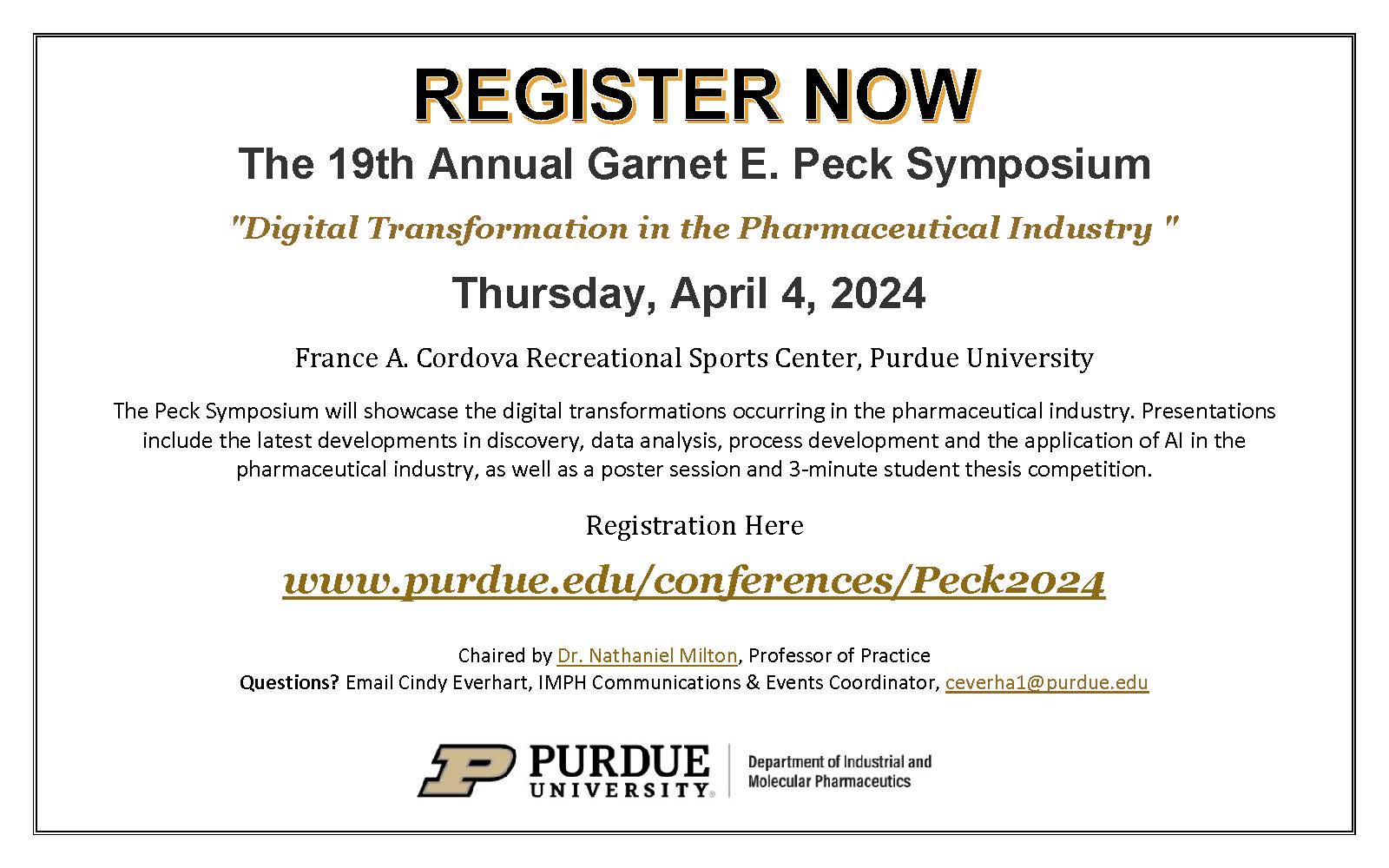
[cid:image001.jpg@01DA85C6.51034AC0] BME WEEKLY ROUNDTABLE April 1, 2024 INTERIM HEAD’S NOTE The first time since 1980, it feels like a once a life-time experience. I hope you enjoyed the Easter weekend and Purdue basketball. I look forward to the semi-final game this Saturday so much. If they prevail, it is so exciting to watch total solar eclipse and the game on the same day, next Monday. Regarding the total solar eclipse, there is a full agenda at Purdue, https://www.purdue.edu/home/total-solar-eclipse/. Here is a friendly reminder. On March 18, a Purdue email encouraged instructors to make these changes to their class plans. “Based on input from students, all instructors are encouraged to consider adjusting course schedules so that no mandatory class/lab/exam sessions are planned from 12:30-5:30 p.m. that day,” the email said. This Friday, we will have our last faculty meeting of the semester. The dean will stop by at around noon. I encourage all faculty members to come to the faculty meeting. 2024 Engineering in Medicine pilot project funding CFP is out. BMEGSA has elected their next cohort of 2024 – 2025 officers. Congratulations! I just saw a presentation on technology translation and commercialization, by Brook Beier, our alum, a long-time friend of the department, and a leader at Purdue Research Foundation. BME is up there with the two biggies (ME and ECE) in this space. We are a clear leader in categories like per FTE start-up, patents, and revenue generated from licenses. I want to send my sincere appreciation to those who have achieved excellence in this space. The college is very proud of you. Keep up good work. UPCOMING IMPORTANT DATES Week of April 1 Mon., April 1: BME Master's Defense Announcement for Kevin Bautista (Jacqueline Linnes, advisor). Everyone is invited to attend the public presentation beginning at 1:00 PM EST in MRGN 129 and via Zoom. Title: A Miniaturized Potentiostat for Electrochemical Impedance Spectroscopy Mon., April 1: Center for Diabetes and Metabolic Diseases Enrichment Seminar Series, 12:00 p.m., R4 101 (Indianapolis) and via Zoom. Holly Ingraham, PhD, Professor of Cellular and Molecular Pharmacology, Hertzstein Endowed Professor of Molecular Physiology, University of California, San Francisco will present “Brain-Body Circuits Designed to Control Female Physiology.” This seminar is sponsored by the Indiana University School of Medicine. Zoom link: https://iu.zoom.us/j/87501979533#success<https://nam04.safelinks.protection.outlook.com/?url=https%3A%2F%2Fiu.zoom.us%2Fj%2F87501979533%23success&data=05%7C02%7Cbmeroundtable-list%40ecn.purdue.edu%7C9823512949bc4fdf032c08dc53ff2d0d%7C4130bd397c53419cb1e58758d6d63f21%7C0%7C0%7C638477603402567556%7CUnknown%7CTWFpbGZsb3d8eyJWIjoiMC4wLjAwMDAiLCJQIjoiV2luMzIiLCJBTiI6Ik1haWwiLCJXVCI6Mn0%3D%7C0%7C%7C%7C&sdata=jEZOHFHXhSQ1Qje9qNhxbkD3y4Q2qepFpz%2Fx%2FPfdRuI%3D&reserved=0> Wed. April 3: BME Distinguished Research Seminar Series, 9:30 a.m., MRGN 121 and via Zoom. Nianqiao Phyllis Ju, Assistant Professor of Statistics, Purdue University will present “SNP-Slice Resolves Mixed Infections: Simultaneously Unveiling Strain Haplotypes and Linking Them to Hosts.” Wed., April 3: Seminar for Neurotrauma and Diseases, 4:00 p.m., DLR 131 and via Zoom. Vitaliy Rayz, Associate Head of Academic Programs, BME Purdue will present “Image-Based Models of Cerebral Flow Dynamics and Biomechanics.” Wed., April 3: IBSC-BME PhD Defense Announcement for Navaporn Sritong (Jacqueline Linnes, advisor). Everyone is invited to attend the public presentation beginning at 2:30 p in MJIS 2001 and via Zoom. Dissertation title: Development of Viral Molecular Detection Platforms for Point-Of-Care Diagnostics. Wed., April 3: BME Master’s Defense Announcement for Madeleine Stanik (N. Kong, advisor). Everyone is welcome to attend the public presentation starting at 10:00am in DLR 131 and via Zoom. Title: Predicting The Risks of Recurrent Stroke and Post-Infection Seizure in Residents of Skilled Nursing Facilities - A Machine Learning Approach Thurs., April 4: 19th Annual Garnet E. Peck Symposium, France A. Cordova Recreational Sports Center. Registration now open: www.purdue.edu/conferences/Peck2024<http://www.purdue.edu/conferences/Peck2024> . The Peck Symposium will showcase the digital transformations occurring in the pharmaceutical industry. Presentations include the latest developments in discovery, data analysis, process development and the application of AI in the pharmaceutical industry, as well as a poster session and 3-minute student thesis competition. Chaired by Dr. Nathaniel Milton, Professor of Practice. Questions? Email Cindy Everhart, IMPH Communications & Events Coordinator, ceverha1@purdue.edu<mailto:ceverha1@purdue.edu> Thurs., April 4: Seminars in Hearing Research, 12:00 noon, Nelson Hall, Room 1215. Ananthanarayan Krishnan, PhD, Professor of SLHS, will present "The spatiotemporal organization of the pitch processing network is shaped by tonal language experience." Thurs., Apr. 4: BME PhD Preliminary Exam Announcement for Zachary R. Davis (Deva Chan, advisor). Everyone is invited to attend the public presentation beginning at 1:00 pm in MJIS 2001. Dissertation title: Understanding spatial and volumetric content changes in cartilage and tissue engineered repair scaffolds using non-invasive imaging. Fri., April 5: BME Special Seminar, 10:00 a.m., MJIS 2001 and via Zoom. Ulrike Dydak, PhD, Professor of Health Sciences and Director, Purdue Life Sciences MRI Facility and Associate Director of Women’s Global Health Institute, Purdue University, will present “Quantitative MRI and Edited Spectroscopy to Study the Risk of Manganese Toxicity in Welders.” Fri., April 5: WorldHealth Purdue’s Glow Run 5K Charity Event. As an event that is aimed at promoting health and wellness, we wanted to specifically reach out to you all, as we thought it might align with your mission and goals. This is a campus and community-driven event, and we believe that your support would really help make this event successful. Proceeds will help the Lafayette Transitional Housing Center! This year, we will be having raffles and prizes for all participants, and those who have more referrals get extra entries. We will also have medals for those who place. Details about this can be found on our website: https://worldhealthpurdue.wixsite.com/worldhealth-purdue-g<https://nam04.safelinks.protection.outlook.com/?url=https%3A%2F%2Fworldhealthpurdue.wixsite.com%2Fworldhealth-purdue-g&data=05%7C02%7Cbmeroundtable-list%40ecn.purdue.edu%7C9823512949bc4fdf032c08dc53ff2d0d%7C4130bd397c53419cb1e58758d6d63f21%7C0%7C0%7C638477603402723896%7CUnknown%7CTWFpbGZsb3d8eyJWIjoiMC4wLjAwMDAiLCJQIjoiV2luMzIiLCJBTiI6Ik1haWwiLCJXVCI6Mn0%3D%7C0%7C%7C%7C&sdata=4qvc9NscBxGNBpBL%2BdWqPaijZlWUyIyI4KZpMJdVA6c%3D&reserved=0> and on the attached flyer. Sat., April 6: E-Waste Day, 8:00 a.m. – 2:00 p.m., Tippecanoe County Fairgrounds (1190 Teal Road, Lafayette). Our bi-annual e-waste event is back on April 6th from 8am-2pm at the Tippecanoe County Fairgrounds! This event includes FREE electronics recycling, paper shredding, and medicine disposal for Tippecanoe County residents! Details on E-waste Recycling: Tippecanoe County residents may bring in electric and electronic devices such as TVs, computers, laptops, vacuum cleaners, printers, etc. for recycling at no charge. We will NOT accept items with refrigerant such as AC units, refrigerators, dehumidifiers, or freezers. We will NOT accept large appliances such as washing machines or stoves. Those can be recycled at Oscar Winski Scrap Metal at 2407 N 9th St. All attendees must show proof of Tippecanoe County residency to receive free service. Details on paper shredding: A paper shredding truck will be on-site to accept up to two banker boxes of paper to shred and recycle from each car. Just pull up, dump your box in the bin, and that's it! Paper clips, staples, folders, and file tabs are A-OK! Please remove binders and alligator clips. Details on medicine take-back: The Tippecanoe County Sheriff's Department will also be here to accept any unused or expired medicines. Over-the-counter and prescription (including controlled substances) are accepted. It will be dumped out onsite, so bring it loose if possible! All of your medicines will be destroyed and disposed of safely. We will not take liquids, needles of any kind, insulin, or powders. We will have volunteers on hand to unload your electronics. Please have them packed in your vehicle in an easy-to-unload manner so that we can keep the line of cars moving. MJIS ALERT WEST LAFAYETTE, Ind. — With warmer weather on the horizon, shared Veo bicycles and electric devices on Monday (March 11) returned to the West Lafayette campus. As a new feature, riders will be unable to end a trip and stop charges until the device is parked in a designated area. The Veo app will notify the rider when trying to end the ride if the device is not in an established parking zone based on GPS data, then the individual will be able to identify the nearest approved parking location through the app. Parking zones are denoted with a white “P” in a blue circle icon in the app to help riders plan their trips and properly park. Upon moving the device to an appropriate location, the ride can be ended. As was previously the case, devices may only be parked in bicycle racks or areas that have Veo parking signage posted. See here for the full Purdue Today article: https://www.purdue.edu/newsroom/releases/2024/Q1/veo-devices-return-to-campu... Reminder to All Students – Final Exam Accommodations Please remind students with disability-related accommodations of the April 19 deadline to request to take final exams with Purdue Testing Services The deadline for Purdue students with disability-related accommodations to schedule Spring 2024 final exams with Purdue Testing Services is 11:55 p.m. Friday, April 19. Instructors are encouraged to remind their classes of this deadline in the weeks leading up to finals. As a reminder, students will not be able to schedule final exams until 1) the Registrar releases the final exam schedule and 2) instructors submit a Testing Information Form (TIF) for their final exam. Students will receive an email when the final exam scheduling window opens. Students who do not submit a final exam request before the deadline will not be able to take their accommodated exams with Purdue Testing Services and instructors will need to make other arrangements to facilitate testing accommodations. Start times for final exams are set by the university and are as follows: 8 a.m., 10:30 a.m., 1 p.m., 3:30 p.m., 6 p.m. and 7 p.m. ET. Read more<https://www.purdue.edu/studentsuccess/testing-services/accommodated-testing/instructor.php> 2024 BME Research Symposium: Innovations in Biomedical Engineering BMEGSA is excited to announce the 2024 BME Research Symposium to be held on April 16th, 2024 in the Hall for Discovery Learning Research (DLR) in Room 131 from 9:30 a.m. – 4:30 p.m. For all attendees, please complete the registration form for the BME Symposium, which can be found here<https://nam04.safelinks.protection.outlook.com/?url=https%3A%2F%2Fdocs.google.com%2Fforms%2Fd%2Fe%2F1FAIpQLSdllfpzKnZOEpL3LyIio8TwFl1XvSLBLWPyuaCUmKIe4fRuvg%2Fviewform%3Fusp%3Dsf_link&data=05%7C02%7Cbmeroundtable-list%40ecn.purdue.edu%7C9823512949bc4fdf032c08dc53ff2d0d%7C4130bd397c53419cb1e58758d6d63f21%7C0%7C0%7C638477603402723896%7CUnknown%7CTWFpbGZsb3d8eyJWIjoiMC4wLjAwMDAiLCJQIjoiV2luMzIiLCJBTiI6Ik1haWwiLCJXVCI6Mn0%3D%7C0%7C%7C%7C&sdata=4CfTFsAdhC2BRRwU5WRSFDMA0NAv6fwliVJ3L9FL%2BVY%3D&reserved=0>. There is no cost to register for the symposium. The schedule of events for the day includes: 9:00-9:30 am Check-in and breakfast provided 9:30-9:45 am Opening Remarks (Prof. Nan Kong, Interim Head of BME 9:45-10:45 am Keynote Speaker (Helen H. Lu, PhD, Columbia University) 1:45-11:15 am Research Hub (Tyler Diorio, PhD) 11:15-12:30 pm Setup and Poster Session 12:30-1:15 pm Lunch Break (catered lunch provided 1:15-3:30 pm Oral Presentations (break halfway) 3:30-4:00 pm Networking Reception 4:00-4:30 pm Awards Ceremony & Closing Remarks (Keynote Speaker) Helen H. Lu, Percy K. and Vida L.W. Hudson Professor of Biomedical Engineering and Professor of Dental and Craniofacial Engineering (in Dental Medicine), Senior Vice Dean of Faculty Affairs and Advancement, Department of Biomedical Engineering, Columbia University Dr. Helen Lu's research focuses on Orthopaedic Interface Tissue Engineering and the formation of complex tissue systems, with the goal of achieving integrative and functional repair of soft tissue injuries. Additionally, her research group is active in the design of novel biomaterials for orthopedic and dental applications. Her group has published extensively in biomaterials and tissue engineering, cell-material interactions as well as smart material design. Lu is the inventor and co-inventor of more than a dozen patents and applications, and she has served on the editorial board of leading journals of the fields, including Tissue Engineering, Regenerative Engineering, Journal of Biomedical Material Research A, Journal of Orthopaedic Research, and is currently an associated editor for IEEE Transactions on Biomedical Engineering. Her research has been supported by the Whitaker Foundation, the Wallace H. Coulter Foundation, the Musculoskeletal Transplant Foundation, the New York State Stem Cell Initiative, the National Football League (NFL) Charities, the Department of Defense and the National Institutes of Health. Lu’s research has also been recognized with many awards, including the Early Faculty Career Awards in Translational Research (Phase I and Phase II) from the Wallace H. Coulter Foundation and the Young Investigator Award from the Society for Biomaterials. She was honored with the Presidential Early Career Award for Scientists and Engineers (PECASE) at the White House in 2010, and was elected as a Fellow of the American Institute for Medical and Biological Engineering (AIMBE) in 2011. Lu received her undergraduate and graduate degrees in Bioengineering from the University of Pennsylvania, and is currently the Professor of Biomedical Engineering and the Director of the Biomaterials and Interface Tissue Engineering Laboratory at Columbia University. She also received tenure at the Columbia College of Dental Medicine, and serves as a Provost Leadership Fellow at Columbia. If you have any questions, please reach out to Brendan (bbkazu@purdue.edu<mailto:bbkazu@purdue.edu>) or Lizzy (frazie34@purdue.edu<mailto:frazie34@purdue.edu>) via email. Congratulations to new BMEGSA Leadership The election results are in! Please welcome our next cohort of 2024-2025 officers for BMEGSA. Executive Board Co-Presidents: Lizzy Frazier & Sushma Gude Vice President: Farshid Gourdarzian Treasurer: Thejas Vishnu Ramesh Secretary: Samridhi Kulshrestha Webmaster: Peter Olayooye Committees Social Chairs: Samantha Mata Robles & Khalid Khalaf Outreach Chairs: Danielle Ahwireng & Alex Nguyen Professional Development Chair: Grigorii Rudakov Diversity Chairs: Mikayla Roach & Unimark Jnr. Awadzi Purdue Indy Rep Chair: Amanda Wagner Committee Members: Anushri Umesh (Purdue Indy) & Ankit Shah (Prof. Dev.) Advisory Council BMES Liaison: Juan Mesa PGSG Senator: Mikayla Roach Special Programs Chair: Tuba Marjan GSAC Representative: Julia Walsh Please join us in congratulating them and we look forward to the excellent service they will bring to the student body. And a huge thank you to everyone who was a part of BMEGSA during this academic year. Upcoming important deadlines and information Wed., April 10: BME Distinguished Research Seminar Series, 9:30 a.m., MRGN 121 or via Zoom. Victor Barocas, PhD, Professor of Biomedical Engineering and Interim Associate Dean for Graduate Programs, College of Science and Engineering, University of Minnesota, Minneapolis-St. Paul will present “Computer Modeling of Growth, Remodeling, and Failure of Ascending Thoracic Aortic Aneurysm.” Wed., April 10: BME PhD Defense Announcement for Hui Ma (Jacqueline Linnes and Tamara Kinzer-Ursem, Co-Chairs). Everyone is invited to attend the public presentation beginning at 10:00 am in MJIS 2001 and via Zoom. Dissertation title: Computational and Experimental Investigation of Microfluidics into Biophysical Interaction. Wed., April 10: Purdue Engineering Distinguished Lecture Series. Jeff Dean, Chief Scientist, Google DeepMind and Google Research will present “Some Exciting Trends in Machine Learning” at 12:00 p.m. in the ARMS Atrium. The seminar will be followed at 1:00 by a panel “What could and should AI do for society in the next 25 years?” This seminar and panel discussion are hosted by the College of Engineering, and Elmore Family School of Electrical and Computer Engineering. Register at bit.ly/pedls-dean Wed., April 10: ISCTR Artificial Intelligence Enabling Medical Devices Webinar, 1:00 p.m. via Zoom. Please join our own Aaron Lottes (panel member) in a 1-hour webinar via zoom hosted by the ISCTR titled, 'Artificial Intelligence Enabling Medical Devices.' Join this free, insightful 1-hour webinar on the advancements of artificial intelligence in medicine. Learn how AI is aiding in the treatment, diagnoses, and research in healthcare. We will feature speakers from the FDA, CMS, as well as pioneers of AI medicine. Through this webinar, you will gain insight into patent protection strategies, patient safety and regulatory compliance, and the evolution of AI in the medical field. Register now to get exclusive information regarding the innovation and future of artificial intelligence in medicine! Webinar Speakers: Spencer B. King, III, MD (Emeritus Professor @Emory University); Louis Jacques, MD (Former Director, CMS); James Min, MD (Founder & CEO, Cleerly, Inc.); Wenbo Li, PhD (Lead Reviewer of Medical Devices, FDA); Joseph Hutter, MD (Center for Standards & Quality, CMS); Nabil Dib, MD, MSc (President, ISCTR) *Click the link below to register in advance for this insightful webinar: https://us02web.zoom.us/webinar/register/WN_jqQ_0O7oS3Cpbuxf6zOhsg<https://nam04.safelinks.protection.outlook.com/?url=https%3A%2F%2Fus02web.zoom.us%2Fwebinar%2Fregister%2FWN_jqQ_0O7oS3Cpbuxf6zOhsg&data=05%7C02%7Cbmeroundtable-list%40ecn.purdue.edu%7C9823512949bc4fdf032c08dc53ff2d0d%7C4130bd397c53419cb1e58758d6d63f21%7C0%7C0%7C638477603402723896%7CUnknown%7CTWFpbGZsb3d8eyJWIjoiMC4wLjAwMDAiLCJQIjoiV2luMzIiLCJBTiI6Ik1haWwiLCJXVCI6Mn0%3D%7C0%7C%7C%7C&sdata=JMJb0fbcp0yFdt1USofl3PO%2FBKLeuUeNRWqDLUI5QKk%3D&reserved=0> After registering, you will receive a confirmation email containing information about joining the webinar. Thurs., April 11: IBSC-BME Preliminary Exam Announcement for Eric J. Tan (Tamara Kinzer-Ursem, advisor), 10:30 a.m., MJIS 2001. This preliminary exam is open only to those who have signed the Lilly NDA. Title: Developing ultrasensitive point-of-care detection of hyper-phosphorylated tau in patients with preclinical Alzheimer’s disease. Committee: Tamara L. Kinzer-Ursem, Chair; Jacqueline Linnes; Jean-Christophe Rochet; Scott C. Bolton Thurs., April 11: BME PhD Defense Announcement for Homeira Kafi (H. Bharadwaj, advisor). Everyone is invited to attend the public presentation beginning at noon EST via Zoom. Title: Multiple Pathways to Suprathreshold Speech in Noise Deficit in Human Listener. Thurs., April 11: BME PhD Defense Announcement for Han Nguyen (Chien-Chi Lin and Julie Liu, co-advisors). Everyone is invited to attend the public presentation beginning at 2:00 p.m. in IUPUI SL 220A and via Zoom. Title: Designing Tunable Viscoelastic Hydrogels for Studying Pancreatic Cancer Cell Fate. Fri., April 12: BME-IBSC PhD Defense Announcement for Emeka Nwanochie (Jacqueline Linnes and Tamara Kinzer-Ursem, Co-Chairs). Everyone is invited to attend the public presentation beginning at 10:00 am in Purdue Graduate Student Center (PGSC) Room 105 A and B and via Zoom. Title: Towards Quantitative Molecular Isothermal Amplification for Point-of-Care HIV Viral Load Monitoring. Wed., April 17: BME Distinguished Research Seminar, 9:30 a.m., MRGN 121 and via Zoom. Kim “Avrama” Blackwell, VMD, PhD, Professor and DEO of Roy J. Carver Department of Biomedical Engineering, University of Iowa, will present “Control of Synaptic Plasticity by Estradiol and Calcium.” Fri., June 7: Indiana Human-Centered Design for Health Seminar Series, 12:00 p.m. via Zoom. Lean about research and best practices in HCD and health, promote the diverse HCD expertise in Indiana, and build a community of HCD researchers and practitioners focused on health, in Indiana and beyond. The speaker will be Youngbok Hon, Professor, Herron School of Art and Design, IUPUI. Register and learn about upcoming seminars at healthtechquitylab.org/hcd-seminar Resources and further information Mon., April 1: BME Master's Defense Announcement for Kevin Bautista (Jacqueline Linnes, advisor). Everyone is invited to attend the public presentation beginning at 1:00 PM EST in MRGN 129 and via Zoom. Title: A Miniaturized Potentiostat for Electrochemical Impedance Spectroscopy Committee: Dr. Jacqueline Linnes (Chair), Dr. Lia Stanciu, Dr. D. Marshall Porterfield Abstract: Portable sensing enables an enhanced form of disease monitoring due to its accessible form-factors, low costs, and insights into user health, along with enhanced detection methods due to its many use cases for at-home or in-field applications. To that end, electrochemistry has been a widely used technique in characterization, detection, and diagnostics. Electrochemical Impedance Spectroscopy (EIS), is an electrochemical technique that enables electrode surface characterization through changes in impedance across a given frequency range making it sensitive to interactions at the electrode surface and enabling the detection and quantification of analytes. While EIS has been traditionally limited to benchtop potentiostats, advancements in integrated circuits (ICs) have since enabled the miniaturization of potentiostats for at-home or field applications. However, implementation of EIS in a portable format is still limited by discontinuous measurements, high cost, or designs not fit for portability. This work revolves around the development of a miniaturized potentiostat that can implement EIS to better accommodate the need for miniaturized sensing platforms. My design uses the AD5941 IC which is a single-chip potentiostat analog-front-end enabling a small form-factor that fits in the palm of the user’s hand. The device was able to characterize a resistor-capacitor circuit with errors as low as 0.052% and quantify the concentration of a redox active compound with a 6.2% error, providing agreeable results with a commercial benchtop potentiostat and demonstrating our device’s potential for diagnostic applications. Our working frequency range of 200 kHz – 0.15 Hz, coupled with high system configurability and a cost of $50 makes our device an accessible option for at-home and portable applications. Future work to implement truly wireless functionalities, such as WiFi or Bluetooth Low Energy, along with experimental testing of biological substances will create a truly robust platform for portable diagnostic and sensing applications. Zoom link: https://purdue-edu.zoom.us/j/95371010513?pwd=VW1vZXVJZ0crT0ViSGR4ZUtvUGVrdz09<https://nam04.safelinks.protection.outlook.com/?url=https%3A%2F%2Fpurdue-edu.zoom.us%2Fj%2F95371010513%3Fpwd%3DVW1vZXVJZ0crT0ViSGR4ZUtvUGVrdz09&data=05%7C02%7Cbmeroundtable-list%40ecn.purdue.edu%7C9823512949bc4fdf032c08dc53ff2d0d%7C4130bd397c53419cb1e58758d6d63f21%7C0%7C0%7C638477603402723896%7CUnknown%7CTWFpbGZsb3d8eyJWIjoiMC4wLjAwMDAiLCJQIjoiV2luMzIiLCJBTiI6Ik1haWwiLCJXVCI6Mn0%3D%7C0%7C%7C%7C&sdata=LMeRqTOQjLGHZrm1DC0%2B2AA6hfz7f7m8Xk8tRGRAyqo%3D&reserved=0> Wed. April 3: BME Distinguished Research Seminar Series, 9:30 a.m., MRGN 121 and via Zoom. Nianqiao Phyllis Ju, Assistant Professor of Statistics, Purdue University will present “SNP-Slice Resolves Mixed Infections: Simultaneously Unveiling Strain Haplotypes and Linking Them to Hosts.” Abstract: Multi-strain infection is a common yet under-investigated phenomenon of many pathogens. Currently, biologists analyzing SNP information sometimes have to discard mixed infection samples as many downstream analyses require monogenomic inputs. Such a protocol impedes our understanding of the underlying genetic diversity, co-infection patterns, and genomic relatedness of pathogens. A scalable tool to learn and resolve the SNP haplotypes from polygenomic data is urgently needed in molecular epidemiology. We develop a slice sampling Markov Chain Monte Carlo algorithm, named SNP-Slice, to learn the SNP haplotypes of all strains in the populations and which strains infect which hosts. Our method accurately reconstructs haplotypes and individual heterozygosities without reference panels and outperforms the state-of-the-art methods at estimating the multiplicity of infections and allele frequencies. Thus, SNP-Slice introduces a novel approach to address polygenomic data and opens a new avenue for resolving complex infection patterns in molecular surveillance. We illustrate the performance of SNP-Slice on empirical malaria and HIV datasets and provide recommendations for using our method on empirical datasets. This is joint work with Jiawei Liu and Qixin He, and our preprint is available at https://www.biorxiv.org/content/10.1101/2023.07.29.551098v2<https://nam04.safelinks.protection.outlook.com/?url=https%3A%2F%2Fwww.biorxiv.org%2Fcontent%2F10.1101%2F2023.07.29.551098v2&data=05%7C02%7Cbmeroundtable-list%40ecn.purdue.edu%7C9823512949bc4fdf032c08dc53ff2d0d%7C4130bd397c53419cb1e58758d6d63f21%7C0%7C0%7C638477603402723896%7CUnknown%7CTWFpbGZsb3d8eyJWIjoiMC4wLjAwMDAiLCJQIjoiV2luMzIiLCJBTiI6Ik1haWwiLCJXVCI6Mn0%3D%7C0%7C%7C%7C&sdata=5LUQKJZ7ipZUybOw4A%2BzTOTdsPROkr0uNgDhYiPsK%2Fw%3D&reserved=0>. Biography: Nianqiao Phyllis Ju is an assistant professor in the Department of Statistics at Purdue University. She completed her Ph.D. in Statistics at Harvard University in 2021 and received her AB in Mathematics from Wellesley College. Her recent research has focused on computational and Bayesian statistics, data privacy, and applications in infectious diseases. ~ BME Hosts: Tamara Kinzer-Ursem and Elsje Pienaar ~ ZOOM LINK : https://purdue-edu.zoom.us/j/93037330929<https://nam04.safelinks.protection.outlook.com/?url=https%3A%2F%2Fpurdue-edu.zoom.us%2Fj%2F93037330929&data=05%7C02%7Cbmeroundtable-list%40ecn.purdue.edu%7C9823512949bc4fdf032c08dc53ff2d0d%7C4130bd397c53419cb1e58758d6d63f21%7C0%7C0%7C638477603402723896%7CUnknown%7CTWFpbGZsb3d8eyJWIjoiMC4wLjAwMDAiLCJQIjoiV2luMzIiLCJBTiI6Ik1haWwiLCJXVCI6Mn0%3D%7C0%7C%7C%7C&sdata=R%2FwShVpoNFrYzqCWzLld7FbfFQYLafoU21kbTUNEXys%3D&reserved=0> *Students registered for the seminar are expected to attend in-person. Wed., April 3: Seminar for Neurotrauma and Diseases, 4:00 p.m., DLR 131 and via Zoom. Vitaliy Rayz, Associate Head of Academic Programs, BME Purdue will present “Image-Based Models of Cerebral Flow Dynamics and Biomechanics.” Abstract: The flow dynamics of neurofluids – blood and cerebrospinal fluid (CSF) – plays an important role in brain health and function. Abnormal blood flow is a hallmark of cerebrovascular diseases such as intracranial atherosclerotic disease or aneurysms. Impaired CSF flow and transport are implicated in neurodegenerative and neurodevelopmental diseases and disorders. Reliable quantification of relevant flow metrics can provide valuable data for predicting neurovascular or neurodegenerative disease progression or for treatment planning. Computational fluid dynamics (CFD) models are traditionally used to simulate subject-specific flow fields. However, their reliability depends on modeling assumptions and the uncertainty of the geometries and boundary conditions obtained from medical imaging data. Alternatively, flow velocities can be measured in vivo with three-directional phase-contrast MRI velocimetry (4D Flow MRI), but its limited spatiotemporal resolution and measurement noise may affect the accuracy of the resulting flow metrics. In this talk we will discuss the limitations of the current imaging and modeling approaches for subject-specific analysis of cerebral flow dynamics and present a framework for error analysis of 4D flow MRI measurements based on principles of flow physics and medical imaging. We will also consider a 4D flow augmentation approach that utilizes deep learning networks constrained with flow physics equations. Finally, we will discuss quantification of biomechanical stress in brain parenchyma resulting from cardiovascular pulsatility or traumatic brain injury. Bio: Dr. Rayz specializes in image-based flow modeling to advance the diagnostics and treatment of neurovascular disease. He earned his PhD in Mechanical Engineering from the University of California, Berkeley in 2005. Dr. Rayz started his career as a Research Scientist in the Radiology Department at UC San Francisco before accepting a joint faculty position in Neurosurgery at the Medical College of Wisconsin and Engineering in UW – Milwaukee. In 2017, Dr. Rayz joined the Weldon School of Biomedical Engineering at Purdue, with a courtesy appointment in Mechanical Engineering. Dr. Rayz’ laboratory works on interdisciplinary projects with several medial centers. His research has enjoyed uninterrupted support from the National Institutes of Health for over 15 years. Currently, Dr. Rayz is the lead PI on the multi-institutional project aiming to utilize MRI flow measurements to improve risk stratification of cerebral aneurysms. He has also expanded his research to the analysis of CSF flow and cerebral biomechanics., Dr. Rayz’ research has resulted in 48 journal publications as well as presentations at numerous conferences. Additionally, Dr. Rayz serves as the Weldon School Associate Head of Academic Programs and leads the effort on BME curriculum redesign and integration with the BME program in Indianapolis. This seminar is sponsored by the Purdue Center for Paralysis Research and Plexon. Zoom link: http://bit.ly/42hhhJG<https://nam04.safelinks.protection.outlook.com/?url=http%3A%2F%2Fbit.ly%2F42hhhJG&data=05%7C02%7Cbmeroundtable-list%40ecn.purdue.edu%7C9823512949bc4fdf032c08dc53ff2d0d%7C4130bd397c53419cb1e58758d6d63f21%7C0%7C0%7C638477603402723896%7CUnknown%7CTWFpbGZsb3d8eyJWIjoiMC4wLjAwMDAiLCJQIjoiV2luMzIiLCJBTiI6Ik1haWwiLCJXVCI6Mn0%3D%7C0%7C%7C%7C&sdata=Sn4JcUzpCbHL65LL%2Fe1KSyqMVDbIECN4e9kVB1kWX1U%3D&reserved=0> (meeting ID: 923 5486 2062, Passcode: CPR) Wed., April 3: BME Master’s Defense Announcement for Madeleine Stanik (N. Kong, advisor). Everyone is welcome to attend the public presentation starting at 10:00am in DLR 131 and via Zoom. Title: Predicting The Risks of Recurrent Stroke and Post-Infection Seizure in Residents of Skilled Nursing Facilities - A Machine Learning Approach Thesis Committee: Nan Kong, Chair; Zachary Hass; Fiona Kolbinger Abstract: Recurrent stroke, infection, and seizure are some of the most common complications in stroke survivors. Recurrent stroke leads to death in 38.6% of survivors, and infections are the most common risk factor for seizures, with stroke survivors that experience an infection being at greater risk of experiencing a seizure. Two predictive models were generated, recurrent stroke and post-infection seizure, to determine stroke survivors at greatest risk to help providers focus on prevention in higher risk patients. This study used the Long-Term Care Minimum Data Set (MDS) 3.0 and applied data balancing, feature selection, and four modeling methods to predict risk for each of the two complications. This work focused on the interpretation of the models to identify features that contributed most to the prediction. For recurrent stroke, it was indicated that treatment combinations of therapy, therapeutic diet, and medications (antidepressants, anticoagulants, and diuretics) contributed the most to reducing recurrent stroke risk when compared to individual treatment features. Meaning that stroke patients who received a pairwise combination of these treatments had a reduced risk of recurrent stroke. For post-infection seizure, interpretation indicated that therapy, independence, and mood related features contributed the most. Meaning, stroke survivors who received fewer therapy hours, were less independent, and had a worse overall mood were at a greater risk of having a post-infection seizure. Uncovering which factors contribute the most to recurrent stroke and pot-infection seizure risk may aid healthcare professionals in adjusting treatment and rehabilitation plans to improve resident outcomes. Zoom link: https://purdue-edu.zoom.us/j/9394825063?omn=95691568486<https://nam04.safelinks.protection.outlook.com/?url=https%3A%2F%2Fpurdue-edu.zoom.us%2Fj%2F9394825063%3Fomn%3D95691568486&data=05%7C02%7Cbmeroundtable-list%40ecn.purdue.edu%7C9823512949bc4fdf032c08dc53ff2d0d%7C4130bd397c53419cb1e58758d6d63f21%7C0%7C0%7C638477603402723896%7CUnknown%7CTWFpbGZsb3d8eyJWIjoiMC4wLjAwMDAiLCJQIjoiV2luMzIiLCJBTiI6Ik1haWwiLCJXVCI6Mn0%3D%7C0%7C%7C%7C&sdata=8LgTMKGCYhevpKv5vbvP6IsdToIhYKN%2FSFThLVMW47w%3D&reserved=0> Wed., April 3: IBSC-BME PhD Defense Announcement for Navaporn Sritong (Jacqueline Linnes, advisor). Everyone is invited to attend the public presentation beginning at 2:30 p in MJIS 2001 and via Zoom. Dissertation title: Development of Viral Molecular Detection Platforms for Point-Of-Care Diagnostics. Committee: Dr. Jacqueline C. Linnes (Chair), Dr. Tamara Kinzer-Ursem, Dr. Mohit Verma (ABE), Dr. Karin F. K. Ejendal, Dr. Natalia M. Rodriguez (DPH) Abstract: The emergence of infectious diseases like HIV, influenza, and COVID-19 highlights the urgent need for highly scalable testing methods that can be deployed outside traditional laboratory settings. Despite decades of research in point-of-care (POC) diagnostics, the main challenge remains the limited performance of assays, especially in terms of sensitivity. Furthermore, most POC assays originating from academic research struggle to transition beyond the laboratory due to manufacturability issues. This dissertation aims to enhance the effectiveness of viral molecular detection platforms for POC diagnostics by improving analytical and clinical sensitivity and facilitating the practical adaptation of academic-developed POC devices for use outside laboratory settings. Each aim addresses a separate aspect of device development. The first aim addresses the need for clinical accuracy during test interpretation, especially in POC or at-home diagnostic tests, by developing an internal amplification control (IAC). Here, I develop a one-pot duplex reverse transcriptase loop-mediated isothermal amplification (RT-LAMP) assay for detecting SARS-CoV-2 along that incorporates a housekeeping gene as an IAC to ensure the quality of collected samples and the validity of assay reagents. The valid results can be easily visualized in triple-line lateral flow immunoassay (LFIA). The second aim makes progress towards overcoming the limited analytical sensitivity of existing rapid diagnostic tests for acute HIV infection screening. Here, I introduce a novel antibody-initiated LAMP assay targeting the HIV p24 capsid protein that combines LAMP sensitivity with the specificity of HIV p24 and its antibody. There are 3000 p24 capsid proteins present in the virion compared to only 2 viral RNA copies. In the assay, two DNA-conjugated antibody probes will each bind to p24 and their proximity will allow the DNA overlaps to generate a complete DNA target that acts as a trigger for the LAMP reaction. An LFIA is integrated into this design to enable simple result visualization. The third aim improves manufacturability and assembly of our existing nucleic acid detection platform by simplifying the platform components while maintaining the user-friendly sample-to-answer concept. Here, I validate material compatibility testing, assess chamber fabrication methods amenable to large-scale manufacturing, evaluate alternative heating units, and examine fluid flow control mechanisms of the redesigned wax valve. These combined aims demonstrate promising outcomes for practical implementation of molecular diagnostics to the POC. Zoom link: https://purdue-edu.zoom.us/my/jlinnes<https://nam04.safelinks.protection.outlook.com/?url=https%3A%2F%2Fpurdue-edu.zoom.us%2Fmy%2Fjlinnes&data=05%7C02%7Cbmeroundtable-list%40ecn.purdue.edu%7C9823512949bc4fdf032c08dc53ff2d0d%7C4130bd397c53419cb1e58758d6d63f21%7C0%7C0%7C638477603402723896%7CUnknown%7CTWFpbGZsb3d8eyJWIjoiMC4wLjAwMDAiLCJQIjoiV2luMzIiLCJBTiI6Ik1haWwiLCJXVCI6Mn0%3D%7C0%7C%7C%7C&sdata=lwr0FrzXldfmylWuD0TsaMKUvWTHBiJwgYG2JiAu%2F30%3D&reserved=0> (open to all) Thurs., April 4: Seminars in Hearing Research, 12:00 noon, Nelson Hall, Room 1215. Ananthanarayan Krishnan, PhD, Professor of SLHS, will present "The spatiotemporal organization of the pitch processing network is shaped by tonal language experience." Abstract: There is compelling evidence that tonal language experience shapes neural representations of pitch in the auditory brainstem and cortex. However, crucial questions remain about the spatiotemporal organization of this distributed pitch network. (1) How does language experience change the spatiotemporal dynamics and coordination of pitch processing at different stages/time windows (when) along the processing hierarchy? (2) Does language experience selectively reconfigure the brain regions, their connectivity strengths, and hemispheric preference at the different stages (where) based on functional demands? (3) Does language experience preferentially drive temporal and/or spectral cue-based mechanisms of pitch encoding (how)? Our long-term objective is to advance knowledge of how language experience shapes the spatiotemporal (when, where, and how) reorganization of the brain and its underlying pitch circuitry. Using a cross-linguistic (Mandarin vs. English) design, we propose a novel multimodal neuroimaging approach that integrates EEG-derived pitch-specific responses with fMRI and functional connectivity measures to assess the brain processes subserving language-dependent tuning of pitch representations at different spatial scales and temporal windows of processing. The long-term goal is to advance our understanding of how language experiences reconfigure the distributed processing network to optimally represent behaviorally relevant acoustic, and linguistic features of dynamic pitch. Our central hypothesis is that tonal language experience reconfigures the spatiotemporal dynamics of the brain’s pitch networks according to functional language demands, which in turn, enables optimal neural encoding of linguistically relevant features of the acoustic signal. To this end, we utilize a functionally motivated theoretical framework that views pitch processing as a distributed hierarchical process that involves coordination between multiple stages/time windows of processing in cortical and subcortical regions utilizing local, bottom-up, and top-down processes to address these questions. This presentation will present preliminary evidence addressing Aim 1 which will characterize brainstem and cortical EEG derived pitch specific measures, fMRI activation patterns, and EEG derived functional connectivity measures reflecting early sensory level pitch processing in response to speech and non-speech sounds with native and non-native pitch contours. We aim to show that experience-dependent effects: (i) at the early sensory level processing in the brainstem and auditory cortex, target neural encoding of only the linguistically relevant dynamic temporal attributes of native pitch contours with a left ear advantage (brainstem) and a right hemispheric (RH) preference (auditory cortex irrespective of domain; (ii) will selectively recruit the language network bilaterally (including the pSTG-aSTG axis, temporal pole and IFG) for native pitch contours irrespective of domain but in Mandarin speakers only. Also, EEG derived functional connectivity measures will show a more organized connectivity between early sensory and downstream language related components only in the Mandarin group. These early results are promising and suggests that the spatiotemporal dynamics in the pitch processing is selectively influenced to enhance neural representations of pitch subserving both auditory and linguistic function. This year’s SHRP schedule is available here: https://purdue.edu/TPAN/hearing/shrp_schedule<https://nam04.safelinks.protection.outlook.com/?url=http%3A%2F%2Fogww.mj.am%2Flnk%2FAU8AAEukm7AAAchk2HAAALFJlZgAAYCsFQMAnDnUAATD7ABh_T90ybQipdUVQZ20y9CAzjYFPgAEkSo%2F5%2FVzPUtXKo0Dowllp_TK_BrQ%2FaHR0cHM6Ly9wdXJkdWUuZWR1L1RQQU4vaGVhcmluZy9zaHJwX3NjaGVkdWxl&data=05%7C02%7Cbmeroundtable-list%40ecn.purdue.edu%7C9823512949bc4fdf032c08dc53ff2d0d%7C4130bd397c53419cb1e58758d6d63f21%7C0%7C0%7C638477603402723896%7CUnknown%7CTWFpbGZsb3d8eyJWIjoiMC4wLjAwMDAiLCJQIjoiV2luMzIiLCJBTiI6Ik1haWwiLCJXVCI6Mn0%3D%7C0%7C%7C%7C&sdata=fDVMFdi4Gjv8MhEmA5zyLm1YbmHRkvLQuFXx0GM4neE%3D&reserved=0> Titles and abstracts of all SHRP talks are here: https://purdue.edu/TPAN/hearing/shrp_abstracts<https://nam04.safelinks.protection.outlook.com/?url=http%3A%2F%2Fogww.mj.am%2Flnk%2FAU8AAEukm7AAAchk2HAAALFJlZgAAYCsFQMAnDnUAATD7ABh_T90ybQipdUVQZ20y9CAzjYFPgAEkSo%2F6%2Fa2vUEcd_J6SQbZdR8Ley5Q%2FaHR0cHM6Ly9wdXJkdWUuZWR1L1RQQU4vaGVhcmluZy9zaHJwX2Fic3RyYWN0cw&data=05%7C02%7Cbmeroundtable-list%40ecn.purdue.edu%7C9823512949bc4fdf032c08dc53ff2d0d%7C4130bd397c53419cb1e58758d6d63f21%7C0%7C0%7C638477603402723896%7CUnknown%7CTWFpbGZsb3d8eyJWIjoiMC4wLjAwMDAiLCJQIjoiV2luMzIiLCJBTiI6Ik1haWwiLCJXVCI6Mn0%3D%7C0%7C%7C%7C&sdata=hfuGa%2BU6PFTGvxLkJ37Wuzey1fzi%2Bj5UQZicMUp1GRo%3D&reserved=0> Thurs., Apr. 4: BME PhD Preliminary Exam Announcement for Zachary R. Davis (Deva Chan, advisor). Everyone is invited to attend the public presentation beginning at 1:00 pm in MJIS 2001. Dissertation title: Understanding spatial and volumetric content changes in cartilage and tissue engineered repair scaffolds using non-invasive imaging. Committee: Deva D. Chan, Chair, Craig J. Goergen, Julie C. Liu, Chad C. Carroll Abstract: Articular cartilage is a soft tissue that lines the end of bones. It contains a complex extracellular matrix with depth dependent properties. It primarily consists of cells called chondrocytes, collagen, proteoglycans, hyaluronic acid and water. Cartilage has poor self-healing properties due to having no blood flow. Thus, when damaged, cartilage begins a degradation process that can progress to severe diseases such as osteoarthritis. Understanding both the roles of cartilage components during both repair and degradation is pivotal to understanding cartilage biology. Repair methods in research include using collagen-based hydrogel constructs that incorporate natural constituents like hyaluronic acid and chondrocytes. However, there are limited non-invasive methods to determine if the repair is successful. Quantitative magnetic resonance imaging (qMRI) has been shown to correlate with biochemical content and ECM fibril organization in cartilage and other soft tissues. Preliminary results show that qMRI outputs could be sensitive to collagen scaffold components, inferring that it may be a useful tool to determine repair progress. Part of this study is to determine how and to what extent each hydrogel component is affecting qMRI outputs. Another part is to determine how chondrocytes remodel the ECM over a 21-day culture period, which would provide insight into what a successful repair looks like through MRI. Finally, we will be knocking out hyaluronan synthase genes to determine the roles of hyaluronic acid in cartilage and bone development in micro computed tomography. These data will be used to create a spatial image processing pipeline that detects where morphological changes occur. Fri., April 5: BME Special Seminar, 10:00 a.m., MJIS 2001 and via Zoom. Ulrike Dydak, PhD, Professor of Health Sciences and Director, Purdue Life Sciences MRI Facility and Associate Director of Women’s Global Health Institute, Purdue University, will present “Quantitative MRI and Edited Spectroscopy to Study the Risk of Manganese Toxicity in Welders.” Abstract: Our brain is constantly exposed to neurotoxic insults due to environmental and occupational toxicants, which may play a role in the development of neurodegenerative diseases. For example, even in today’s occupational settings inhalation of welding fumes is reported to cause accumulation of the metal manganese (Mn) in the brain, neurochemical changes, and subsequently changes in cognitive and motor function that resemble Parkinson’s Disease. In recent years we reported on increased brain Mn levels correlating with cognitive outcomes, on novel MRI ways to assess excess manganese on a whole-brain basis, as well as on significantly elevated in vivo levels of the neurotransmitter gamma-aminobutyric acid (GABA) in the thalamus of metal workers in China and the US. In some brain regions those changes were reversible, with the rate of change being modulated by the amount of life-long exposure to Mn. Our current studies use novel quantitative MRI (qMRI) and advanced MRS editing techniques to explore the dose-response relationships of uptake and elimination of Mn and other heavy metals into specific brain regions of the human brain, the metal burden of the individual brain for risk assessment, and the relationship of brain Mn to oxidative stress markers, neurotransmitter imbalances and neurological outcomes. This talk will introduce and illustrate how non-invasive in-vivo MRI methods may be used to study both the effects and mechanisms of environmental and occupational neurotoxicity. Biography: Dr. Dydak received her bachelor’s degree in physics from the University of Vienna, Austria, and her PhD and postdoctoral training in biomedical engineering from the Swiss Federal Institute of Technology (ETH) Zürich, Switzerland. The Dydak lab focuses on the development and translation of Magnetic Resonance Imaging (MRI) and Spectroscopy (MRS) techniques for the in vivo assessment of metal burden in the body and neurochemical concentrations to study disease status and disease prevention. One main goal of the Dydak lab is to use these in vivo imaging methods to better understand the neurotoxic effects of environmental and occupational toxicants. ~ BME Host: Yunjie Tong ~ ZOOM LINK: https://purdue-edu.zoom.us/j/9302687285?pwd=MUF1WDludmxQMzYwdkVUNWFWakhNQT09<https://nam04.safelinks.protection.outlook.com/?url=https%3A%2F%2Fpurdue-edu.zoom.us%2Fj%2F9302687285%3Fpwd%3DMUF1WDludmxQMzYwdkVUNWFWakhNQT09&data=05%7C02%7Cbmeroundtable-list%40ecn.purdue.edu%7C9823512949bc4fdf032c08dc53ff2d0d%7C4130bd397c53419cb1e58758d6d63f21%7C0%7C0%7C638477603402723896%7CUnknown%7CTWFpbGZsb3d8eyJWIjoiMC4wLjAwMDAiLCJQIjoiV2luMzIiLCJBTiI6Ik1haWwiLCJXVCI6Mn0%3D%7C0%7C%7C%7C&sdata=3GBukEYpRMGC%2B6oaWtNcDRMT9Ha45MxXkfPgegFor6w%3D&reserved=0> Wed., April 10: BME Distinguished Research Seminar Series, 9:30 a.m., MRGN 121 or via Zoom. Victor Barocas, PhD, Professor of Biomedical Engineering and Interim Associate Dean for Graduate Programs, College of Science and Engineering, University of Minnesota, Minneapolis-St. Paul will present “Computer Modeling of Growth, Remodeling, and Failure of Ascending Thoracic Aortic Aneurysm.” Abstract: Ascending thoracic aortic aneurysm (ATAA), an enlargement of the aorta near its exit from the heart, is largely harmless unless a vessel wall failure event occurs. Such an event, however, is life-threatening and would best be prevented by surgical intervention before the tissue fails. Surgical intervention, while effective, is also costly and dangerous, so the challenge to the biomedical engineer is to develop tools to help identify and quantify the risk to a specific patient based on available information. In collaboration with Jessica Wagenseil at Washington University, we are employing a combination of mouse models, computer models, and ex vivo experiments to understand how ATAAs grow and rupture, with the eventual goal of patient-specific predictive models. We are still a ways away, but the journey so far has been interesting and informative. Biography: Victor Barocas is a Professor of Biomedical Engineering and the interim Associate Dean for Graduate Programs in the College of Science and Engineering at the University of Minnesota. Over the past two decades, he has studied the biomechanics of deformation, failure, and remodeling of native and engineered tissues for a wide range of organs and systems, including ocular, cardiovascular, dental, musculoskeletal, and dermal tissues. His current work focuses primarily on the cardiovascular system and on the biomechanics of aneurysm disease. He served as the co-editor-in-chief of the ASME Journal of Biomechanical Engineering from 2012-2021, and he served many years as the Director of Graduate Studies for Biomedical Engineering at Minnesota. He received the 2023 ASME Robert M. Nerem Medal for Education and Mentorship. ~ BME Host: Deva Chan ~ ZOOM LINK: https://purdue-edu.zoom.us/j/95124789878?pwd=S0x0VW5Vd3VaMVc1LytlL0NJU1FYUT09<https://nam04.safelinks.protection.outlook.com/?url=https%3A%2F%2Fpurdue-edu.zoom.us%2Fj%2F95124789878%3Fpwd%3DS0x0VW5Vd3VaMVc1LytlL0NJU1FYUT09&data=05%7C02%7Cbmeroundtable-list%40ecn.purdue.edu%7C9823512949bc4fdf032c08dc53ff2d0d%7C4130bd397c53419cb1e58758d6d63f21%7C0%7C0%7C638477603402723896%7CUnknown%7CTWFpbGZsb3d8eyJWIjoiMC4wLjAwMDAiLCJQIjoiV2luMzIiLCJBTiI6Ik1haWwiLCJXVCI6Mn0%3D%7C0%7C%7C%7C&sdata=6oQId%2F5lQmsOFaodADunOqAf78z90SFZaLQKjUwXFZA%3D&reserved=0> *Students registered for the seminar are expected to attend in-person. Wed., April 10: BME PhD Defense Announcement for Hui Ma (Jacqueline Linnes and Tamara Kinzer-Ursem, Co-Chairs). Everyone is invited to attend the public presentation beginning at 10:00 am in MJIS 2001 and via Zoom. Dissertation title: Computational and Experimental Investigation of Microfluidics into Biophysical Interaction. Committee: Dr. Jacqueline C. Linnes (Co-Chair), Dr. Tamara L. Kinzer-Ursem (Co-Chair), Dr. Arezoo M. Ardekani, and Dr. Steven T. Wererley Abstract: Protein-protein interaction plays a key role in biological, biomedical and pharmaceutical research. The technical development of biosensors, new drugs and vaccines, and disease diagnostics heavily rely on the characterization of protein-protein interaction kinetics. The current gold standard assays for measuring protein-protein interaction are surface plasmon resonance (SPR), and bio-layer interferometry (BLI). These commercial devices are accurate but expensive, however. Microfluidic techniques have been widely adopted in biomedical research due to the precise control of fluids, small volume requirement, low cost and etc, and have boosted the development of biomolecular interaction analysis, point-of-care diagnostics, and biosensors. Here, I have developed new microfluidic techniques and models in protein-protein interaction kinetics measurement, rotational diffusion coefficient modeling, electrochemical impedance spectroscopy-based biosensors, and two-phase porous media flow models. Firstly, I applied particle diffusometry (PD) in the streptavidin-biotin binding kinetics measurement, utilizing a Y-junction microchannel. Secondly, to reduce solution volumes used in an analysis experiment, I designed a low-volume chip and coupled it with PD to measure the binding kinetics of human immunodeficiency virus p24 antibody-antigen interactions. Thirdly, considering the Brownian motion of the non-symmetric particles, I developed a new model to efficiently compute particles' rotational diffusion coefficients. Fourthly, to make economic biosensors to detect multiple biomarkers, I created a new chip, enabling hundreds of tests in a single droplet (~ 50 μL) on one chip. Finally, to understand the liquid flow in porous media, such as nitrocellulose in lateral flow assays, I built a new two-phase porous media flow model based on the Navier-Stokes equation and compared it with experiments. These techniques and models underwent rigorous experimental and computational validation, demonstrating their effectiveness and performance. Zoom link (no password): https://purdue-edu.zoom.us/j/3601666168?omn=93108263752<https://nam04.safelinks.protection.outlook.com/?url=https%3A%2F%2Fpurdue-edu.zoom.us%2Fj%2F3601666168%3Fomn%3D93108263752&data=05%7C02%7Cbmeroundtable-list%40ecn.purdue.edu%7C9823512949bc4fdf032c08dc53ff2d0d%7C4130bd397c53419cb1e58758d6d63f21%7C0%7C0%7C638477603402880067%7CUnknown%7CTWFpbGZsb3d8eyJWIjoiMC4wLjAwMDAiLCJQIjoiV2luMzIiLCJBTiI6Ik1haWwiLCJXVCI6Mn0%3D%7C0%7C%7C%7C&sdata=TnoYROatI6UY8cqgukw%2BnBtMZjOeK5kkgbD4Sajegk4%3D&reserved=0> Thurs., April 11: BME PhD Defense Announcement for Homeira Kafi (H. Bharadwaj, advisor). Everyone is invited to attend the public presentation beginning at noon EST via Zoom. Title: Multiple Pathways to Suprathreshold Speech in Noise Deficit in Human Listener. Thesis Committee: Hari M. Bharadwaj, Chair, Edward L. Bartlett, Michael G. Heinz, Joshua M. Alexander Abstract: Threshold audiometry, which measures the audibility of sounds in quiet, is currently the foundation of clinical hearing evaluation and patient management. Yet, despite using clinically prescribed state-of-the-art hearing aids that can restore audibility in quiet, patients with sensorineural hearing loss (SNHL) experience difficulty understanding speech in noisy backgrounds (e.g. cocktail party-like situations). This is likely because the amplification provided by modern hearing aids while restoring audibility in quiet, cannot compensate for the degradation in neural coding of speech in noise resulting from a range of non-linear changes in cochlear function that occur due to hearing damage. Furthermore, in addition to robust neural coding, the efficacy of cognitive processes such as selective attention also influences speech understanding outcomes. While much is known about how audibility affects speech understanding outcomes, little is known about suprathreshold deficits in SNHL. Unfortunately, direct measurements of the physiological changes in human inner ears are not possible due to ethical constraints. Here, I use noninvasive tools to characterize the effects of two less-familiar forms of SNHL: cochlear synaptopathy and distorted tonotopy. Results from our experiments showed that age-related CS degrades envelope coding even in the absence of audiometric hearing loss and that these effects can be quantified using non-invasive electroencephalography (EEG)-based envelope-following response (EFRs) metrics. To date, DT has been only studied in laboratory-controlled animal models. Here, I combined psychophysical tuning curves, EFRs, and speech-in-noise measurements to characterize the effects of DT. Our results suggest that low-frequency noise produces a strong masking effect on the coding of speech by the high-frequency portions of the cochlea in individuals with SNHL and that an index of DT (tip-to-tail ratio) obtained from psychophysical tuning curves can account for a significant portion of the large individual variability in listening outcomes among hearing-aid users, over and beyond audibility. Lastly, I propose a machine-learning framework to study the effect of attentional control on speech-in-noise outcomes. Specifically, I introduced a machine-learning model to assess how attentional control influences speech-in-noise understanding, using EEG to link prestimulus neural activity with listening performance. This design allows for examining the influence of top-down executive function on listening outcomes separately from the peripheral effects of SNHL. Zoom link: https://pitt.zoom.us/j/97232990469<https://nam04.safelinks.protection.outlook.com/?url=https%3A%2F%2Fpitt.zoom.us%2Fj%2F97232990469&data=05%7C02%7Cbmeroundtable-list%40ecn.purdue.edu%7C9823512949bc4fdf032c08dc53ff2d0d%7C4130bd397c53419cb1e58758d6d63f21%7C0%7C0%7C638477603402880067%7CUnknown%7CTWFpbGZsb3d8eyJWIjoiMC4wLjAwMDAiLCJQIjoiV2luMzIiLCJBTiI6Ik1haWwiLCJXVCI6Mn0%3D%7C0%7C%7C%7C&sdata=Z7C0d9LL2lXg0rCZwLRHNGnvKXnxsw4jcb52idK1EiA%3D&reserved=0> Thurs., April 11: BME PhD Defense Announcement for Han Nguyen (Chien-Chi Lin and Julie Liu, co-advisors). Everyone is invited to attend the public presentation beginning at 2:00 p.m. in IUPUI SL 220A and via Zoom. Title: Designing Tunable Viscoelastic Hydrogels for Studying Pancreatic Cancer Cell Fate. Committee: Chien-Chi Lin, Co-Chair; Julie C. Liu, Co-Chair; Hiroki Yokota; Sungsoo Na Abstract: Pancreatic ductal adenocarcinoma (PDAC) is the most common and lethal pancreatic cancer subtype. The silent tumor progression and aggressive development of chemoresistance are the primary factors behind the dismal 13% 5-year survival rate. The tumor microenvironment (TME) has been the focus of many pancreatic cancer research since the TME actively interacts with cancer cells to promote tumor growth, drug resistance, and invasion. A thorough comprehension of PDAC cell and TME interaction is crucial to uncover the mechanism and key regulators behind PDAC’s rapid progression, high propensity for metastasis, and exceptional resistance to cancer therapeutics. Hydrogels have emerged as invaluable tools for investigating cell-matrix communication in three-dimensional (3D) environments, as their chemical and mechanical properties can be easily tuned to mimic the dynamic nature of native tissue. However, current biomimetic hydrogels used in PDAC models are elastic and often lack tissue-relevant viscoelastic properties, such as hysteresis and stress-relaxation. Stress-relaxation influences various cellular processes, including differentiation, proliferation, and cancer progression. This dissertation aims to address this gap by introducing viscoelasticity and fast stress relaxation into existing hydrogel platforms to more accurately replicate PDAC tissue mechanics. Specifically, we employ two chemistries—thiol-norbornene photopolymerization and boronic ester dynamic bonding—to fabricate gelatin-based hydrogels. Gels formed solely via irreversible thiol-norbornene chemistry exhibit elasticity and slow stress-relaxation, while gels formed with both thiol-norbornene and reversible boronic ester bonds display viscoelastic properties and stress-relaxation. Cell-laden hydrogels with varying mechanical properties (low vs high stiffness, slow vs fast relaxation) were used as tools to explore the effects of matrix stiffening and viscoelasticity in promoting cancer aggressiveness. Results from these studies describe our recent progress in understanding the mechanism by which viscoelastic substrates facilitate cancer development and how cellular functions can be controlled via modulating cell receptor-matrix binding. Zoom Link: https://purdue-edu.zoom.us/j/7085972423<https://nam04.safelinks.protection.outlook.com/?url=https%3A%2F%2Fpurdue-edu.zoom.us%2Fj%2F7085972423&data=05%7C02%7Cbmeroundtable-list%40ecn.purdue.edu%7C9823512949bc4fdf032c08dc53ff2d0d%7C4130bd397c53419cb1e58758d6d63f21%7C0%7C0%7C638477603402880067%7CUnknown%7CTWFpbGZsb3d8eyJWIjoiMC4wLjAwMDAiLCJQIjoiV2luMzIiLCJBTiI6Ik1haWwiLCJXVCI6Mn0%3D%7C0%7C%7C%7C&sdata=sVN04Pzb3wF5tC4HzEizFk1j07XOlOI0OrwMCHOfGjU%3D&reserved=0> Fri., April 12: BME-IBSC PhD Defense Announcement for Emeka Nwanochie (Jacqueline Linnes and Tamara Kinzer-Ursem, Co-Chairs). Everyone is invited to attend the public presentation beginning at 10:00 am in Purdue Graduate Student Center (PGSC) Room 105 A and B and via Zoom. Title: Towards Quantitative Molecular Isothermal Amplification for Point-of-Care HIV Viral Load Monitoring. Committee: Dr. Jacqueline Linnes and Dr. Tamara Kinzer-Ursem (Co-Chairs), Dr. J. Paul Robinson, Dr. Aman Russom (KTH Royal Institute of Technology, Stockholm, Sweden) Abstract: The quantification of viral load in people with HIV (PLHIV) is crucial for assessing the effectiveness of antiretroviral therapy and evaluating transmission risk. However, in 2022, 11.3 million PLHIV had still not achieved viral suppression and may become susceptible to both HIV transmission and a variety of opportunistic infections. Nucleic acid amplification tests (NAATs) have emerged as potent tools for monitoring viral load with reverse transcription quantitative polymerase chain reaction (RT-qPCR) being recognized as the benchmark due to its sensitivity and ability for real-time quantification enabled by fluorescence signal emission. Nevertheless, RT-qPCR is burdened by drawbacks including extended processing times, high operational costs, and the requirement for specialized laboratory facilities. In this study, we propose a novel method for HIV-1 viral load monitoring by integrating reverse-transcriptase loop-mediated isothermal amplification (RT-LAMP) with real-time particle diffusometry (PD). By monitoring changes in diffusivity during RT-LAMP amplification of HIV-1, real-time PD allows for the generation of quantitative data embedded within PD plots. Additionally, to address challenges related to amplification inhibition in complex human specimens, we developed a power-free sample processing system specifically designed for extracting HIV-1 RNA from both whole blood and plasma. Ultimately, we incorporated the real-time quantitative PD-RT-LAMP assay onto a field-compatible handheld portable platform suitable for field use, featuring built-in quality control measures. These innovations aim to facilitate quick and comprehensive viral load determination, offering promise for enhanced HIV management and patient care. Zoom Link: https://purdue-edu.zoom.us/my/jlinnes<https://nam04.safelinks.protection.outlook.com/?url=https%3A%2F%2Fpurdue-edu.zoom.us%2Fmy%2Fjlinnes&data=05%7C02%7Cbmeroundtable-list%40ecn.purdue.edu%7C9823512949bc4fdf032c08dc53ff2d0d%7C4130bd397c53419cb1e58758d6d63f21%7C0%7C0%7C638477603402880067%7CUnknown%7CTWFpbGZsb3d8eyJWIjoiMC4wLjAwMDAiLCJQIjoiV2luMzIiLCJBTiI6Ik1haWwiLCJXVCI6Mn0%3D%7C0%7C%7C%7C&sdata=sT6Rkt0ipKyUvwU79IOABs5S6P456ZxFqOHAMnZNz9o%3D&reserved=0> (open to all) Wed., April 17: BME Distinguished Research Seminar, 9:30 a.m., MRGN 121 and via Zoom. Kim “Avrama” Blackwell, VMD, PhD, Professor and DEO of Roy J. Carver Department of Biomedical Engineering, University of Iowa, will present “Control of Synaptic Plasticity by Estradiol and Calcium.” Abstract: The ability of neurons to respond differentially to specific temporal and spatial patterns of stimulation underlies the storage of memory and information in neural circuits. Synaptic plasticity is one mechanism that conveys this ability to neurons. Brain slice plasticity experiments are widely used to investigate the molecular mechanisms underlying synaptic plasticity; however, there are several limitations. First, most experiments use males and exclude females. To address this, we measured LTP experimentally in both males and cycling females and show that the sex hormone estradiol influences synaptic plasticity. Second, most experiments use regular, periodic stimulation patterns; however, neurons exhibit significant variability in vivo during repeated experiences and experience a diversity of inhibitory inputs. To investigate synaptic plasticity in vivo, we created a data-driven, multi-compartmental model of a striatal spiny projection neuron with sophisticated calcium dynamics. Our synaptic plasticity rule, based on amplitude and duration of calcium transients, can correctly predict the direction of synaptic plasticity for both spike-timing and frequency-based stimulation protocols. We demonstrate that a novel and important function of inhibition is to enhance the difference in calcium between stimulated and non‑stimulated spines, i.e., to enhance synaptic specificity. Using in vivo spike train recordings as inputs, we evaluate how the direction and magnitude of synaptic plasticity are controlled by spatial synaptic interactions and trial-to-trial variability. These results will enable derivation of spike based, spatial plasticity rules for large scale networks of simplified neurons. Biography: Dr. Blackwell received a VMD and PhD in bioengineering at University of Pennsylvania, as part of the prestigious Veterinary Medical Scientist Training Program (VSMTP). Her professional career began at the not-for-profit Environmental Research Institute of Michigan, where she began developing artificial neural networks for pattern recognition, before changing her research focus to investigate mechanisms of long term memory storage in real neurons. In 1996 Dr. Blackwell joined the faculty of George Mason University, then in August of 2023 became professor and chair of the Roy J Carver Department of Biomedical Engineering at the University of Iowa. Dr. Blackwell is a world leader in computational modeling of calcium dynamics and signaling pathways underlying plasticity. She has developed several software tools for large scale dynamical modeling of the signaling pathways underlying memory storage in neurons. She has used this software to create data-driven models of striatal and hippocampal signaling pathways. Dr. Blackwell also uses the experimental technique of brain slice electrophysiology to understand the effect of sex and sex hormones on synaptic plasticity. She has several collaborations with internationally recognized experimentalists to understand the mechanisms underlying learning in the hippocampus and pathological changes in the striatum due to drugs of abuse. Her research has been funded by the National Institutes of Health, Department of Defense, Human Frontiers Science Program, and the National Science Foundation. ~ BME Host: Tamara Kinzer-Ursem ~ ZOOM LINK: https://purdue-edu.zoom.us/j/98557006856?pwd=Y1Y4cXRuSE1HNUNoZm84RlFKblQwQT09<https://nam04.safelinks.protection.outlook.com/?url=https%3A%2F%2Fpurdue-edu.zoom.us%2Fj%2F98557006856%3Fpwd%3DY1Y4cXRuSE1HNUNoZm84RlFKblQwQT09&data=05%7C02%7Cbmeroundtable-list%40ecn.purdue.edu%7C9823512949bc4fdf032c08dc53ff2d0d%7C4130bd397c53419cb1e58758d6d63f21%7C0%7C0%7C638477603402880067%7CUnknown%7CTWFpbGZsb3d8eyJWIjoiMC4wLjAwMDAiLCJQIjoiV2luMzIiLCJBTiI6Ik1haWwiLCJXVCI6Mn0%3D%7C0%7C%7C%7C&sdata=HCQ8zfkUtBt2o7aDzjTzPDI6wwHnt%2FarxePhgUL10%2BQ%3D&reserved=0> *Students registered for the seminar are expected to attend in-person. BME Distinguished Seminar Series, 9:30 a.m., MRGN 121 (NOTE LOCATION CHANGE) or via Zoom. Zoom link: https://purdue-edu.zoom.us/j/5593290378?pwd=eFBOZFlNTU50ZDA2S2gwcnpyOWIwUT09<https://nam04.safelinks.protection.outlook.com/?url=https%3A%2F%2Fpurdue-edu.zoom.us%2Fj%2F5593290378%3Fpwd%3DeFBOZFlNTU50ZDA2S2gwcnpyOWIwUT09&data=05%7C02%7Cbmeroundtable-list%40ecn.purdue.edu%7C9823512949bc4fdf032c08dc53ff2d0d%7C4130bd397c53419cb1e58758d6d63f21%7C0%7C0%7C638477603402880067%7CUnknown%7CTWFpbGZsb3d8eyJWIjoiMC4wLjAwMDAiLCJQIjoiV2luMzIiLCJBTiI6Ik1haWwiLCJXVCI6Mn0%3D%7C0%7C%7C%7C&sdata=Qt4RpALkDeIZu4r2KE5OutHm6u3xMuMPz5yIU9w%2B%2BiQ%3D&reserved=0> Note: Students registered for the seminar are expected to attend in-person. Week # Date Speaker Title Host Website 12 4/3/2024 Nianqiao Phyllis Ju Assistant Professor of Statistics, Purdue Kinzer-Ursem Pienaar 13 4/10/2024 Victor Barocas Professor, Department of Biomedical Engineering, University of Minnesota Deva Chan https://cse.umn.edu/bme/victor-barocas<https://nam04.safelinks.protection.outlook.com/?url=https%3A%2F%2Fcse.umn.edu%2Fbme%2Fvictor-barocas&data=05%7C02%7Cbmeroundtable-list%40ecn.purdue.edu%7C9823512949bc4fdf032c08dc53ff2d0d%7C4130bd397c53419cb1e58758d6d63f21%7C0%7C0%7C638477603402880067%7CUnknown%7CTWFpbGZsb3d8eyJWIjoiMC4wLjAwMDAiLCJQIjoiV2luMzIiLCJBTiI6Ik1haWwiLCJXVCI6Mn0%3D%7C0%7C%7C%7C&sdata=iw1sNf53ka1n22kc%2FH9J2qLXEQvzRnH7cg1%2B%2F63yZ28%3D&reserved=0> 14 4/17/2024 Kim “Avrama” Blackwell Professor and DEO of Roy J. Carver Department of Biomedical Engineering Kinzer-Ursem https://ibi.gmu.edu/faculty-directory/kim-avrama-blackwell/<https://nam04.safelinks.protection.outlook.com/?url=https%3A%2F%2Fibi.gmu.edu%2Ffaculty-directory%2Fkim-avrama-blackwell%2F&data=05%7C02%7Cbmeroundtable-list%40ecn.purdue.edu%7C9823512949bc4fdf032c08dc53ff2d0d%7C4130bd397c53419cb1e58758d6d63f21%7C0%7C0%7C638477603402880067%7CUnknown%7CTWFpbGZsb3d8eyJWIjoiMC4wLjAwMDAiLCJQIjoiV2luMzIiLCJBTiI6Ik1haWwiLCJXVCI6Mn0%3D%7C0%7C%7C%7C&sdata=6idJDWNUsCHMA03PoUlaUxGyvjfRUfNXvwV9Utu%2Fz60%3D&reserved=0> 15 4/24/2024 Stacey Finley Nichole A. and Thuan Q. Pham Professor and Associate Professor of Biomedical Engineering, Chemical Engineering and Materials Science, and Quantitative and Computational Biology, USC Kinzer-Ursem Pienaar https://viterbi.usc.edu/directory/faculty/Finley/Stacey<https://nam04.safelinks.protection.outlook.com/?url=https%3A%2F%2Fviterbi.usc.edu%2Fdirectory%2Ffaculty%2FFinley%2FStacey&data=05%7C02%7Cbmeroundtable-list%40ecn.purdue.edu%7C9823512949bc4fdf032c08dc53ff2d0d%7C4130bd397c53419cb1e58758d6d63f21%7C0%7C0%7C638477603402880067%7CUnknown%7CTWFpbGZsb3d8eyJWIjoiMC4wLjAwMDAiLCJQIjoiV2luMzIiLCJBTiI6Ik1haWwiLCJXVCI6Mn0%3D%7C0%7C%7C%7C&sdata=nm%2Bsde8%2FYMMT0OLVApv5KiG6CyXhjZEX1ZBJEN8PYPM%3D&reserved=0> [A close-up of a register Description automatically generated] Postdoctoral Fellow Opportunity – IUSM Emergency Medicine The laboratory of Dr. Nathan J. Alves, PhD, within the Department of Emergency Medicine at the Indiana University School of Medicine (IUSM), is seeking a highly motivated and independent post-doctoral research fellow. Dr. Alves is a Chemical and Biomolecular Engineer, Associate Professor and the Director of Translational Research for the Department of Emergency Medicine in addition to having an affiliate faculty appointment at Purdue University in Biomedical Engineering. The Alves Lab explores highly interdisciplinary research interests applying engineering and biophysical principles and designs to create translational technologies and treatments in the area of blood coagulation and fibrinolysis. The primary focus of research in the laboratory is to develop targeted clot digesting therapeutic agents to more safely digest clinically relevant blood clots to treat pulmonary embolism (PE, blood clots in the lungs), deep vein thrombosis (DVT), and ischemic stroke. This interdisciplinary research utilizes diverse enzyme assays, chemical synthesis, blood clot formation and digestion assays under shear, and other novel testing/delivery platforms that include multivalent branched molecules and nanoparticle drug delivery systems. Projects Include: (1) Leveraging multivalency to modulate enzyme activity and improve inhibitor selectivity (nanoparticle drug delivery and targeting). (2) Ex-vivo flowing models of clot digestion under shear using in-vivo like fluorescently labeled blood clots from human whole blood. (3) Development of novel fibrinolytic diagnostics tools to assess coagulation state. (4) Mouse models of clot formation/targeting/digestion utilizing intravital microscopy. (5) Study the effects of environmental microplastic exposure on coagulation/fibrinolysis. Projects are funded both externally and internally. For additional information and to apply, go to: https://indiana.peopleadmin.com/postings/19651<https://nam04.safelinks.protection.outlook.com/?url=https%3A%2F%2Findiana.peopleadmin.com%2Fpostings%2F19651&data=05%7C02%7Cbmeroundtable-list%40ecn.purdue.edu%7C9823512949bc4fdf032c08dc53ff2d0d%7C4130bd397c53419cb1e58758d6d63f21%7C0%7C0%7C638477603402880067%7CUnknown%7CTWFpbGZsb3d8eyJWIjoiMC4wLjAwMDAiLCJQIjoiV2luMzIiLCJBTiI6Ik1haWwiLCJXVCI6Mn0%3D%7C0%7C%7C%7C&sdata=cSIJUBItC4ShT%2BazM1HggJJVeiNQFu4mUp87LXGBINQ%3D&reserved=0> Attachments: WorldHealth Purdue Glow 5k Flyer ISCTR AI webinar agenda -- Bmeroundtable-list mailing list Bmeroundtable-list@ecn.purdue.edu https://engineering.purdue.edu/ECN/mailman/listinfo/bmeroundtable-list