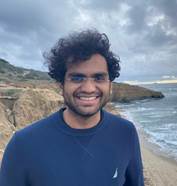
[cid:image002.jpg@01D89A95.A56C4350] BME Summer Seminar Series Wednesday, July 20th, 2022 9:30-10:30AM EST Via Zoom Meeting - link below* Evaluation links: Om Kolhe: https://purdue.ca1.qualtrics.com/jfe/form/SV_9XBGSuWVQakqYiG Julia Walsh: https://purdue.ca1.qualtrics.com/jfe/form/SV_8kofpIjUVQBJAou Integrated CMOS Neural Amplifier for Multiparameter Recording Om Kolhe (K. Jayant, advisor) [cid:image005.jpg@01D89A95.A583EA00] Abstract: Dopamine is one of the most important neurotransmitters in the brain and plays an important role in body functions, including movement, memory, reward and motivation. The role of dopamine in learning and motivation has been vastly studied and it is believed that the 'slow' (tonic) changes in dopamine modulates motivation, and the 'fast' (phasic) fluctuations encodes reward prediction error. However there have not been many studies exploring the role of dopamine in memory consolidation. It is postulated that a ventral tegmental area (VTA)-hippocampus dopaminergic loop controls the entry of information into long-term memory. This dopaminergic loop can be better studied if we can detect how dopamine levels modulate the neural firing patterns of cells in the hippocampus. Thus, we designed and fabricated a multichannel CMOS circuit in TSMC's 180nm technology node, which can perform simultaneous electrochemistry (EChem) and electrophysiological (EPhys) recording in-vivo. The circuit consists of a transimpedance amplifier (TIA) for EChem recording and a neural amplifier for EPhys recording. Both the circuits are chopper stabilized to push the flicker noise corner to 10 Hz thus improving the noise performance at low frequencies. The TIA is a switch capacitor amplifier with configurable gain and can perform constant voltage amperometry as well as fast scan cyclic voltammetry for detection of dopamine at sub-second time scales. The neural amplifier a bandwidth of 5kHz encompassing both local field potentials (LFP) and neural spikes. Our future work aims to fabricate an implantable flexible neural probe which can integrate with the recording circuit. The system will be then implanted in a mouse brain, while the mouse performs reward-based decision tasks in a virtual reality environment. Evaluation and Comparison of Anti-biofouling Coatings for Implantable Biosensors Julia Walsh (H. Lee / S. Harbin, advisor) [https://engineering.purdue.edu/ResourceDB/ResourceFiles/image243540/alter?bo...] Abstract: Biosensors are used in the treatment and diagnosis of a variety of illnesses, including Diabetes and COVID-19. They are a promising part of the treatment of many health conditions that require continuous monitoring. However, despite the growing versatility of these sensors, development of implantable continuous biosensors is limited by short lifetimes. This is largely attributable to fouling with biological molecules and cells as part of the foreign body response. To improve on sensor lifetimes, many groups have created coatings and surface treatments intended to prevent fouling of the surface by biological particles. However, due to differences in the methods used to assess the coatings in these studies, it is impossible to say which approaches work best. Our goal is to carry out standardized testing of a large variety of antifouling techniques to assess which work best to prolong of sensor lifetime and limit immunogenicity. To measure sensor lifetime, we have created a basic enzymatic glucose biosensor that can use amperometry to assess function over time. This technique will be used in combination with cell cultures and in vivo continuous glucose monitoring to measure sensor lifetime under different conditions. To assess immunogenicity, we have been working with the Dunn Lab to carry out intravital microscopy analysis of the coatings we are testing. This technique allows for the real-time monitoring of the immune response to the coatings through microscopy. This technique along with protein assays will be used to assess the interaction of the coatings with biological environments. *Join Zoom Meeting https://purdue-edu.zoom.us/j/92168739019?pwd=cnBOaFBxN3FWVVVTWC8wWWhaekdIdz0... Meeting ID: 921 6873 9019 Passcode: biomedical Liz Rowen She/Her Graduate Program Assistant Weldon School of Biomedical Engineering Martin C. Jischke Hall of Biomedical Engineering 206 S. Martin Jischke Drive West Lafayette, IN 47907-2032 o: 765-494-1197 [7054E290]<https://www.purdue.edu/?utm_source=signature&utm_medium=email&utm_campaign=purdue> -- Bmeroundtable-list mailing list Bmeroundtable-list@ecn.purdue.edu https://engineering.purdue.edu/ECN/mailman/listinfo/bmeroundtable-list