
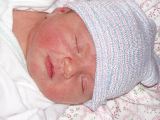
MONDAY MEMO, October 29, 2007 **************** 1. Announcements **************** 1.1: MAKE UP SESSIONS: All-user meetings; Monday, October 29, 6:00PM MRGN 121 and Tuesday, October 30, 6:00PM, MRGN 121. There are a large number of people who missed the all-user meetings for BNC. If you have access key or card to a laboratory or the cleanroom, you were REQUIRED to attend one of these meetings. To assist you in maintaining your access, we have scheduled two makeup sessions. NOTE THAT THESE ARE THE ONLY MAKEUP SESSIONS THAT WILL BE OFFERED. Anyone who has not attended an all-user meeting or one of the makeup sessions will have access to the cleanroom and laboratories REVOKED. To restore access privileges, go to nano.purdue.edu (facilities => operations) and download the slide packet OR view the slides on-line with your advisor (see Step 2); Meet with your advisor and go through the slides that were presented; Print the form that is included with these slides; sign the form and have your advisor sign the form; send or give the form to John Weaver (BRK 1025). Your access will be restored as soon as practical after the form is received. PLEASE NOTE: If you have already attended an all-user meeting, or if you do not have access to the labs or cleanroom, you may disregard this message. 1.2: SUPERUSER MEETING, Friday, November 2, 10:00AM; BRK 2001. The first superuser meeting will be concerning the evaporators and sputterers in the Birck Cleanroom. ALL STUDENTS are invited. 1.3: BLOOD BORNE PATHOGEN TRAINING: Friday, 11.02, 3:00PM, BRK 1099. 1.4: LAB SUPPLIES: We are in the final stages of evaluating new gloves for use in the facility. If you would like to volunteer to test and document the dexterity/comfort/robustness of the new gloves before the official supplier is selected, please email Dave Lubelski (lubelski@purdue.edu). He will issue you a questionnaire and some sample gloves to use for the next few weeks. 1.5: KUDOS: Sabre Kais has been elected a Fellow of AAAS for ³Outstanding creative contribution to theoretical chemistry, particularly the development of a finite size scaling approach to calculate quantum critical parameters for atomic, molecular and quantum dot systems.² 1.6: PRINTING in Birck using one of the copiers: ECN reports that a document is now in place that describes how to connect to the Canon printers (BRK1022, 3220, 128.210.51.245; BRK2020, 5570, 128.210.51.246; and BRK1220, 5570, 128.210.51.244). Visit https://engineering.purdue.edu/ECN/Support/KnowledgeBase/Docs/20051013092900 . Please note, printers at BRK have page accounting turned on, so you must know your access code in order to print via the printers listed above (see secretarial staff for assistance, if you don¹t have a code). 1.7: NanoScienceWorks.org: Purdue and the Birck Center were listed as the ³Featured Institution² October e-newsletter. FEATURED INSTITUTION: Purdue University ³Purdue University is the home of several world-class nanoscience centers and initiatives. Purdue¹s Birck Nanotechnology Center at Purdue leverages advances in nanoscale science and engineering to addressing societal challenges and opportunities in computing, communications, the environment, security, energy independence, and health. Purdue is also the home of the Network for Computational Nanotechnology, and the online nanoHUB portal, which provides tools for simulations, research, and teaching for K-12 and graduate/undergraduate instructors. In the last year, some 5,700 users have run 220,000+ simulations at nanoHUB.² Learn More <http://cts.vresp.com/c/?nanoscienceworks.org/5bf45b960c/b2a58f2419/b2e9617b 0b/searchterm=purdue> . <http://cts.vresp.com/c/?nanoscienceworks.org/5bf45b960c/b2a58f2419/f76c6894 bc/searchterm=purdue> .. <http://cts.vresp.com/c/?nanoscienceworks.org/5bf45b960c/b2a58f2419/59924831 c5> ****************** 2. Seminars / Classes ****************** 2.1: Monday, October 29, 2:30PM; ECE 317: NCN Seminar: ³Plastic Deformation at Micron and Submicron Scales: A MicroMechanics Simulation Tool tutorial,² by Marisol Koslowski, Assistant Professor of Mechanical Engineering, Purdue University. ABSTRACT: Most people experiences the way objects plastically deform on a macroscopic scale. From a car crash to the bending of a paper clip plastic deformation occurs in the form of a smooth flow as a response of an applied stress. But due to the constant shrinking on the dimensions of mechanical devices -such as micro electro mechanical systems (MEMS) and micro electronic interconnects- the notion that plasticity is governed not by a steady flow but by the occurrence of intermittent avalanches of defects moving through the material is gaining increasing attention. To model the deformation of metallic materials at micron and submicron scales a continuum theory of dislocations is derived. We will introduce the MicroMechanics Simulation Tool a dislocation mechanics simulation tool for the prediction of plastic deformation of single crystals. We will show some simulations that show the formation of structures and their influence in macroscopic deformation as for example the dependence on the yield stress on the characteristic size of the sample. BIO: Dr. Marisol Koslowski is an assistant professor of Mechanical Engineering, Purdue University. Previously she was a Technical Staff Member in the Theoretical Division at Los Alamos National Laboratory. She received her B.S. degree in Physics in 1997 from the University of Buenos Aires, Argentina and her M.S in 1999 and her Ph. D. in Aeronautics in 2003 from the California Institute of Technology. Her research interests are the development of theoretical and numerical tools to study the mechanical response of materials and structures, especially at micro- and nano-scales. 2.2: Tuesday, October 30, 1:30PM; MRGN 121: ³International Research and Education Funding Opportunities for Faculty and Students,² by Larry H. Weber, PhD, Office of International Science and Engineering, National Science Foundation. For additional information, please contact Dr. Pankaj Sharma, sharma@purdue.edu; 4-9806. 2.3: 2007 Discovery Lecture Series: Global Business Development in Life Sciences, Thursday, November 8, 9:00AM, Ross-Ade Pavilion. 9:00 Session I Kauffman Campuses Initiative, Best Practices Workshop: ³Skills for Business Development,² by Ted Ashburn, Senior Director of Corporate Development, Genzyme Corporation; ³Skills for Successful Entrepreneurs,² by Michael Kurek, Partner, Biotechnology Business Consultants, LLC 11:30 Luncheon BioCrossroads Keynote, Starting Regionally, Thinking Globally, Business Development, and the Life Sciences: ³Welcome and Opening,² by Alan Rebar, Sr. Assoc. Vice President for Research, Executive Director, Discovery Park, Purdue University; ³Keynote: Biotech 2007: A Global Transformation,² by G. Steven Burrill, CEO, Burrill and Company, moderated by William Miller, Provost Emeritus, Stanford University; ³Technology Commercialization and Purdue University,² by France A. Córdova 2:30 Panel Session Translating Indiana Ideas into Global Successes, moderated by David Johnson, President and CEO, BioCrossroads: ³Importance of Intellectual Property,² by Ted Ashburn; and ³Considering Global Competition When Developing IP in a Startup Environment,² by Roger Newton, Co-Founder, Esperion Therapeutics, a Division of Pfizer Global Research & Development This event is free and supported by the generosity of the Lilly Endowment and the Kauffman Foundation. Registrations will be accepted on a first-come, first-serve basis. Questions may be directed to: Lori LeRoy, Public Relations and Marketing Director, Biocrossroads, at lleroy@biocrossroads.com; or Candiss B. Vibbert, Associate Director for Discovery Park Engagement, at vibbert@purdue.edu. Please register today: www.purdue.edu/dp/dls/register.html 2.4: Spring 2008 Course Announcement: ME/CHE 517, ³Micro/Nanoscale Physical Processes,² Professors Gil Lee (ChE) and Steve Wereley (ME); Tuesdays and Thursdays 9:00-10:15am Objective: You will learn how physical behavior changes as system size is decreased to the micrometer and nanometer length scales. You will determine when to expect processes to behave differently than at traditional macroscopic length scales and how to use these behavior differences to accomplish innovative tasks at microscopic length scales. This will include the use numerical tools (such as ANSYS and Matlab) to study these systems and predict their behavior. Description: This class will prepare engineers and scientists to address problems they will encounter when studying physical phenomena commonly encountered in Nanotechnology and Micro-Electromechanical Systems. The course will provide the student with the tools to analyze mechanics, dynamics, electricity and magnetism, optics, surface phenomena, fluid dynamics, heat transfer, and mass transfer problems at the micrometer scale and below. Atomic force microscopes (AFM), MEMS, and microfluidic systems will be analyzed quantitatively using the ANSYS or equivalent analysis packages. Prerequisites: Students should be of advanced undergraduate or graduate standing; have had experience at the undergraduate level with: statics, dynamics, electricity and magnetism, fluid dynamics, heat transfer, and mass transfer; and be capable of independent work. 2.5: Spring 2008 Course Announcement: ME595W, ³Fundamentals of Particle Image Velocimetry,² Professor Steve Wereley (ME); Tuesdays 12:30PM, ME 204; one-credit hour Particle image velocimetry (PIV) and related techniques such as micro-PIV are quickly becoming the standard tools for measuring fluids and fluid-like materials in motion because of their utility in exploring complex flows such as the microflow around a human red blood cell (below left) and a wavy Taylor vortex (below right). This one credit hour course will expose students to the wide variety of flows and flow parameters that can be measured with this versatile technique. The course will focus on the scientific principles underlying the PIV techniquefluid dynamics, particle dynamics, lasers, optics, imaging, etc.as well as the practical application of these principles to reach an in-depth understanding of the technique including its advantages over competing techniques, its limitations, and its future potential. When finished with the course, students will have attained a level of expertise at which they can analyze a particular flow and determine the optimal parameter space for investigating that flow: algorithm choice, particle size, time between exposures, imaging format, magnification, etc. Students will be exposed to several of the popular commercial particle image velocimetry packages in addition to writing their own basic software. Several advanced topics such as microscopic PIV, stereo PIV, and 3D velocity measurements will be covered. Course grades will be based on approximately weekly assignments and a single final project to be presented orally near the end of the semester. ******************** 3. Birck Visitors ******************** 3.1: Tuesday, October 30, 1:30PM: First-Year Engineering Seminar Students. 3.2: Wednesday, October 31, 10:30AM: CHM115S class tour group; Prof. Chitta Das. 3.3: Thursday, November 1, 4:00PM: Purdue Student Pugwash. 3.4: Friday, November 2, 10:45AM: University of Belgium visitors. 3.5: Friday, November 2, 1:45PM: PULSe Program tour 3.6: Saturday, November 3, 2:00PM: Purdue Collegiate 4-H group. ******************** 4. Funding Opportunities ******************** 4.1: NineSigma Request, RFP# 50591-1, ³Clutch Wear Sensing²; a Fortune 100 company, invites proposals for the design and development of a sensing technology for wear detection in a clutch assembly for automatic transmission systems. The final submission date for Proposal Abstracts is November 16, 2007. More information is available in the Request for Proposal (RFP) document online at http://www.ninesigma.com/mx/50591-1 <http://www.ninesigma.com/mx/50591-1> . If after reviewing the full RFP document you are interested in submitting a proposal or would like more information, please contact Irina Shiyanovskaya (phd@ninesigmainc.com) by email and reference RFP# 50591-1 in the subject line. (Birck contact: Yong Chen) ******************** 5. One Purdue ******************** 5.1: Have you begun using One Purdue to place orders? Check with your home departments to be sure that you have been given access to use the SRM system. Purchasing Services is conducting SRM Requisitioner Hands-on Workshops on Tuesdays and Thursdays beginning immediately through November 15th. Each workshop is two hours long. The first workshop will be from 8-10 am and the second from 10-12 pm. The workshops will be held in the Business Services Training Room in FREH (located on the first floor behind the reception area). This workshop is intended to aid Requisitioners (that would be anyone interested in placing an order) in ordering through SRM. The first 30 minutes will be a presentation of tips and tricks, including setting default ship-to information, using vendor lists, proper procedures for identifying pricing, and more. The remaining time will be spent entering live orders with the assistance of Purchasing Services staff. Please bring orders to enter during the workshop. All sessions are the same material, you only need to attend one session. Space is limited, so please register as soon as possible. To register: go to: www.itap.purdue.edu/training <http://www.itap.purdue.edu/training/ <http://www.itap.purdue.edu/training/> >; click on the header ³OnePurdue² (about three-quarters down the right column); all the showcases and workshops currently available for enrollment will appear; when the you click on ³Register Now,² you will be prompted to log in with your Career Account user ID and password. You will then be asked to verify your name, e-mail address and phone number. Click on the ³Submit² button. Several things will then happen: * Your registration will be confirmed on the screen, including the date, time and training location. * Click on a ³Download² icon to add the event to your Outlook calendar. * An e-mail confirmation will be sent to you. This system maintains an automated waiting list for each class. If a class section is full, you may choose to be added to its waiting list. If registered people cancel, you will automatically be bumped, (in the order of the waiting list) into the vacant seats. You will be sent an e-mail confirmation, so it's important that you cancel your registration if you are unable to attend. 5.2: OnePurdue town halls to address student systems: Faculty and staff are invited to attend a OnePurdue Student System Town Hall meeting to learn how OnePurdue will affect the financial aid, bursar/student accounts, admission, and registrar business processes and systems. The November town halls will be held in Fowler Hall, Stewart Center, on the West Lafayette campus as follows: Nov. 5. 1-3PM and Nov. 15. 10AM-noon. Questions regarding the OnePurdue Town Hall should be sent to Adedayo Adeniyi, OnePurdue Director of Change Management & Communications, at aadeniyi@purdue.edu. (http://www.purdue.edu/onepurdue). ******************** 6. Life on the Outside ******************** 6.1: Family increases by one J: John Coy is the proud papa of Abigail Barbara who entered this world on Tuesday, 10.23 at 1:57PM weighing in at 6 lbs and 14 ounces. She¹s a full 19 inches tall. Deborah S. Starewich Administrative Assistant to Timothy D. Sands, Director Birck Nanotechnology Center Purdue University 765-494-3509 dstarewi@ecn.purdue.edu http://www.nano.purdue.edu/
participants (1)
-
 Deborah Starewich