
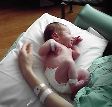
MONDAY MEMO, MARCH 26, 2007 CONTENTS 1. Announcements 1.1: BNC All User Make Up Meetings: Wednesday, 03.28, 8:00am or Thursday, 03.29, 8:00am, BRK 1001. 1.2: Birck Annual Symposium of Research Programs: information update 1.3: HOLD THE DATE: Thursday, April 26, 11:00, MRGN 121, ³Microscale Platforms for Applications in Global Health Diagnostics,² by Dr. Bill Rodriguez, Assistant Professor of Medicine, Harvard Medical School 2. Faculty/Staff/Student Awards and Honors 2.1: NONE 3. Seminar Announcements 3.1: Monday, March 26, 6:00pm, EE 170: ³GE Healthcare Industry Presentation² 3.2: Monday, March 26, 8:00pm, Krannert Auditorium: ³Coming Together to Debate and Deliver on the Challenges Confronting the World,² by Archbishop Celestino Migliore 3.3: Wednesday, March 28, 2:00pm, EE 317: ³Molecular Interferometry,² by David Nolte, Physics Department; NCN/INAC 501 Tutorial 3.4: Thursday, March 29, 10:30am, BRK 1001: ³Nitride Metal/Semiconductor Multilayers and Superlattices for Solid State Thermionic Energy Conversion,² by Vijay Rawat, doctoral candidate, Materials Engineering, Purdue University 3.5: Friday, March 30, 10:30am, BRK 2001: ³III/V Nanowires for Nanoelectronics,² by Werner Prost, University of Duisburg-Essen 3.6: Friday, March 30, 3:30pm, MSEE B012: ³Interface Properties from Their Equilibrium Fluctuations,² by Moneesh Upmanyu, Colorado School of Mines 4. Workshops/Conferences 4.1: College Teaching Workshops: from Center for Instructional Excellence . . . Once again, staff will present the entire CTW-1 series over three days in May. In addition, the popular ³Presentation Techniques² session will be repeated in April. These sessions are designed to improve the teaching skills of Purdue faculty, staff, and graduate teaching assistants. To register online for any or all of the sessions, visit: http://www.cie.purdue.edu/workshop/register/index.cfm 5. Job/Fellowship opportunities 5.1: None 6. Life on the Outside 6.1: Prof. Ziaie welcomes new family member **************** 1. Announcements **************** 1.1: BNC All User Make Up Meetings: Wednesday, 03.28, 8:00am and Thursday, 8:00am, BRK 1001. Make up meetings are scheduled for BNC¹s once-per-semester all-user. If are a user of the cleanroom and/or laboratories, it is imperative that you attend a User Meeting. If you did not attend one of the earlier held meetings (March 19 or 20) and you do not attend one of these make up meetings, you will lose your access privileges. 1.2: Birck Annual Symposium of Research Programs: information update If available, please plan on attending the presentations describing projects, people, and capabilities enhanced by research performed in the Birck Center (MRGN 121; 3:00). Presenters include Profs. Rasid Bashir; Vlad Shalaev; David Janes; Ron Reifenberger, and Tim Fisher. Be sure that your poster has been hung in the building or is ready for display on an easel on Monday, April 2, 2007 by 2:00PM [TIME CHANGED]. For work that is complete, consider preparing it for hanging somewhere in the building (think about best location); if your work is in progress, we can still hang it but it might be best to present it on an easel. Both options are available. If you¹ve missed the powerpoint templates, let me know; I¹ll send them to you again. There are now several printed samples on display in the building; i.e., near the Surface Analysis Lab (across from the kitchen); upstairs as you enter from Bindley; downstairs near the AFM lab. Print your posters (FOR FREE!) in the Morgan Entrepreneur building (corner of State and Intramural; upstairs about halfway down the hall, on the left; I believe the room is 261) -- it¹s a computer lab; sign in with your ecn account and print from powerpoint (there are instructions there). Parijat Deb has printed there, you may ask him how easy it is. I¹m creating a ³brochure² for our event, please let me know the title and authors of your posters when possible. Poster session will run concurrently with the Discovery Park Advisory Council reception. Please be available at your poster to answer questions from 5:30 until 7:30 (dress: casual business). We will hold a reception for participants at 7:30 UPSTAIRS Atrium area. As this event is a ³dry run² for our first external advisory committee meeting (to be held next year at the time), we welcome all comments or suggestions. 1.3: HOLD THE DATE: Thursday, April 26, 11:00, MRGN 121, ³Microscale Platforms for Applications in Global Health Diagnostics,² by Dr. Bill Rodriguez, Assistant Professor of Medicine, Harvard Medical School. Of the 40 million people living with HIV infection worldwide, fewer than 10% are aware that they¹re infected. Fewer than 500,000 have access to the blood tests (CD4 cell counts and HIV RNA levels) essential for effective treatment. Of the 5,000 people dying each day from tuberculosis, half are undiagnosed; the best available test for diagnosing TB the light microscope was invented 350 years ago. Diagnostic tests for other major global diseases dengue, malaria, typhoid fever, diarrhea are equally unusable in resource-limited settings, like sub-Saharan Africa, where the global burden of disease rests. Can advances in microfabrication, microfluidics, MEMS, and biosensing be applied to the development of diagnostics for these diseases? Can they be made into truly point-of-care diagnostic products, against unforgiving specifications? We have applied these technologies to global health, and made progress in point-of-care devices for CD4 cell counting, HIV RNA measurement, and TB diagnosis. A review of the biological, technical, product development, intellectual property, funding, and commercialization challenges to unleashing the potential of bioengineering methods to have a major impact on global health will be presented. **************** 2. Awards/Honors **************** 2.1: None ************************ 3. Seminar Announcements ************************ 3.1: Monday, March 26, 6:00pm, EE 170: ³GE Healthcare Industry Presentation,² by Ananth Mohan; FREE Fu Lam Chinese Food. Bring an updated resume 3.2: Monday, March 26, 8:00pm, Krannert Auditorium: ³Coming Together to Debate and Deliver on the Challenges Confronting the World,² by Archbishop Celestino Migliore Archbishop Migliore has a Master¹s Degree in Theology and a Doctorate in Canon Law. After graduating from the Pontifical Academy for Ecclesiastical Diplomacy, he joined the Holy See¹s diplomatic service. He served in Angola as attaché and second secretary to the Apostolic Delegation; as alternate Observer to the Organization of American States; as Apostolic Nunciature in Egypt and Warsaw, Poland; and as the Permanent Observer of the Holy See to the Council of Europe in Strasbourg, France. In 1995, he was appointed Under-Secretary of the Section for Relations with States of the Secretariat of State at the Vatican, where he also fostered relations with several Asian countries without formal diplomatic relations with the Holy See, traveling to Beijing, Hanoi, and P¹yongyang as Head of Delegation of the Holy See. In 2001, he led the Delegation of the Holy See to the United Nations Conference on Illicit Trade in Small Arms and Light Weapons and to other conferences, symposia and panels held in various European capitals on issues related to the World Trade Organization, the Economic Commission for Europe, the European Union, and the Middle East. In 2002, His Holiness Pope John Paul II nominated Archbishop Migliore as Apostolic Nuncio and Permanent Observer of the Holy See to the United Nations in New York. Archbishop Migliore has given numerous statements at the United Nations on a wide range of current issues and has delivered many addresses at conferences, colleges, and universities. 3.3: Wednesday, March 28, 2:00pm, EE 317: ³Molecular Interferometry,² by David Nolte, Physics Department; NCN/INAC 501 Tutorial ABSTRACT and BIO not available for this announcement. 3.4: Thursday, March 29, 10:30am, BRK 1001: ³Nitride Metal/Semiconductor Multilayers and Superlattices for Solid State Thermionic Energy Conversion,² by Vijay Rawat, doctoral candidate, Materials Engineering, Purdue University ABSTRACT: The recognition in the 1990¹s that nanostructured materials have the potential to significantly enhance the performance of solid-state energy conversion devices prompted an increase in research activity that has been bolstered recently by the current energy/global warming crisis. Thermoelectricity is a type of solid state energy conversion process where the thermal gradient across a bulk material is used to generate electrical power. Thermoelectric devices are potentially applicable in multiple areas such as waste heat recovery systems for automobiles and power plants, steam-free powering of naval vessels, thermal management in integrated chips and terrestrial power generators employing concentrator solar cells. Although much work has been done on development of bulk and thin-film nanostructured thermoelectric materials, these material are not yet efficient enough to compete with conventional power generators. Recently, a different approach for thermal-to-electrical energy conversion was proposed that utilizes thermionic transport in metal-semiconductor multilayers or superlattices with nanoscale periods, unlike the diffusive transport in conventional thermoelectrics (Mahan et. al., PRL (1998), Shakouri et. al. APL (1997)). Subsequent theoretical work showed that cross-plane transport through such metal/semiconductor superlattices has the potential to yield values of the figure-of-merit that are much higher than those of currently available thermoelectric materials. The primary challenge involved in realizing a solid-state thermionic energy converter is selecting materials suitable for fabrication of stable superlattices with a high degree of crystalline order. The integration of materials with disparate electrical and physical properties in superlattices with nanoscale periods requires consideration of several aspects of materials compatibility, including a) the similarity in crystal structures and lattice parameters necessary to initiate and sustain superlattice growth, b) the thermodynamic stability of the constituent materials at high operating temperatures required for thermionic generators (hot side temperatures of 300 to 650°C), and c) comparable surface and interfacial energies to maintain a Frank-van der Merwe (i.e. layer-by-layer) growth mode. Considering all these constraints, we have identified TiN/GaN and ScN/ZrN as two potential material systems and in this presentation, I will discuss the suitability of these materials for thermionic energy converters. I will also present the preliminary structural, thermal and electrical measurements of these material systems. BIO: Vijay Rawat is a doctoral candidate in Materials Engineering at Purdue University and has been working with Prof. Tim Sands since 2004. He received his Bachelor of Technology in Metallurgical and Materials Engineering from Indian Institute of Technology, Kharagpur (India) in 2001, and his MS in Materials Engineering from Purdue University in 2003. 3.5: Friday, March 30, 10:30, BRK 2001: ³III/V Nanowires for Nanoelectronics,² by Werner Prost, University of Duisburg-Essen ABSTRACT: The vapor-liquid-solid growth mode provides high quality crystals wires at the diameter of the nanoscaled seed element. This approach offers the growth of highly mismatched materials due a gradual lattice constant matching of substrate to the wire material. This talk addresses promising combinations of III/V materials to standard substrates like GaAs, InP and Silicon. Moreover, both electronic and optoelectronic will be presented exhibiting already high performance, i.e. the transconductance of InAs FET in excess of 4 S/mm exceeds any other III/V or silicon based approach. Finally, the challenge of integration technologies for a future monolihtic implementation in large scale circuits will be addressed. BIO: Werner Prost is member of the technical staff at the University Duisburg-Essen. He received the PhD degree in electrical engineering from Duisburg University in 1989. His main interest is to contribute to the development of electronic- and optoelectronic devices at the nanoscale for communication technology by means of advanced heterostructure technology. He has (co-)authored more than 170 papers in scientific journals and conference proceedings. Prost is a member of the Center of Excellence SFB 445 ³Nanopartikels from the Gas phase² and of the Priority Program SPP 1165 ³Nanowires and Nanotubes,² the ³German Crystal Growth Association,² and an overseas member of the technical group on electron devices of the Japanese Institute of Electronics, Information and Communication Engineers. 3.6: Friday, March 30, 3:30pm, MSEE B012: ³Interface Properties from Their Equilibrium Fluctuations,² by Moneesh Upmanyu, Colorado School of Mines ABSTRACT: Thermodynamic and kinetic properties of interfaces play a central role in the interplay between growth and form of interfacial microstructures. Due to the limitations associated with accessible spatio-temporal scales in experiments and also in atomic-scale simulations, extracting these properties has been challenging. In this talk, I will present our recent work on theoretical frameworks and associated computational techniques aimed at extracting equilibrium interface properties, mainly their mobility and stiffness, from their fluctuations. The generality of this technique combined with inherent spatio-temporal efficiency permits extraction of interface properties in wide range of material systems. As validation, I will present results on homophase interfaces, or grain boundaries in pure aluminum. The misorientation and temperature dependence properties indicate a structural coupling between these properties that sets the overall anisotropy of the grain boundary properties. Extension of the techniques to include the effect of impurities provides for the first time a direct measure of the impurity drag effect. Ongoing theoretical analyses will be presented, which require extension of classical Brownian motion of particles to that in a binary medium. Implications for microstructural evolution during annealing phenomena will be discussed. BIO: Dr. Moneesh Upmanyu was born in Bombay, India, and received his B. Tech. degree in Metallurgical Engineering and Materials Science from the Indian Institute of Technology, Bombay, in 1995, and Ph.D. degree in Material Science & Engineering with a minor focus in Computational Materials Science from the University of Michigan in 2001. He was also a visiting Graduate Student and then a Postdoctoral Research Fellow in the Mechanical and Aerospace Engineering Department and (then) Princeton Materials Institute at Princeton University. Following that, he spent a year as a Postdoctoral Research Scientist in the Computational Materials Science Division at Oak Ridge National Laboratory before accepting a position as an Assistant Professor in the Engineering Division and the Materials Science Program at Colorado School of Mines in Fall 2002. He heads the Group for Simulation and Theory of Atomic-scale Material Phenomena (stamp) and is now also affiliated with the Bioengineering and Life Sciences Program within the Engineering Division. Dr. Upmanyu¹s research is aimed at exploring atomic-scale phenomena using computational techniques and theoretical frameworks in several classes of material systems, both in nature and technology. His interests range from interfacial phenomena in polycrystalline microstructures, structure-morphology-property relations in thin films and wires, and atomistics, mechanics & self-assembly of semi-flexible filamentous aggregates as well as their networks in biology and technology. Targeted material systems include grain boundary microstructures in crystalline materials, metallic and semiconducting thin films, inorganic nanowires, nanotubes and their assemblies, and soft filamentous assemblies such as DNA, twisted protein aggregates, and their networks. His group¹s principal expertise is in computational techniques such as molecular dynamics and Monte-Carlo based methods and their links with continuum methods such as phase field and finite-element methods as well as meso-/continuum theoretical frameworks. Dr. Upmanyu is the recipient of several awards including the Graduate Student Medal (Materials Research Society) and the Outstanding Young Scientist Award (Recrystallization & Grain Growth Congress). He is a member of the Materials Research Society (MRS), The Minerals, Metals and Materials Society (TMS), The American Physical Society (APS), The American Society for Metals (ASM) and Society for Industrial and Applied Mathematics (SIAM). ************************ 4. Workshops/Conferences ************************ 4.1: College Teaching Workshops: from Center for Instructional Excellence . . . Once again, staff will present the entire CTW-1 series over three days in May. In addition, the popular ³Presentation Techniques² session will be repeated in April. These sessions are designed to improve the teaching skills of Purdue faculty, staff, and graduate teaching assistants. To register online for any or all of the sessions, visit: http://www.cie.purdue.edu/workshop/register/index.cfm ******************************** 5. Fellowship/Job Opportunities ******************************** 5.1: None ******************************** 6. Life on the Outside ******************************** 6.1: Prof. Ziaie welcomes new family member Keyon Andrew Ziaie, born 03.15, 12:19PM, weighing in at 7 pounds, 10 ounces and measuring 20 inches long Deborah S. Starewich Administrative Assistant to Timothy D. Sands, Director Birck Nanotechnology Center Purdue University 765-494-3509 dstarewi@ecn.purdue.edu http://www.nano.purdue.edu/
participants (1)
-
 Deborah Starewich