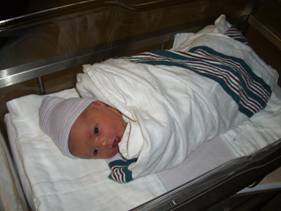
MONDAY MEMO, APRIL 9, 2007 CONTENTS 1. Announcements 1.1: Blood Borne Pathogen Training: Friday, April 13th from 3-4 PM in BRK 1099. 1.2: REMINDER: Cleanroom Preventive Maintenance, May 1-2, 2007 1.3 : Spring Fling: May 16; plan now to join the volleyball tournament 2. Faculty/Staff/Student Awards and Honors 2.1 3. Seminar Announcements 3.1: Tuesday, April 10, 1:00 pm, Lawson 3102AB: "ChemXSeer: A Digitial Library for Chemical Kinetics Data and Scientific Literature," by Prasenjit Mitra, Assistant Professor, College of Information Sciences and Technology, Pennsylvania State University 3.2: Wednesday, April 11, 2:00 pm, EE 317: "Sugar: The Spice for MEMS," by Jason Clark, Assistant Professor, Schools of Electrical and Computer Engineering and Mechanical Engineering, Network for Computational Nanotechnology, Purdue University 3.3: Thursday, April 12,10:30 am, BRK 1001: "Selecting Your Career," presented by NSAC 4. Workshops/Conferences 4.1 5. Job/Fellowship opportunities 5.1 6. Life on the Outside 6.1: Baertsch Kovalchick family expands by one J 6.2: March of Dimes bake sale: Wednesday, April 11 **************** 1. Announcements **************** 1.1: Blood Borne Pathogen Training: Friday, April 13th from 3-4 PM in BRK 1099. This session is limited to 10 participants; alternate training can be coordinated with Paula Vitello at REM. 1.2: REMINDER: Cleanroom Preventive Maintenance, May 1-2, 2007 Per Mark Voorhis, a shut down of cleanroom operations has been scheduled for 48 hours to complete a six-month preventive maintenance procedure. A shutdown of cleanroom operations will begin on Tuesday (1-May-07) at 7:00 AM and will be completed by Wednesday (2-May-07) at 5:00 PM. Maintenance is required for our cleanroom makeup air handlers, chemical exhaust, and ultra pure water systems. Please note that the ultra pure water will be shut down for the entire building. We will also complete cleanroom troubleshooting to improve temperature repeatability during this time. Since the chemical exhaust system will be shut down please remove chemicals from all hoods in the cleanroom prior to the shutdown. If not removed, the lab staff will dispose of them for you. Thank you for your understanding and patience during this necessary procedure. If you have any questions or concerns please Mark Voorhis (mvoorhis@purdue.edu) 1.3: Spring Fling: May 16; plan now to join the volleyball tournament. Spring Fling is on May 16th this year. We will be putting together a team again to play in the volleyball tournament. Please respond and let me know if you would be interested in playing on the team. This year graduate students are able to play. So if we have enough interest we can put a couple of teams together. We will possibly have a few practices after work at Riehle Bros!! Volleyball and beer!! How can you say no???? CONTACT Janessa Drake for additional information (drake1@purdue.edu). **************** 2. Awards/Honors **************** ************************ 3. Seminar Announcements ************************ 3.1: Tuesday, April 10, 1:00 pm, Lawson 3102AB: "ChemXSeer: A Digitial Library for Chemical Kinetics Data and Scientific Literature," by Prasenjit Mitra, Assistant Professor, College of Information Sciences and Technology, Pennsylvania State University ABSTRACT: Scientists have digital documents and experimental data that they want to publish, link, and share. ChemXSeer is an ongoing project that aims to establish a digital library for documents and data related to chemical kinetics. This talk will introduce the architecture and algorithms deployed for the following components: (a) Chemical Entity Search: The tool identifies chemical formulae and chemical names, disambiguates the terms from other general terms using hierarchical Conditional Random Fields, and tags them. Novel similarity scores, ranking functions and search methods are introduced to enable searching for chemical entities; (b) TableSeer: This tool automatically identifies tables in digital documents and extracts the contents in the cells of the tables. The contents are stored in a queryable table in a database. TableSeer extracts table metadata, and uses a novel ranking function to search for tables relevant to user queries; (c) Databases: Our data repository contains experimental data obtained from various sources. Our tools can process, store and link data in multiple formats, e.g., Excel, XML, Gaussian, and Charmm. A metadata ad-on can help annotate the data and link multiple datasets. The metadata is then used to link the data to published articles allow the end-user to search for relevant data. The talk will briefly cover our efforts on novel focused crawling algorithms and query expansion to enhance search and rewriting techniques to utilize the limited resources available at hand and to enhance the quality of the search respectively. BIO: Prasenjit Mitra is an assistant professor at the College of Information Sciences and Technology at the Pennsylvania State University. He received his PhD in Electrical Engineering from the database group at Stanford University in 2004. Prior to that, he had received a Master of Science degree in Computer Science at The University of Texas at Austin in December 1994. His Bachelor of Technology (with Honors) degree in Computer Science and Engineering was received from the Indian Institute of Technology, Kharagpur in May, 1993. From 1995, he was a senior member of the technical staff at the Server Technologies division at Oracle Corporation in Redwood Shores, CA for five years developing database management systems software. He also held a position as a senior engineer at Narus, Inc. and DBWizards working on database applications. Dr. Mitra's research interests are in database systems, digital libraries, information retrieval, and web information systems. He is especially interested in scalable information integration from large data sources in distributed settings and making data and information on the world-wide-web easily processable by machines. 3.2: Wednesday, April 11, 2:00 pm, EE 317: "Sugar: The Spice for MEMS," by Jason Clark, Assistant Professor, Schools of Electrical and Computer Engineering and Mechanical Engineering, Network for Computational Nanotechnology, Purdue University ABSTRACT: In this seminar, I present some design, modeling, and simulation features of a computer aided engineering tool for microelectromechanical systems (MEMS) called SUGAR. For experimental verification, I use a microdevice that is difficult to simulate with conventional MEMS software. I show that the relative errors of the lumped models are less than 3% of finite element analysis; that the computational costs are much less than 1% of finite element analysis; and that simulation fairly agrees with experiment. Features of SUGAR include: a flexible SPICE-like netlist language for MEMS design; a simple modeling framework for computationally efficient lumped models; an extensible architecture to which users can add features; and the ability to display 3D circuits together with deflected electromechanical structures. Since SUGAR is programmed in MATLAB, a multitude of commonly used functions and 3rd-party toolboxes may be used with SUGAR at once. Such attributes facilitate the exploration of design spaces and feature modifications. BIO: Jason Clark is an Assistant Professor of Electrical and Computer Engineering, and of Mechanical Engineering, at Purdue University. He is a faculty member of the Birck Nanotechnology Center, and of the Network for Computational Nanotechnology. Dr. Clark received his Ph.D. in Applied Science from the University of California at Berkeley, fall 2005. His CAD/E efforts lead to one of the first nodal analysis software packages for MEMS, called SUGAR. And his micro-metrology efforts lead to the first comprehensive on-chip methods for measuring micro-scale geometry and material properties, called electro micro-metrology (EMM). Prior to professorship, he held positions at Lawrence Livermore National Lab, Berkeley National Lab, Berkeley Biomedical Microdevices Center, Berkeley. 3.3: Thursday, April 12,10:30 am, BRK 1001: "Selecting Your Career," presented by NSAC Come consider whether you'd like to work in industry, a government lab, or academia. Each graduate student will need to decide what type of career is most appealing as full-time employment is pursued upon graduation. A panel discussion with faculty whom have experience in industry and government labs in addition to academia will be available to answer questions on this very valuable topic. Included will be an introduction to the panel members; faculty from several different disciplines; a brief overview of the career fields to be discussed (industry, government labs, and academia); plenty of open question time to address important issues. If you would like a specific topic/question included in the dialogue, you may bring it with you to the seminar, or send it to Brian Iverson ( biverson@purdue.edu <mailto:biverson@purdue.edu> ). ************************ 4. Workshops/Conferences ************************ 4.1 ******************************** 5. Fellowship/Job Opportunities ******************************** 5.1 ******************************** 6. Life on the Outside ******************************** 6.1: Baertsch Kovalchick family expands by one J Our Chelsey Baertsch announces the birth of her daughter, Scarlet Dru Baertsch Kovalchick on March 22. 6.2: March of Dimes bake sale: Wednesday, April 11. The business office will have a bake sale to raise funds for the March of Dimes. Buy and eat goodies and support a worthy cause at the same time.