[Bmeroundtable-list] BME Weekly Roundtable - Monday, January 8, 2024

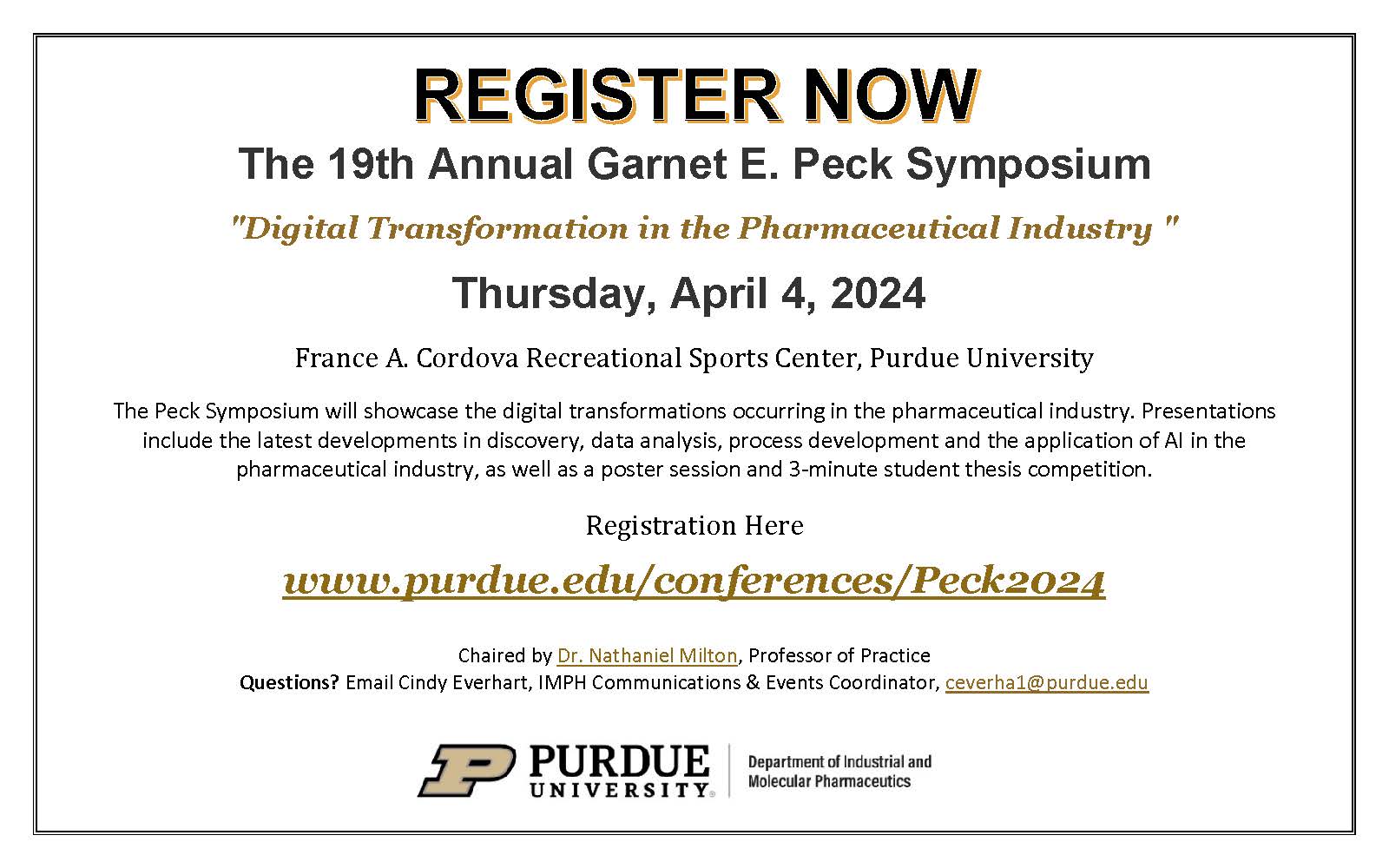
[cid:image001.jpg@01DA4221.8CEC6EB0] BME WEEKLY ROUNDTABLE January 8, 2024 INTERIM HEAD’S NOTE Good Moring, everyone! Welcome back. I hope you had a great winter break. I had a rather relaxing one, taking my family to the Florida Keys between Christmas and New Year’s and attending the New Year Celebration on he New Year’s Eve in Tampa, FL. What caps this break is going through the final week of the NFL regular season to witness that my beloved Pittsburgh Steelers made the playoffs. The excitement in my household will last at least one more week. 😊 Congratulations to all the NFL fans in our department who are still in the hunt for the Super Bowl LVIII Championship. How about the Purdue Men’s basketball and how many weeks they have been ranked No. 1 in the nation! As we come into the conference games, more excitement is on the horizon. I wish for everyone to have a productive and successful Spring semester. * I personally would like to focus on promoting the recognition of excellence of our students. Please let me and Rhonda Jones (rwjones@purdue.edu<mailto:rwjones@purdue.edu>) know if they have received any external recognition. Internally, I will pay attention to the announcements about their research seminars, preliminary examinations, and thesis defenses, among others. I will highlight some in this section. Please review the Three Minute Thesis Competition; more details presented later in this email. * I would also like to promote external recognition among our faculty, staff, and alumni, and simply celebrate their achievements with social events. Here are a few opportunities: * MIT Technology Review Innovators Under 35 List Candidates – 2024 Cycle, https://www.innovatorsunder35.com/about/<https://nam04.safelinks.protection.outlook.com/?url=https%3A%2F%2Fwww.innovatorsunder35.com%2Fabout%2F&data=05%7C02%7Cbmeroundtable-list%40ecn.purdue.edu%7C7c235bf1c26c4595a89908dc1062ffa5%7C4130bd397c53419cb1e58758d6d63f21%7C0%7C0%7C638403264656568063%7CUnknown%7CTWFpbGZsb3d8eyJWIjoiMC4wLjAwMDAiLCJQIjoiV2luMzIiLCJBTiI6Ik1haWwiLCJXVCI6Mn0%3D%7C3000%7C%7C%7C&sdata=EZQp4CV8HTq0OQE06YDuDt%2Fk4Q4Mvp5px3PsPsPI8m4%3D&reserved=0>. Your name suggestions are welcome. * The nominations for the Purdue Engineering 38 by 38<https://engineering.purdue.edu/Engr/People/Awards/Institutional/38-38> awards are due January 31. It is vital to engage young alumni with Purdue Engineering as we seek to build lasting relationships and foster a culture of involvement with our students, faculty, and initiatives. The 38 by 38 ceremony will be held the evening of October 17, 2024, followed by a day of honorees visiting with the academic units and a networking event hosted by the College. * A Purdue CoE 150th event featuring a celebration of our Weldon School. It is tentatively scheduled on Nov. 15th, 2024. The college has an event organizing team. If you are interested in contributing, please let me know. Your ideas and suggestions are welcome. * I will continue to work with the leadership team to take a deep dive into issues related to our teaching assignment and research incentivization. For these issues, we will utilize monthly faculty meetings. I am also glad to announce that there will be a mini retreat right after the submission of final grades for the entire faculty and staff. * We will continue to facilitate the IUPUI integration this semester. Several of the Indianapolis faculty attended our last faculty meeting in the Fall. We shall see them more this semester as the situation gets more settled. The integration has gotten into many detailed discussions at the operational level. I encourage you to actively participate in this process. Good luck in the new semester! UPCOMING IMPORTANT DATES Week of January 8 Mon., Jan. 8: SLHS Weekly Seminar, 12:30 p.m., LYLE 1160. Soo-Eun Chang, Associate Professor of Psychiatry at the University of Michigan will present “Neurodevelopmental markers of stuttering persistence and recovery.” Wed., Jan. 10: BME Distinguished Seminar Series, 9:30 a.m., MRGN 121 (NOTE LOCATION CHANGE) or via zoom. Jason W. Allen, MD, PhD, FACR, Eugene C. Klatte Professor and Chair of Department of Radiology and Imaging Sciences, Indiana University School of Medicine will present “Cryptogenic Strokes Unveiled by Biomedical Engineering Approaches.” Thurs., Jan. 11: Seminars in Hearing Research, 12:00 p.m., LYLE 1160. Jane Mondul, Postdoctoral Research Fellow, Johns Hopkins University School of Medicine will present “Effects of Sound Experience on the Olivocochler Efferent System and Hearing in Noise.” Thurs., Jan. 11: Wells Center Seminar Series, IUSM Center for Diabetes and Metabolic Diseases, 12:00 p.m., R4-101 (Indianapolis) and via Zoom. Richard Oram, MD, PhD, Associate Professor Diabetes UK, Harry Keen Fellow, University of Exeter will present “Can we predict the Future? Utility of polygenic scores for prediction of T1D and other autoimmune diseases.” Zoom link: iu.zoom.us/j/88362778007 Password: 910856. Virtual Workshop Series on Mastering Grant Writing Tommy Sors, Director of Scientific Strategy and Relations, invites you to elevate your research potential by registering to be part of our exclusive workshop series, meticulously designed to guide you through the competitive landscape of NIH funding and the art of grant writing. Each session builds on the next, so you want to make sure to catch all sessions because they offer the knowledge and tools to craft winning proposals. Sessions ran on Thursdays from 2:00-3:00 p.m. November 30 – December 14 and will continue Tuesdays 10:00-11:00 a.m. January 9-Feb. 13. Register at https://purdue.ca1.qualtrics.com/ife/form/SV_01WMuhATStggQOW<https://nam04.safelinks.protection.outlook.com/?url=https%3A%2F%2Fpurdue.ca1.qualtrics.com%2Fife%2Fform%2FSV_01WMuhATStggQOW&data=05%7C02%7Cbmeroundtable-list%40ecn.purdue.edu%7C7c235bf1c26c4595a89908dc1062ffa5%7C4130bd397c53419cb1e58758d6d63f21%7C0%7C0%7C638403264656724431%7CUnknown%7CTWFpbGZsb3d8eyJWIjoiMC4wLjAwMDAiLCJQIjoiV2luMzIiLCJBTiI6Ik1haWwiLCJXVCI6Mn0%3D%7C3000%7C%7C%7C&sdata=CdePMYliFqBvtrrvihCTHGvkKFzZZP7FWExCcH3YWdc%3D&reserved=0> ACADEMIC PROGRAMS UPDATE Faculty, did you know there’s a quick and easy way to record and post your lectures? If not, look into BoilerCast. Students may view the BoilerCast recordings in the Kaltura Media Gallery of their enrolled courses. This service is available in all centrally scheduled classrooms and includes all of the MJIS classrooms (MJIS 1001, 1083 & 1097). For more information check out the link here: https://it.purdue.edu/facilities/classrooms/boilercast.php Quick note… the capture only includes what is presented from the podium (not any notes you may be making on an I-pad, etc.). GRADUATE PROGRAM UPDATE Three Minute Thesis Competition Nominate a graduate student to represent your academic unit! The Graduate School’s annual Three Minute Thesis competition is scheduled for April 9th! To increase academic representation in our 3MT® competition, we are asking that West Lafayette graduate faculty members nominate talented graduate student(s) to represent their academic units. Nominees must be current Purdue graduate students in the final stages of their research. Each nominee will be contacted by Graduate School staff and encouraged to register for the competition. Nominations are not required for students to submit a draft video; they are simply intended to help the Graduate School identify and encouraged talented students to participate. I have shared the link to the nomination form below, as well as some additional information about the Graduate School’s 3MT® competition. Please email me, Allison Loy (Loy2@purdue.edu<mailto:Loy2@purdue.edu>), with any questions! 3MT® 2024 Nomination Form<https://nam04.safelinks.protection.outlook.com/?url=https%3A%2F%2Fpurdue.ca1.qualtrics.com%2Fjfe%2Fform%2FSV_0HW7iBUEZyaGOCa%3F_ga%3D2.197924843.551982344.1700081267-654682909.1700081267&data=05%7C02%7Cbmeroundtable-list%40ecn.purdue.edu%7C7c235bf1c26c4595a89908dc1062ffa5%7C4130bd397c53419cb1e58758d6d63f21%7C0%7C0%7C638403264656724431%7CUnknown%7CTWFpbGZsb3d8eyJWIjoiMC4wLjAwMDAiLCJQIjoiV2luMzIiLCJBTiI6Ik1haWwiLCJXVCI6Mn0%3D%7C3000%7C%7C%7C&sdata=An2p6RW3AHF6aBRlpxcTQFMqb8I8Xy5CM8Gli8GN8yg%3D&reserved=0>: * Nomination Deadline: January 15, 2024 What is 3MT®? Three Minute Thesis (3MT®) is a research communication competition that helps graduate students develop academic, presentation, and research communication skills so that they can effectively explain their research to a non-specialist audience. During each competition, graduate students will have three minutes to present a compelling discussion on their research topic, including its significance and relevance, to the public. This is a fast-paced competition where the top 10 finalists compete by summarizing their two to three-plus years of research in only three minutes with only one slide. The cash awards for this year’s competition are $5,000 for first place, $3,000 for second place, and $2,000 for the People’s Choice Award winner. The first-place winner will also be invited to compete in the Midwestern Association of Graduate School’s (MAGS) annual 3MT® competition. 3MT® Timeline * Friday, February 9: Draft Video Submission Deadline – Learn more about making a draft video!<https://www.purdue.edu/gradschool/professional-development/documents/Virtual_3MT_Competitors_Guide.pdf> * Friday, February 16: Semifinalists Announced * Friday, February 23: Semifinals – in person * Monday, February 26: Finalists Announced * Tuesday, April 9: Competition – in person Learn more about the Purdue University Graduate School’s 3MT® competition at the following URL: https://www.purdue.edu/gradschool/professional-development/competitions/3mt/... Thank you, Allison Loy (s/h) Loy2@purdue.edu Professional Development Events Coordinator Office of Graduate Professional Development The Graduate School Upcoming important deadlines and information Mon., Jan. 15: Nomination Deadline for Three Minute Thesis Competition. See full article for details. The actual competition will occur on Tuesday, April 9th. Wed., Jan. 17: BME Distinguished Seminar Series, 9:30 a.m., MRGN 121 or via Zoom. Estelle Park, Assistant Professor of Biomedical Engineering, Purdue University, will present “Engineering Stem Cells and Organoids on a Chip for the Study of Human Health and Disease.” Mon., Jan. 22: BME Special Seminar, 9:30 a.m., MJIS 2001. Behzad Sharif, PhD, Associate Professor of Medicine & Lilly Endowment INCITE Scholar; Director, Cardiovascular MRI Research; Director, Cardiovascular Imaging Research Core; Krannert Cardiovascular Research Center, IU School of Medicine, Indianapolis will present “Innovations in translational cardiovascular MRI: Towards “intelligent MRI” with automatic data analysis enabling gold-standard diagnostic procedures.” Tues., Jan. 23: Purdue Engineering Distinguished Lecture Series. Yannis C. Yortsos, Dean of Biterbi School of Engineering, Zohrab Kaprielian Dean’s Chair in Engineering, University of Southern California will present “The Intertwining of Engineering with Social Phenomena.” This seminar is hosted by the College of Engineering, and Davidson School of Chemical Engineering. Register at bit.ly/pedls-yortsos Mon., Jan. 29: BME Special Seminar, 9:30 a.m., MJIS 2001. Jessica Oakes, Associate Professor of Bioengineering, Northeastern University will present “Respirable Particles in the Lung: From Diseases Caused from Wildland Fire Smoke and E-cigarettes to Effective Treatment Strategies.” Wed., Feb. 21: Purdue Engineering Distinguished Lecture Series. Russell Allgor, Vice President and Chief Scientist, Worlwide Operations at Amazon.com will present “Logistics and Fulfillment Systems for E-Commerce.” This seminar is hosted by the College of Engineering, and School of Industrial Engineering. Register at bit.ly/pedls-allgor Fri., March 1: Indiana Human-Centered Design for Health Seminar Series, 12:00 p.m. via Zoom. Lean about research and best practices in HCD and health, promote the diverse HCD expertise in Indiana, and build a community of HCD researchers and practitioners focused on health, in Indiana and beyond. The speaker will be Andrew Miller, Associate Professor and Chair, Department of Hunan-Centered Computing, IUPUI. Register and learn about upcoming seminars at healthtechquitylab.org/hcd-seminar Wed., March 6: Purdue Engineering Distinguished Lecture Series. Karen Willcox, Director, Oden Institute for Computational Engineering and Sciences, Associate Vice President for Research, and Professor of Aerospace Engineering and Engineering Mechanics, The University of Texas at Austin will present “From Reduced-Order Modeling to Scientific Machine Learning: How Computational Science is Enabling the Design of Next-Generation Engineering Systems.” This seminar is hosted by the College of Engineering, and School of Mechanical Engineering. Register at bit.ly/pedls-willcox Thurs., April 4: 19th Annual Garnet E. Peck Symposium, France A. Cordova Recreational Sports Center. Registration now open: www.purdue.edu/conferences/Peck2024<http://www.purdue.edu/conferences/Peck2024> . The Peck Symposium will showcase the digital transformations occurring in the pharmaceutical industry. Presentations include the latest developments in discovery, data analysis, process development and the application of AI in the pharmaceutical industry, as well as a poster session and 3-minute student thesis competition. Chaired by Dr. Nathaniel Milton, Professor of Practice. Questions? Email Cindy Everhart, IMPH Communications & Events Coordinator, ceverha1@purdue.edu<mailto:ceverha1@purdue.edu> Wed., April 10: Purdue Engineering Distinguished Lecture Series. Jeffrey Dean, Google Senior Fellow and SVP of Google Research and Google Health, Google Research will present “Machine Learning, AI and Applications of AI.” This seminar is hosted by the College of Engineering, and Elmore Family School of Electrical and Computer Engineering. Register at bit.ly/pedls-dean Fri., June 7: Indiana Human-Centered Design for Health Seminar Series, 12:00 p.m. via Zoom. Lean about research and best practices in HCD and health, promote the diverse HCD expertise in Indiana, and build a community of HCD researchers and practitioners focused on health, in Indiana and beyond. The speaker will be Youngbok Hon, Professor, Herron School of Art and Design, IUPUI. Register and learn about upcoming seminars at healthtechquitylab.org/hcd-seminar Resources and further information Mon., Jan. 8: SLHS Weekly Seminar, 12:30 p.m., LYLE 1160. Soo-Eun Chang, Associate Professor of Psychiatry at the University of Michigan will present “Neurodevelopmental markers of stuttering persistence and recovery.” Abstract: Stuttering is a complex neurodevelopmental disorder affecting 5-8% of preschool-age children, continuing into adulthood in 1% of the population. The neural mechanisms underlying stuttering remain unclear, yet there is accumulating empirical and theoretical support for functional neuroanatomical deficits within the basal ganglia thalamocortical (BGTC) network. There is a dearth of information, however, on possible neurodevelopmental anomalies in stuttering during preschool age, when symptoms typically first emerge. In this presentation, I will discuss recent findings from a longitudinal study of childhood stuttering, in which children with persistent stuttering (pCWS) and those who recovered from stuttering (rCWS) were compared with their fluent age-matched peers, to examine the developmental trajectories of both gray matter volume (GMV) and white matter volume (WMV) during preschool- and school-age years using voxel-based morphometry. A total of 470 MRI scans were analyzed from 95 CWS (72 pCWS and 23 rCWS) and 95 fluent peers between 3-12 years of age. Each participant was scanned up to four times, with an average inter-scan interval of one year. We examined overall group and group by age interactions (growth rate differences) in GMV and WMV in preschool age (3-5 years old) and school age (6-12 years old) children, controlling for sex, IQ, intracranial volume, and socioeconomic status. The results provided broad support for a possible BGTC network deficit starting in the earliest phases of the disorder. Natural recovery from stuttering involved normalization or compensation of earlier occurring structural changes affecting BGTC structures and connectivity among them. I will discuss how these results inform neural bases of stuttering and how earlier occurring differences in neurostructural development may be associated with chronicity of or recovery from stuttering in later years. Future directions will also be discussed, including a research program that seeks to delve into the physiological bases and the temporal dynamics of BGTC function in children who stutter. Bio: Soo-Eun Chang, Ph.D., CCC-SLP, is an Associate Professor of Psychiatry at the University of Michigan. Dr. Chang received her MS degree in Speech and Hearing Sciences at Vanderbilt University, Ph.D. from the University of Illinois at Urbana-Champaign, and postdoctoral training in Clinical Neurosciences at the National Institutes of Health (NINDS/NIH). Dr. Chang's research combines multimodal neuroimaging and behavioral experiments to examine the neural bases of stuttering persistence and recovery. Wed., Jan. 10: BME Distinguished Seminar Series, 9:30 a.m., MRGN 121 (NOTE LOCATION CHANGE) or via zoom. Jason W. Allen, MD, PhD, FACR, Eugene C. Klatte Professor and Chair of Department of Radiology and Imaging Sciences, Indiana University School of Medicine will present “Cryptogenic Strokes Unveiled by Biomedical Engineering Approaches.” Abstract: Internal carotid artery webs (CaW) are a relatively common, but frequently overlooked etiology of cryptogenic strokes, particularly in younger patients. CaW are not related to atherosclerosis, and instead demonstrate atypical fibromuscular dysplasia on histopathology. These lesions appear as shelf-like or pyramidal-shaped projections and occur exclusively in the bulbar segment of the internal carotid artery. Despite generally producing <50% stenosis of the lumen, CaW are thrombogenic and are resistant to standard antiplatelet monotherapy, unlike atherosclerotic plaques associated with a similar degree of luminal narrowing, which are usually asymptomatic. Furthermore, the composition of CaW-associated emboli likely differs from other arterial clots and appears similar to venous clots, suggesting a different mechanism of thrombogenesis. Using a multimodal approach of 4D flow MRI and computational fluid dynamics simulations, we have shown that immediately downstream of CaW, there is increased stagnation with larger areas of the vessel wall exposed to decreased wall shear stress and increased oscillatory index. These persist throughout the cardiac cycle and likely set the stage for thrombosis and subsequent stroke. We have also demonstrated that CaW are amendable to carotid stenting, providing a less invasive treatment option to carotid endarterectomy. As the prevalence of CaW in the general US population is 1-7%, understanding the mechanism of thrombogenesis and the future and recurrent stroke risk in these patients is critical to determining appropriate, patient-centric clinical care. Biography: Jason W. Allen, MD, PhD, FACR is the Eugene C. Klatte Professor and Chair of the Department of Radiology and Imaging Sciences at the Indiana University School of Medicine. Dr. Allen obtained his MD and PhD in Neuroscience from Georgetown University School of Medicine and completed residencies in Neurology and Diagnostic Radiology as well as a two-year Neuroradiology fellowship at New York University School of Medicine. He previously was a partner at TRA Medical Imaging in Washington as well as a prior Professor at Emory University School of Medicine where he served in several roles, including the Neuroradiology Division Director, Medical Director of the Emory Center for Systems Imaging Core (CSIC), and Director of the Laboratory for Imaging Neuroscience at Emory (LINE). His primary research interests are characterizing the alterations in advanced neuroimaging metrics in the setting of neuronal injury, including stroke, traumatic brain injury, and neurodegenerative disorders, as well as the diagnosis and prognosis of cerebrovascular disease, such as subarachnoid hemorrhage, cerebrovascular reserve, and internal carotid webs. His laboratory is funded through several federal, private foundation, and institutional grants. He is also active in national organizations, particularly the American Society of Functional Neuroradiology (ASFNR) and the American Society of Neuroradiology (ASNR). ~ BME Host: Young Kim ~ Zoom link: https://purdue-edu.zoom.us/j/5593290378?pwd=eFBOZFlNTU50ZDA2S2gwcnpyOWIwUT09<https://nam04.safelinks.protection.outlook.com/?url=https%3A%2F%2Fpurdue-edu.zoom.us%2Fj%2F5593290378%3Fpwd%3DeFBOZFlNTU50ZDA2S2gwcnpyOWIwUT09&data=05%7C02%7Cbmeroundtable-list%40ecn.purdue.edu%7C7c235bf1c26c4595a89908dc1062ffa5%7C4130bd397c53419cb1e58758d6d63f21%7C0%7C0%7C638403264656724431%7CUnknown%7CTWFpbGZsb3d8eyJWIjoiMC4wLjAwMDAiLCJQIjoiV2luMzIiLCJBTiI6Ik1haWwiLCJXVCI6Mn0%3D%7C3000%7C%7C%7C&sdata=hSYpZ4oY7gH9UGa%2FQ0uVufvhZyX5dcQpME7%2B81forTM%3D&reserved=0> Note: Students registered for the seminar are expected to attend in-person. Thurs., Jan. 11: Seminars in Hearing Research, 12:00 p.m., LYLE 1160. Jane Mondul, Postdoctoral Research Fellow, Johns Hopkins University School of Medicine will present “Effects of Sound Experience on the Olivocochler Efferent System and Hearing in Noise.” Abstract: Every living being has a unique history of sound experience. While high intensity noise exposures can damage the inner ear, exposure to moderate level sounds can also alter auditory function and hearing abilities. Variations in sound experience may contribute to differences in hearing-in-noise abilities in listeners with hearing loss and with normal hearing (i.e., “hidden hearing loss”). Two mechanisms that may underlie hearing-in-noise deficits are noise-induced cochlear synaptopathy and olivocochlear dysfunction – neither of which is captured in standard audiometric testing. My research aims to understand how sound experience contributes to 1) structure and function of the auditory periphery, with a focus on the olivocochlear efferent system, and 2) physiological and perceptual measures of hearing in noise. In this talk, I will first describe patterns of hearing-in-noise deficits in nonhuman primates with noise-induced synaptopathy. Second, I will discuss approaches for studying sound-induced plasticity of the olivocochlear pathways in mouse models. I will briefly describe physiological and perceptual hearing-in-noise abilities in transgenic mice with medial olivocochlear dysfunction. Then, I will describe changes in lateral olivocochlear neuron neurotransmitter expression caused by minimally traumatic noise exposures. I will conclude by discussing next steps for understanding the relationship between early sound experience, olivocochlear function, and hearing-in-noise abilities in mice, with eventual translation to human populations. This year’s SHRP schedule is available here: https://purdue.edu/TPAN/hearing/shrp_schedule<https://nam04.safelinks.protection.outlook.com/?url=http%3A%2F%2Fogww.mj.am%2Flnk%2FAU8AAEukm7AAAchk2HAAALFJlZgAAYCsFQMAnDnUAATD7ABh_T90ybQipdUVQZ20y9CAzjYFPgAEkSo%2F5%2FVzPUtXKo0Dowllp_TK_BrQ%2FaHR0cHM6Ly9wdXJkdWUuZWR1L1RQQU4vaGVhcmluZy9zaHJwX3NjaGVkdWxl&data=05%7C02%7Cbmeroundtable-list%40ecn.purdue.edu%7C7c235bf1c26c4595a89908dc1062ffa5%7C4130bd397c53419cb1e58758d6d63f21%7C0%7C0%7C638403264656724431%7CUnknown%7CTWFpbGZsb3d8eyJWIjoiMC4wLjAwMDAiLCJQIjoiV2luMzIiLCJBTiI6Ik1haWwiLCJXVCI6Mn0%3D%7C3000%7C%7C%7C&sdata=VxTJ%2BywmTS6detGWY1A1bYr1M1iO%2FlT1x5mYGuyTaXk%3D&reserved=0> Titles and abstracts of all SHRP talks are here: https://purdue.edu/TPAN/hearing/shrp_abstracts<https://nam04.safelinks.protection.outlook.com/?url=http%3A%2F%2Fogww.mj.am%2Flnk%2FAU8AAEukm7AAAchk2HAAALFJlZgAAYCsFQMAnDnUAATD7ABh_T90ybQipdUVQZ20y9CAzjYFPgAEkSo%2F6%2Fa2vUEcd_J6SQbZdR8Ley5Q%2FaHR0cHM6Ly9wdXJkdWUuZWR1L1RQQU4vaGVhcmluZy9zaHJwX2Fic3RyYWN0cw&data=05%7C02%7Cbmeroundtable-list%40ecn.purdue.edu%7C7c235bf1c26c4595a89908dc1062ffa5%7C4130bd397c53419cb1e58758d6d63f21%7C0%7C0%7C638403264656724431%7CUnknown%7CTWFpbGZsb3d8eyJWIjoiMC4wLjAwMDAiLCJQIjoiV2luMzIiLCJBTiI6Ik1haWwiLCJXVCI6Mn0%3D%7C3000%7C%7C%7C&sdata=IECNyXoeUHNJ0NHe5nsivGZ6umILnIhZOCnq53lXzIE%3D&reserved=0> Wed., Jan. 17: BME Distinguished Seminar Series, 9:30 a.m., MRGN 121 or via Zoom. Estelle Park, Assistant Professor of Biomedical Engineering, Purdue University, will present “Engineering Stem Cells and Organoids on a Chip for the Study of Human Health and Disease.” Abstract: The development of advanced engineering strategies to create realistic model systems that facilitate the exploration of the profound complexity of biological tissues is essential for enhancing our understanding of human health and disease. Recent advances in stem cell research have led to the development of human adult stem cell or pluripotent stem cell-derived organoids that follow the developmental trajectories of living human organs in vitro and create multicellular tissue constructs that recapitulate the key structural and functional aspects of human organs with greater biological and cellular complexity. In parallel, organ-on-a-chip technology allows us to engineer human organ-like tissue constructs by enabling precise control over their culture conditions and microenvironment. Inspired by the potential of combining these two approaches, our lab is interested in creating microfabricated devices and developing stem cell-based tissue engineering approaches to investigate the biochemical and biomechanical cues that are responsible for guiding organoid growth and maturation. I will discuss how we synergistically combine organoids and organ-on-a-chip technology, so called organoids-on-a-chip, to create in vitro replicas of living human organs with unprecedented levels of maturity and complexity. I will also describe how our approach can contribute to the biomedicine community using some of the model systems we have developed. Biography: Estelle Park is an Assistant Professor in the Weldon School of Biomedical Engineering at Purdue University. Her research focuses on using engineered tissues and organoid models to understand how biomechanical and biochemical cues direct stem cell differentiation, maturation, and function during development and disease progression, with a particular emphasis on the intestine and liver. Her research is best known for growing stem cell-derived organoids in physiologically relevant microenvironments through microengineered organ-chip devices to study tissue morphogenesis and identify biomarkers in diseases. When she’s not thinking about her research, Estelle enjoys walking her dog and trying out new restaurants. ~ BME Host: Young Kim ~ Zoom link: https://purdue-edu.zoom.us/j/5593290378?pwd=eFBOZFlNTU50ZDA2S2gwcnpyOWIwUT09<https://nam04.safelinks.protection.outlook.com/?url=https%3A%2F%2Fpurdue-edu.zoom.us%2Fj%2F5593290378%3Fpwd%3DeFBOZFlNTU50ZDA2S2gwcnpyOWIwUT09&data=05%7C02%7Cbmeroundtable-list%40ecn.purdue.edu%7C7c235bf1c26c4595a89908dc1062ffa5%7C4130bd397c53419cb1e58758d6d63f21%7C0%7C0%7C638403264656724431%7CUnknown%7CTWFpbGZsb3d8eyJWIjoiMC4wLjAwMDAiLCJQIjoiV2luMzIiLCJBTiI6Ik1haWwiLCJXVCI6Mn0%3D%7C3000%7C%7C%7C&sdata=hSYpZ4oY7gH9UGa%2FQ0uVufvhZyX5dcQpME7%2B81forTM%3D&reserved=0> Note: Students registered for the seminar are expected to attend in-person. Mon., Jan. 22: BME Special Seminar, 9:30 a.m., MJIS 2001. Behzad Sharif, PhD, Associate Professor of Medicine & Lilly Endowment INCITE Scholar; Director, Cardiovascular MRI Research; Director, Cardiovascular Imaging Research Core; Krannert Cardiovascular Research Center, IU School of Medicine, Indianapolis will present “Innovations in translational cardiovascular MRI: Towards “intelligent MRI” with automatic data analysis enabling gold-standard diagnostic procedures.” Abstract: The overall theme of in my research laboratory is the development, validation, and clinical translation of new MRI-based technologies aimed at improving the state-of-the-art in diagnosis and imaging-guided therapy of cardiovascular (CV) disease with a focus on: (1) Reliable quantification of imaging biomarkers for assessment of microvascular health, including new “functional MRI” markers of tissue microcirculation by leveraging multi-disciplinary innovations in magnetic resonance physics, computational engineering, and machine learning; (2) Development and translation of minimally-invasive interventional MRI technologies enabling gold-standard diagnosis and monitoring of CV disease status without ionizing radiation. In this talk, I will present our recent efforts devoted to developing artificial intelligence-enabled MRI strategies for automatic and reliable quantification of blood flow patterns in the myocardium. I will demonstrate the potential impact of these techniques by presenting preclinical and clinical results. Next, I will discuss how our ongoing collaborations with local medical device companies has led to the development of an accelerated interventional MRI paradigm for “gold standard” assessment of CV health status using a low-field, lower-cost MRI system. Once combined with deep learning-based real-time data analysis, this minimally invasive paradigm has the potential to change the current approach for clinical management of most CV patients, which is based on x-ray-based fluoroscopy and involves radiation exposure for patients and healthcare workers. Biography: Behzad Sharif is an Associate Professor of Medicine, Radiology & Imaging Sciences at IU School of Medicine where he directs the Cardiovascular MRI research program. Dr. Sharif obtained his PhD degree in Electrical Engineering from UIUC in 2010 supervised by Yoram Bresler and trained as an American Heart Association (AHA) postdoctoral fellow with Debiao Li, PhD, and Daniel Berman, MD, at Cedars-Sinai Biomedical Imaging Research Institute and the David Geffen School of Medicine at UCLA. From 2015 until joining IU in 2021, he held joint faculty appointments at Cedars Sinai and UCLA with continuous NIH funding as PI. Dr. Sharif currently serves on committees and peer review panels for AHA, NIH, and the Society for Cardiovascular MRI (SCMR), and as the PI or co-investigator on four active federal grants. His earlier work has been recognized by the AHA National Scientist Development Award, a K99/R00 Pathway to Independence Award from the NIH, and the SCMR Early Career Award in Basic Science. In 2021, Dr. Sharif was recruited to IU as part of the INCITE biomedical scientist recruitment program funded by the Lilly Endowment. Since then, he has established academic-industry partnerships with local biotech companies to advance the emerging field of low-field & interventional MRI with the goal of enhancing the role of MRI-guided diagnostic and therapeutic technologies. ~ BME Host: Craig Goergen ~ Mon., Jan. 29: BME Special Seminar, 9:30 a.m., MJIS 2001. Jessica Oakes, Associate Professor of Bioengineering, Northeastern University will present “Respirable Particles in the Lung: From Diseases Caused from Wildland Fire Smoke and E-cigarettes to Effective Treatment Strategies.” Abstract: The respiratory system is one of the primary portals into the body and is responsible for gas exchange and protection from airborne foreign substances. The extent of deposition, retention, and clearance of inhaled particles is a complex interaction of physical forces, biological mechanisms, and subject's pathophysiology. Aerosol particles that originate from toxic sources (e.g., wildland fires, cigarettes/e-cigarettes, industrial emissions) can cause local and systemic inflammation, which when exposed to chronically, can lead to dysfunction of nearly every system in the body. Alternatively, particles may be designed for therapeutic purposes to treat, for example, asthma or respiratory distress syndrome. This talk will first focus on development of a chronic exposure platform to model occupation exposure in the context of wildland fire fighters. We will discuss how inhaling wildland fire smoke over a long period of time can cause changes in respiratory biomechanics and the biological underpinnings of lung remodeling. Turning our attention to other particles, we will next focus on the biomechanical impact of inhaling e-cig aerosols on the lung. Finally, we will discuss computational modeling of asthmatic and sarcoidosis lungs and importance of sensitivity analysis on predicting therapeutic potential. Biography: Jessica Oakes is a tenured Associate Professor in the Department of Bioengineering at Northeastern University. Following completion of her PhD in 2013 (UC San Diego), she continued research in aerosol medicine as a postdoc fellow at INRIA Paris, France and at UC Berkeley, supported by a Whitaker Fellowship, a UC Presidential Postdoc Fellowship, and an American Lung Association Fellowship. Now, her research group focuses on combining experimental and numerical techniques to predict, quantify, and optimize aerosol dosimetry, and the corresponding structure/function response, in the lung. Dr. Oakes’s is the recipient of the Outstanding New Environmental Scientist award from NIH/NIEHS. Her research has also generously supported by the FEMA/DHS Assistance to Firefighters grant program, NIH NHLBI, and the Bill & Melinda Gates Foundation. In June 2023, Jessica received with the YC Fung Early Career Medal from the American Association of Mechanical Engineers. ~ BME Host: Craig Goergen ~ BME Distinguished Seminar Series, 9:30 a.m., MRGN 121 (NOTE LOCATION CHANGE) or via Zoom. Zoom link: https://purdue-edu.zoom.us/j/5593290378?pwd=eFBOZFlNTU50ZDA2S2gwcnpyOWIwUT09<https://nam04.safelinks.protection.outlook.com/?url=https%3A%2F%2Fpurdue-edu.zoom.us%2Fj%2F5593290378%3Fpwd%3DeFBOZFlNTU50ZDA2S2gwcnpyOWIwUT09&data=05%7C02%7Cbmeroundtable-list%40ecn.purdue.edu%7C7c235bf1c26c4595a89908dc1062ffa5%7C4130bd397c53419cb1e58758d6d63f21%7C0%7C0%7C638403264656724431%7CUnknown%7CTWFpbGZsb3d8eyJWIjoiMC4wLjAwMDAiLCJQIjoiV2luMzIiLCJBTiI6Ik1haWwiLCJXVCI6Mn0%3D%7C3000%7C%7C%7C&sdata=hSYpZ4oY7gH9UGa%2FQ0uVufvhZyX5dcQpME7%2B81forTM%3D&reserved=0> Note: Students registered for the seminar are expected to attend in-person. Week # Date Speaker Title Host Website 1 1/10/2024 Jason Allen Chair of Radiology and Imaging Sciences, IUSM Young Kim https://medicine.iu.edu/news/2023/06/allen-named-radiology-chair<https://nam04.safelinks.protection.outlook.com/?url=https%3A%2F%2Fmedicine.iu.edu%2Fnews%2F2023%2F06%2Fallen-named-radiology-chair&data=05%7C02%7Cbmeroundtable-list%40ecn.purdue.edu%7C7c235bf1c26c4595a89908dc1062ffa5%7C4130bd397c53419cb1e58758d6d63f21%7C0%7C0%7C638403264656724431%7CUnknown%7CTWFpbGZsb3d8eyJWIjoiMC4wLjAwMDAiLCJQIjoiV2luMzIiLCJBTiI6Ik1haWwiLCJXVCI6Mn0%3D%7C3000%7C%7C%7C&sdata=%2FBXo5PMJoWesZGyQWMU8rrIUrm16I%2B3Fsvlqx7BnxpQ%3D&reserved=0> 2 1/17/2024 Estelle Park Assistant Professor, Purdue BME Young Kim https://engineering.purdue.edu/BME/People/ptProfile?resource_id=290272 3 1/24/2024 Fiona Kolbinger Research Assistant Professor, Purdue BME Young Kim https://engineering.purdue.edu/BME/People/ptProfile?resource_id=286131 4 1/31/2024 Cheri Stabler Professor and Chair of the J. Crayton Pruitt Family Department of Biomedical Engineering Taimoor Qazi https://www.bme.ufl.edu/labs/stabler/personnel-2/cherie-stabler/<https://nam04.safelinks.protection.outlook.com/?url=https%3A%2F%2Fwww.bme.ufl.edu%2Flabs%2Fstabler%2Fpersonnel-2%2Fcherie-stabler%2F&data=05%7C02%7Cbmeroundtable-list%40ecn.purdue.edu%7C7c235bf1c26c4595a89908dc1062ffa5%7C4130bd397c53419cb1e58758d6d63f21%7C0%7C0%7C638403264656724431%7CUnknown%7CTWFpbGZsb3d8eyJWIjoiMC4wLjAwMDAiLCJQIjoiV2luMzIiLCJBTiI6Ik1haWwiLCJXVCI6Mn0%3D%7C3000%7C%7C%7C&sdata=D%2BVq%2FoMzJr7Q0J7L8BYUg7knw4%2B2sxbjkGV1IGhZm6A%3D&reserved=0> 5 2/7/2024 Jennifer Wayne Professor and Head, Virginia Tech BEAM Deva Chan https://beam.vt.edu/people/faculty/wayne.html<https://nam04.safelinks.protection.outlook.com/?url=https%3A%2F%2Fbeam.vt.edu%2Fpeople%2Ffaculty%2Fwayne.html&data=05%7C02%7Cbmeroundtable-list%40ecn.purdue.edu%7C7c235bf1c26c4595a89908dc1062ffa5%7C4130bd397c53419cb1e58758d6d63f21%7C0%7C0%7C638403264656724431%7CUnknown%7CTWFpbGZsb3d8eyJWIjoiMC4wLjAwMDAiLCJQIjoiV2luMzIiLCJBTiI6Ik1haWwiLCJXVCI6Mn0%3D%7C3000%7C%7C%7C&sdata=hBpwx8qemfjE17l%2FlgzIVLGUUeXOi8%2BLPxfwm80uX0w%3D&reserved=0> 6 2/14/2024 Donny Hanjaya-Putra Assistant Professor, Aerospace and Mechanical Engineering, U of Notre Dame Taimoor Qazi https://dhplab.nd.edu/<https://nam04.safelinks.protection.outlook.com/?url=https%3A%2F%2Fdhplab.nd.edu%2F&data=05%7C02%7Cbmeroundtable-list%40ecn.purdue.edu%7C7c235bf1c26c4595a89908dc1062ffa5%7C4130bd397c53419cb1e58758d6d63f21%7C0%7C0%7C638403264656724431%7CUnknown%7CTWFpbGZsb3d8eyJWIjoiMC4wLjAwMDAiLCJQIjoiV2luMzIiLCJBTiI6Ik1haWwiLCJXVCI6Mn0%3D%7C3000%7C%7C%7C&sdata=PqsnBxtCWeRIiQwCkciAZBu2aoaWmSZKjtqG9qBrJAQ%3D&reserved=0> 7 2/21/2024 Anne Robertson Distinguished Service Professor, Department of Mechanical Engineering and Materials Science, Swanson School of Engineering, University of Pittsburgh Vitaliy Rayz https://www.engineering.pitt.edu/people/faculty/anne-robertson/<https://nam04.safelinks.protection.outlook.com/?url=https%3A%2F%2Fwww.engineering.pitt.edu%2Fpeople%2Ffaculty%2Fanne-robertson%2F&data=05%7C02%7Cbmeroundtable-list%40ecn.purdue.edu%7C7c235bf1c26c4595a89908dc1062ffa5%7C4130bd397c53419cb1e58758d6d63f21%7C0%7C0%7C638403264656724431%7CUnknown%7CTWFpbGZsb3d8eyJWIjoiMC4wLjAwMDAiLCJQIjoiV2luMzIiLCJBTiI6Ik1haWwiLCJXVCI6Mn0%3D%7C3000%7C%7C%7C&sdata=YKxCCOxFX80S%2F%2Bnsl2lJ28qFRhj9aSa7%2B4z5rEMGxxU%3D&reserved=0> 8 2/28/2024 John Oshinsk Professor in the Emory/Georgia Tech Department of Biomedical Engineering and Department of Radiology and Imaging Sciences, Emory University School of Medicine Vitaliy Rayz https://www.cores.emory.edu/csic/about/faculty-staff/oshinski-john.html<https://nam04.safelinks.protection.outlook.com/?url=https%3A%2F%2Fwww.cores.emory.edu%2Fcsic%2Fabout%2Ffaculty-staff%2Foshinski-john.html&data=05%7C02%7Cbmeroundtable-list%40ecn.purdue.edu%7C7c235bf1c26c4595a89908dc1062ffa5%7C4130bd397c53419cb1e58758d6d63f21%7C0%7C0%7C638403264656880608%7CUnknown%7CTWFpbGZsb3d8eyJWIjoiMC4wLjAwMDAiLCJQIjoiV2luMzIiLCJBTiI6Ik1haWwiLCJXVCI6Mn0%3D%7C3000%7C%7C%7C&sdata=09PdtazIDm4uaHIsyQV3RN%2BmExR%2Fya27YBMwdxXjdbM%3D&reserved=0> 9 3/6/2024 Melissa Kemp Carol Ann and David D. Flanagan Professor, Georgia Cancer Coalition Distinguished Cancer Scholar, Georgia Tech Elsje Pienaar https://bme.gatech.edu/bme/faculty/Melissa-Kemp<https://nam04.safelinks.protection.outlook.com/?url=https%3A%2F%2Fbme.gatech.edu%2Fbme%2Ffaculty%2FMelissa-Kemp&data=05%7C02%7Cbmeroundtable-list%40ecn.purdue.edu%7C7c235bf1c26c4595a89908dc1062ffa5%7C4130bd397c53419cb1e58758d6d63f21%7C0%7C0%7C638403264656880608%7CUnknown%7CTWFpbGZsb3d8eyJWIjoiMC4wLjAwMDAiLCJQIjoiV2luMzIiLCJBTiI6Ik1haWwiLCJXVCI6Mn0%3D%7C3000%7C%7C%7C&sdata=3UQCMSd%2F4CUg47zaKToFHNEJeiBqmyCpKmta%2B7hnKgU%3D&reserved=0> 10 3/20/2024 Jerome Mertz Professor, Biomedical Engineering, Boston University Krishna Jayant https://www.bu.edu/csn/profile/jerome-mertz/<https://nam04.safelinks.protection.outlook.com/?url=https%3A%2F%2Fwww.bu.edu%2Fcsn%2Fprofile%2Fjerome-mertz%2F&data=05%7C02%7Cbmeroundtable-list%40ecn.purdue.edu%7C7c235bf1c26c4595a89908dc1062ffa5%7C4130bd397c53419cb1e58758d6d63f21%7C0%7C0%7C638403264656880608%7CUnknown%7CTWFpbGZsb3d8eyJWIjoiMC4wLjAwMDAiLCJQIjoiV2luMzIiLCJBTiI6Ik1haWwiLCJXVCI6Mn0%3D%7C3000%7C%7C%7C&sdata=LsAKrNFN5SI4u0rq8wJvxdEwcCUa%2FR%2BALQsm%2FNTJzLo%3D&reserved=0> 11 3/27/2024 Mikhail G. Shaprio Professor of Chemical Engineering, Caltech Krishna Jayant https://cce.caltech.edu/people/mikhail-g-shapiro<https://nam04.safelinks.protection.outlook.com/?url=https%3A%2F%2Fcce.caltech.edu%2Fpeople%2Fmikhail-g-shapiro&data=05%7C02%7Cbmeroundtable-list%40ecn.purdue.edu%7C7c235bf1c26c4595a89908dc1062ffa5%7C4130bd397c53419cb1e58758d6d63f21%7C0%7C0%7C638403264656880608%7CUnknown%7CTWFpbGZsb3d8eyJWIjoiMC4wLjAwMDAiLCJQIjoiV2luMzIiLCJBTiI6Ik1haWwiLCJXVCI6Mn0%3D%7C3000%7C%7C%7C&sdata=VQsKM2lv0plTMicH1TnQtltyFB0Riki%2BlzWpBz3Tjcs%3D&reserved=0> 12 4/3/2024 Jennifer Linderman Pamela Raymond Collegiate Professor of Engineering, University of Michigan Kinzer-Ursem Pienaar https://che.engin.umich.edu/people/linderman-jennifer/<https://nam04.safelinks.protection.outlook.com/?url=https%3A%2F%2Fche.engin.umich.edu%2Fpeople%2Flinderman-jennifer%2F&data=05%7C02%7Cbmeroundtable-list%40ecn.purdue.edu%7C7c235bf1c26c4595a89908dc1062ffa5%7C4130bd397c53419cb1e58758d6d63f21%7C0%7C0%7C638403264656880608%7CUnknown%7CTWFpbGZsb3d8eyJWIjoiMC4wLjAwMDAiLCJQIjoiV2luMzIiLCJBTiI6Ik1haWwiLCJXVCI6Mn0%3D%7C3000%7C%7C%7C&sdata=NjV1bXcm3Zz5Ml1u4PpkB4D%2F9xeEqQqD%2B%2BagCorQjAE%3D&reserved=0> 13 4/10/2024 Victor Barocas Professor, Department of Biomedical Engineering, University of Minnesota Deva Chan https://cse.umn.edu/bme/victor-barocas<https://nam04.safelinks.protection.outlook.com/?url=https%3A%2F%2Fcse.umn.edu%2Fbme%2Fvictor-barocas&data=05%7C02%7Cbmeroundtable-list%40ecn.purdue.edu%7C7c235bf1c26c4595a89908dc1062ffa5%7C4130bd397c53419cb1e58758d6d63f21%7C0%7C0%7C638403264656880608%7CUnknown%7CTWFpbGZsb3d8eyJWIjoiMC4wLjAwMDAiLCJQIjoiV2luMzIiLCJBTiI6Ik1haWwiLCJXVCI6Mn0%3D%7C3000%7C%7C%7C&sdata=0EAjpzf1OH381gCu3kmBQNdhzrYUcGjNw3Q5%2FeAD8fs%3D&reserved=0> 14 4/17/2024 Kim “Avrama” Blackwell Professor and DEO of Roy J. Carver Department of Biomedical Engineering Kinzer-Ursem https://ibi.gmu.edu/faculty-directory/kim-avrama-blackwell/<https://nam04.safelinks.protection.outlook.com/?url=https%3A%2F%2Fibi.gmu.edu%2Ffaculty-directory%2Fkim-avrama-blackwell%2F&data=05%7C02%7Cbmeroundtable-list%40ecn.purdue.edu%7C7c235bf1c26c4595a89908dc1062ffa5%7C4130bd397c53419cb1e58758d6d63f21%7C0%7C0%7C638403264656880608%7CUnknown%7CTWFpbGZsb3d8eyJWIjoiMC4wLjAwMDAiLCJQIjoiV2luMzIiLCJBTiI6Ik1haWwiLCJXVCI6Mn0%3D%7C3000%7C%7C%7C&sdata=LKeKmUHKIejIFT5FEw%2Fjd3UGtEqJpGFtGXo0OQAqQxA%3D&reserved=0> 15 4/24/2024 Stacey Finley Nichole A. and Thuan Q. Pham Professor and Associate Professor of Biomedical Engineering, Chemical Engineering and Materials Science, and Quantitative and Computational Biology, USC Kinzer-Ursem Pienaar https://viterbi.usc.edu/directory/faculty/Finley/Stacey<https://nam04.safelinks.protection.outlook.com/?url=https%3A%2F%2Fviterbi.usc.edu%2Fdirectory%2Ffaculty%2FFinley%2FStacey&data=05%7C02%7Cbmeroundtable-list%40ecn.purdue.edu%7C7c235bf1c26c4595a89908dc1062ffa5%7C4130bd397c53419cb1e58758d6d63f21%7C0%7C0%7C638403264656880608%7CUnknown%7CTWFpbGZsb3d8eyJWIjoiMC4wLjAwMDAiLCJQIjoiV2luMzIiLCJBTiI6Ik1haWwiLCJXVCI6Mn0%3D%7C3000%7C%7C%7C&sdata=1XuLYr135q14Byrn8ZdBYORPinj93xJktPzWiUKzveY%3D&reserved=0> [A close-up of a register Description automatically generated] Postdoctoral Fellow Opportunity – IUSM Emergency Medicine The laboratory of Dr. Nathan J. Alves, PhD, within the Department of Emergency Medicine at the Indiana University School of Medicine (IUSM), is seeking a highly motivated and independent post-doctoral research fellow. Dr. Alves is a Chemical and Biomolecular Engineer, Associate Professor and the Director of Translational Research for the Department of Emergency Medicine in addition to having an affiliate faculty appointment at Purdue University in Biomedical Engineering. The Alves Lab explores highly interdisciplinary research interests applying engineering and biophysical principles and designs to create translational technologies and treatments in the area of blood coagulation and fibrinolysis. The primary focus of research in the laboratory is to develop targeted clot digesting therapeutic agents to more safely digest clinically relevant blood clots to treat pulmonary embolism (PE, blood clots in the lungs), deep vein thrombosis (DVT), and ischemic stroke. This interdisciplinary research utilizes diverse enzyme assays, chemical synthesis, blood clot formation and digestion assays under shear, and other novel testing/delivery platforms that include multivalent branched molecules and nanoparticle drug delivery systems. Projects Include: (1) Leveraging multivalency to modulate enzyme activity and improve inhibitor selectivity (nanoparticle drug delivery and targeting). (2) Ex-vivo flowing models of clot digestion under shear using in-vivo like fluorescently labeled blood clots from human whole blood. (3) Development of novel fibrinolytic diagnostics tools to assess coagulation state. (4) Mouse models of clot formation/targeting/digestion utilizing intravital microscopy. (5) Study the effects of environmental microplastic exposure on coagulation/fibrinolysis. Projects are funded both externally and internally. For additional information and to apply, go to: https://indiana.peopleadmin.com/postings/19651<https://nam04.safelinks.protection.outlook.com/?url=https%3A%2F%2Findiana.peopleadmin.com%2Fpostings%2F19651&data=05%7C02%7Cbmeroundtable-list%40ecn.purdue.edu%7C7c235bf1c26c4595a89908dc1062ffa5%7C4130bd397c53419cb1e58758d6d63f21%7C0%7C0%7C638403264656880608%7CUnknown%7CTWFpbGZsb3d8eyJWIjoiMC4wLjAwMDAiLCJQIjoiV2luMzIiLCJBTiI6Ik1haWwiLCJXVCI6Mn0%3D%7C3000%7C%7C%7C&sdata=mRW9zPP79QOWdcLfGHD3haM%2F4Ke4CADUGnqhoIlY2z0%3D&reserved=0> -- Bmeroundtable-list mailing list Bmeroundtable-list@ecn.purdue.edu https://engineering.purdue.edu/ECN/mailman/listinfo/bmeroundtable-list

participants (1)
-
 Gelfand, Johanna K