[Bmeroundtable-list] BME Distinguished Research Seminar - Wed., October 16

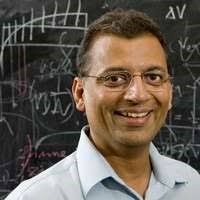
[cid:image001.png@01DB1E56.1450EC30] BME DISTINGUISHED RESEARCH SEMINAR SERIES October 16, 2024 9:30-10:20 am, MJIS 1001 and via ZOOM ZOOM LINK: https://us02web.zoom.us/j/85358612194?pwd=3f3yr1Asbv8htkbWQAdYWEk4hWYUnU.1<https://nam04.safelinks.protection.outlook.com/?url=https%3A%2F%2Fus02web.zoom.us%2Fj%2F85358612194%3Fpwd%3D3f3yr1Asbv8htkbWQAdYWEk4hWYUnU.1&data=05%7C02%7Cbmeroundtable-list%40ecn.purdue.edu%7Ccabb772963f94cd1e85508dcec8ebea2%7C4130bd397c53419cb1e58758d6d63f21%7C0%7C0%7C638645345026387061%7CUnknown%7CTWFpbGZsb3d8eyJWIjoiMC4wLjAwMDAiLCJQIjoiV2luMzIiLCJBTiI6Ik1haWwiLCJXVCI6Mn0%3D%7C0%7C%7C%7C&sdata=8FWgvrBJ3XV7IY339Trv%2B17myneo1TzmQiigOJRrM0I%3D&reserved=0> *Note: Students enrolled in the seminar course are expected to attend in person. Virtual reality for memory research and translation [cid:image002.jpg@01DB1E56.1450EC30] Mayank Mehta Director, Center for Physics of Life Professor in Departments of Physics, Neurology and ECE. UCLA Abstract: The human hippocampus is necessary for episodic memory, i.e. memory of specific events experienced, the standard clinical test of Alzheimer's etc. On the other hand, the rodent hippocampus is believed to be an abstract cognitive map of space supported by place cells. Hence, spatial memory, e.g. water-maze escape, is the classic test of hippocampal function in mice. However, place cells are rare in primates. Instead, primate hippocampal neurons encode specific visual cues, e.g. faces. How can these major differences across species be reconciled? Further, while many drugs have cured hippocampal disorders, e.g. ADRD, in mice, all of them have failed in humans. We hypothesize that these two puzzles are related, and they arise from fundamental differences in the multisensory experiences of mice and primates. Indeed, when rodents are asked to rely only on vision, like primates, using a noninvasive virtual reality, most of the rodent-primate hippocampal differences vanish. This approach also provides early insights about how visual stimuli are transformed from V1 to CA1 to episodic memory. The results would help understand the functioning of neural deep-network works, and for reliable translation of memory therapies from mice to humans. Bio: Mayank Mehta is a professor in the department of Physics & Astronomy, Neurology, and Electrical and Communications engineering (ECE) at UCLA. He is the director of Keck Center for Neurophysics and of the Center for Physics of Life. During his PhD he investigated the effects of quantum fluctuations on the structure space-time. His subsequent research has focused on understanding how the brain creates abstract ideas such as abstract space-time and events. To test these theories, his laboratory has developed novel experimental tools such as an immersive VR for rodents, and a novel electrode called Dendrode that can measure the membrane potential of dendrites in freely behaving animals. Using these, their lab measures the activities of many individual neurons simultaneously while the subjects are learning and during the subsequent sleep. Using these they have uncovered novel mechanisms of learning and abstraction. Their results show that their specialized VR is especially suited to facilitate the translation of neurocognitive therapies, e.g. Alzheimer's, from Phase1 trials in rodents to Phase 2-3 trials in humans. ~ BME Host: Krishna Jayant ~ Jo Gelfand Intra/Extramural Relations Administrator Purdue University Weldon School of Biomedical Engineering 206 S. Martin Jischke Drive West Lafayette, IN 47907-2032 765-494-2996 jo@purdue.edu<mailto:jo@purdue.edu> [cid:image003.jpg@01DB1E56.1450EC30] -- Bmeroundtable-list mailing list Bmeroundtable-list@ecn.purdue.edu https://engineering.purdue.edu/ECN/mailman/listinfo/bmeroundtable-list


participants (1)
-
 Gelfand, Johanna K