[Bmeroundtable-list] BME Monday Roundtable - May 22, 2023

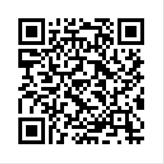
[cid:image005.jpg@01D98C8F.FBA66BA0] BME Monday ROUNDTABLE May 22, 2023 DEPUTY HEAD'S NOTE This past week was truly the beginning of the summer break. Enjoy it! * The BME Summer Seminar Series kicked off last Wednesday. It was a good one. Dear faculty, please come. It is good to help celebrate the preliminary accomplishment of our students (especially in the early years of their PhD) in their PhD research, important to provide your critiques to their research and presentation. To fellow graduate students, it is also good to learn from your peers and cheer for them. https://purdue-edu.zoom.us/j/98231659969?pwd=T21Oa1B6QzFyQzFvckMzS1doNGlJUT0.... * The deadline for the TBE workshop is this coming Thursday. Please give a serious consideration. Trailblazers in Engineering (TBE) is a multi-day workshop focused on preparing future outstanding engineering scholars for future engineering faculty careers who are also committed to increase the success of underrepresented communities of engineers. Important MJIS Alerts Week of May 22: Exterior washing of windows in MJIS will take place this week. If you feel like you're being watched, look out your windows to see if there is someone there. We don't know specifically what days they will be working on MJIS, but it will be this week. There will be lifts moving around the building, so please be aware and be careful. REMINDER: Purdue University is a NON-SMOKING campus. You are not permitted to smoke/vape in or around MJIS. There is a smoking area on the other side of Martin Jischke Drive, near the police station. Remember that the air intakes for the entire building are located externally. If you smoke on the sidewalk outside of MJIS, it is drawn into and distributed throughout the building! Don't do it! Here is a map of all the smoking areas on campus: https://www.purdue.edu/smokefree/Smoking_map.pdf The closest to MJIS is labeled "4" Also, this is the time of year when there are numerous unknown people moving throughout the building. This is also the optimal time for undesirable people to take advantage of the increased unknown traffic. In order to protect your personal belongings, lock your door if there is no one in your office area. We have had teams of criminals working campus buildings in the past, stealing wallets, purses, etc. by simply trying doors and entering unlocked areas. Also, do not admit anyone into a secure area (e.g., the lab block) if you do not know them. Keep personal items tucked away and out of sight. Do not be the victim of a "crime of convenience!" UPCOMING IMPORTANT DATES Week of May 22 Mon., May 22: Center for Diabetes and Metabolic Diseases Research Seminar, 12:00 noon via Zoom. Rita Saroufim, Pediatric Endocrinology Fellow - PGY6, Pediatric Endocrinology & Diabetology, Riley Hospital for Children at Indiana University Health, will present "Fellow Research Presentation." Zoom link: https://iu.zoom.us/s/87501979533 This seminar series is sponsored by the Indiana University School of Medicine. Tues., May 23: BME PhD Defense Announcement for Mrugesh Krishna Parasa (Dr. Kevin Solomon, advisor). Everyone is invited to attend the public presentation beginning at 3:00 PM via Zoom. Title of the Thesis Research: Programmable Control of Protein Activity via Formation of Biomolecular Condensates in Bacteria. Wed., May 24: BME Summer Seminar Series, 9:30 a.m., via Zoom. The BME Summer Seminar Series will run from May 17th - August 9th. This week, Fahmida Sultana Laboni (Taeyoon Kim advisor) will present "Cell Shape Changes Driven by Actomyosin Contractility" as part of the BME Summer Seminar Series on Wednesday, May 24 at 9:30 a.m. via Zoom. Thurs., May 25: Application Deadline for Trailblazers in Engineering workshop, to be held on the Purdue campus July 25-26. Trailblazers in Engineering (TBE) is a multi-day workshop focused on preparing future outstanding engineering scholars for future engineering faculty careers who are also committed to increase the success of underrepresented communities of engineers. Trailblazers in Engineering Fellows are selected not only for their outstanding scholarly achievements but also for their potential impact in expanding representation and diversity in engineering. See attached flyer for application instructions. Upcoming Opportunity for Fun! Do you play a band instrument? Purdue Bands and Orchestras has just opened registration for the 2023 Purdue University Summer Band! This ensemble is open to all area musicians that are high school age and up. Participation in Purdue's Summer Band is FREE to all. We plan to begin rehearsals on Tuesday, June 20, and rehearse on Tuesday and Thursday afternoons from 4:00-5:30 PM in Hagle Hall, Room 178. Our concert will be held on Thursday, July 20, 6:30 PM at Columbian Park Memorial Island Amphitheater immediately prior to a performance by the Lafayette Citizens' Band. Register Here: https://docs.google.com/forms/d/e/1FAIpQLSd8v47EEuzyl070XPk4QyH0fIBflpdLywlC... Upcoming important deadlines and info. Tues., May 30: C.R.A.S.E. (Civilian Response to Active Shooter Events) training is available through the Purdue University Police Department. Contact Sarah Clark (sclark32@purdue.edu<mailto:sclark32@purdue.edu>) to sign up for your 9:30, 1:30 or 5:30 session. All faculty and staff are encouraged to attend. For additional information see: https://www.purdue.edu/newsroom/purduetoday/releases/2023/Q2/pupd-to-offer-f... Wed., May 31: Purdue Department of Health & Kinesiology World Class Research Seminar, 3:00 p.m., Lawson B151. Graham Fraser, PhD, will be the guest speaker for the Department of Health & Kinesiology on Wednesday, May 31st, at 3:00 p.m. in Lawson B151. His presentation is entitled "Dynamics of Capillary Blood Flow Regulation in Skeletal Muscle." Thurs., June 1: BME PhD Final Defense Announcement for Jongcheon Lim (H. Lee, advisor). Everyone is invited to attend the public presentation beginning at 3:00 PM in MJIS 2001 and via Zoom. Title: Toward Advanced Neural Interfaces for Selective Vagus Nerve Stimulation Thurs., June 1: BME PhD Preliminary Exam announcement for Claudia Benito Alston (L. Solorio, advisor). Everyone is invited to attend the public presentation beginning at 3:00 PM in DLR 131 and via Zoom. Title: Optimization of a patient-specific 3D printed bone graft for increased osteoinduction through finite element analysis, computational fluid dynamics, as well as in vitro to in vivo modeling Wed., Sept. 6: BMES Early Bird Registration Deadline! Register now to lock in savings with early-bird pricing for the 2023 BMES Annual Meeting (to be held in Seattle, WA, October 11-14). Thousands of biomedical engineers will attend this year's meeting to learn, collaborate, and network. As a BMES member, you can save more than 10% with reduced early bird rates, so if you're not already a member, now would be a good time to join! Click here for details: https://mailchi.mp/e3958bb463f2/o8cvhb9q5x-9335625?e=ea10e317a2 Committee Updates Graduate Office Update The Purdue Office of Engagement is sponsoring an "Advancing Graduate Research Impact in Society Professional Development Program for Future Engaged-Scholars." The purpose of the Advancing Graduate Research Impact in Society certification program is to foster the development of engaged scholarship. This professional development program will help increase knowledge, skills, and experience translating your research in ways that help solve societal problems. The program is open is any graduate student or post-doctoral fellow enrolled at Purdue's West Lafayette campus. Participants will meet weekly to learn how to become engaged scholars, develop community partnerships, engage with diverse communities, evaluate engagement activities, and communicate your engaged work. Location: Purdue Grad Student Center, Northwestern Avenue, Room 105 Day & Time: Tuesdays 3:00-4:00 p.m., Fall 2023 Semester. (All sessions are in person) Registration required: Open from May 18 to June 16. If you are interested in learning more or registering, please scan the UR code: [cid:image006.png@01D98C8F.FBA66BA0] Resources and further information BME PhD Defense Announcement for Mrugesh Krishna Parasa (Dr. Kevin Solomon, advisor). Everyone is invited to attend the public presentation on Tues., May 23, beginning at 3:00 PM via Zoom. Title of the Thesis Research: Programmable Control of Protein Activity via Formation of Biomolecular Condensates in Bacteria. Thesis Committee members: Dr. Kevin Solomon, Dr. Tamara Kinzer-Ursem, Dr. David Thompson, Dr. Leopold Green Abstract: Biomolecular condensates or membraneless organelles are phase separated proteins and/or other biomolecules that are ubiquitous in eukaryotic cells. While these condensates may be liquid with exchange and diffusion of their components with the rest of the cell (e.g. cytoplasm), they locally concentrate their constituent biomolecules altering their interactions in normal cellular processes. Here, we exploit this phenomenon via reversible coacervate formation to control the activity of cellular proteins in E. coli. To induce liquid-liquid phase separation, we fuse proteins to elastin-like polypeptides (ELP) that reversibly aggregate in response to increases in temperature and/or changes in intracellular pH. In so doing, we sequester their fusion partners from the cytoplasm, limiting their ability to participate in cytoplasmic reactions. We have demonstrated this concept in vivo with enzymes and transcription factors for switchable control of protein activity with temperature. For example, I-SceI mediated cleavage of a host genome can be inhibited by increasing the cultivation temperature, creating a simple temperature-sensitive kill switch; accidental release will lower the culture temperature leading to cell death. Similarly, coupled transcription factors exhibit a 2-fold increase in transcription in response to temperature. More importantly, the threshold for coacervate formation and control of protein activity may be tuned through appropriate design of the ELP fusion partner. Our results introduce a simple yet effective, rapid and tunable approach to control protein activity via induction of coacervate formation that may form a powerful new tool for synthetic biology. Zoom link: https://purdue-edu.zoom.us/j/99880181010 BME Summer Seminar Series, Wed., May 24, 9:30 a.m., via Zoom. Fahmida Sultana Laboni (Taeyoon Kim advisor) will present "Cell Shape Changes Driven by Actomyosin Contractility". Abstract: Living cells undergo continuous shape changes facilitated by contractile forces. The actin cytoskeleton plays a crucial role in generating the necessary contractile forces for various cellular processes. To investigate the effects of actomyosin contractility on cellular-scale changes, numerous in vitro experiments have been conducted using synthetic cell-like systems. These systems typically comprise actin, cross-linking proteins, and myosin motors enclosed within lipid vesicles or water droplets. These experiments aim to understand how forces derived from actomyosin contractility contribute to alterations in cell structure and function. Despite the insights these artificial systems have offered, inherent experimental constraints have kept us from completely comprehending the underlying mechanisms governing the changes in cell structure. In order to surpass the constraints and systematically study alterations in cell morphology, we created an agent-based model. This model represents a simple cell-like structure that consists of a discrete actomyosin cortex, osmotic pressure, and cell membrane. The purpose of this model is to better understand how these components interact and contribute to changes in cell shape. The actomyosin cortex consists of actin filaments, cross-linking proteins, and molecular motors. It is assumed that a fraction of the cross-linking proteins can be bound to the membrane. Motions of all elements are governed by the Langevin equation based on Brownian dynamics. Using the model, we explored a wide parametric space consisting of network connectivity, motor density, and cortex-membrane coupling. We found that forces generated from the actomyosin network induce distinct cell shape changes depending on conditions. If the cortex is tightly coupled to the membrane, contractile forces lead to uneven membrane surfaces. If the cortex is weakly coupled to the membrane, the cortex is separated from the membrane and contracts by itself. Interestingly, blebs are formed when the cortex induces enough contractility, and the cortex-membrane coupling is at an intermediate level. Results from our study shed light on fundamental mechanisms of cell shape changes driven by a competition between osmotic pressure and actomyosin contractility. *Join Zoom Meeting: https://purdue-edu.zoom.us/j/98811885943?pwd=Nll1MlE3TTYyOHZJL3hIYlpGSXhUUT0... Meeting ID: 988 1188 5943 Passcode: biomedical Evaluation link: for Fahmida Sultana Laboni: https://purdue.ca1.qualtrics.com/jfe/form/SV_d5KOVoQQX0rz1sy Purdue Department of Health & Kinesiology World Class Research Seminar, Wed., May 30, 3:00 p.m., Lawson B151. Graham Fraser, PhD, will be the guest speaker for the Department of Health & Kinesiology on Wednesday, May 31st, at 3:00 p.m. in Lawson B151. His presentation is entitled "Dynamics of Capillary Blood Flow Regulation in Skeletal Muscle." Abstract: Increases in oxidative metabolism, such as during exercise, necessitate increased skeletal muscle blood flow to match oxygen (O2) demand for generating ATP needed for muscular contraction. Skeletal muscle O2 concentration, and other metabolites formed through oxidative and non-oxidative energy pathways serve as direct vasomotor stimulus facilitating oxygen delivery:demand matching. The complex interplay between these metabolically mediated mechanisms, and the potential for overlapping and complementary pathways that produce vasodilation make studying blood flow responses directly in the context of exercising or contracting muscle challenging. In this presentation we quantify the direct capillary level flow responses to acute changes in skeletal muscle oxygen (O2) and carbon dioxide (CO2) concentrations, both in terms of their independent contribution and their combined effects. The dynamics of O2 and CO2 mediated responses and the apparent minimum scale of O2 sensing in microvascular networks will be discussed in the context of potential mechanisms. Bio: Dr. Graham Fraser is an Associate Professor and Coordinator for the Cardiovascular Research group in the Faculty of Medicine at Memorial University of Newfoundland. His NSERC funded research program is focused on the development of novel tools to study blood flow regulation in the microcirculation, and his CIHR research is aimed at examining microvascular regulatory defects in animal models of type 2 diabetes. BME PhD Final Defense Announcement for Jongcheon Lim (H. Lee, advisor). Everyone is invited to attend the public presentation on Thurs., June 1, beginning at 3:00 PM in MJIS 2001 and via Zoom. Title: Toward Advanced Neural Interfaces for Selective Vagus Nerve Stimulation Thesis Committee: Hyowon Lee, Chair; Chi Hwan Lee; Edward Bartlett; Matthew P. Ward Abstract: Vagus nerve branches to multiple organs such as heart, stomach and spleen to regulate their physiological activities. Selective activation of a portion of fibers in the vagus nerve can potentially modulate specific organ activities without off-target effect. Despite recent advancements in microfabrication technology that enables more advanced neural interfaces, current devices for electrical neuromodulation rely on relatively bulky system such as helical cuff electrode for VNS, which stimulates entire fascicle indiscriminately. In this presentation, we show three approaches towards selective vagus nerve stimulation (VNS). First, we investigated VNS using microelectrode with circle and Vicsek fractal shape. Our rat study shows that fractal microelectrode can activate C-fibers in cervical vagus nerve with higher energy efficiency compared to circle microelectrode. Secondly, we developed stretchable and adhesive cuff device for a compliant neural interface for a long-term stability. We designed Y-shaped kirigami thin-film device for stretchable neural interface and applied a tissue-adhesive hydrogel to enable tough adhesion of the cuff electrode, which can be potentially used to fix the position of microelectrode for a reliable selective stimulation with minimal mechanical mismatch. Lastly, we developed a microchannel electrode array device to potentially measure high-quality of single fiber action potential (SFAP) from the abdominal vagal trunk of rat to explore natural patterns selective organ activities which can be used for a fine-tuned selective VNS. Our results show the potential of measuring C-fiber activities evoked by cervical VNS. In the future, we plan to apply an improved design to increase signal to noise ratio to capture the spontaneous SFAP from the teased nerve fibers. Zoom Link: - https://purdue-edu.zoom.us/j/95239025355?pwd=Z2xDOEJ5K3ZKcUdwNXNldTVLNVBNUT0... BME PhD Preliminary Exam announcement for Claudia Benito Alston (L. Solorio, advisor). Everyone is invited to attend the public presentation on Thurs., June 1, beginning at 3:00 PM in DLR 131 and via Zoom. Title: Optimization of a patient-specific 3D printed bone graft for increased osteoinduction through finite element analysis, computational fluid dynamics, as well as in vitro to in vivo modeling Thesis Committee: Luis Solorio, Chair; Adrian Buganza Tepole; Deva Chan; Clark T. Barco Abstract: Maxillofacial and oral defects originate from congenital conditions such as cleft palate, diseases such as osteosarcoma that cause malignancies, as well as from injuries due to blasts or vehicular accidents. These defects lead to complications for the patient including difficulty speaking, infections, as well as damaging psychological effects owing to the patient's distorted physical appearance. The current standard of care uses particulates of freeze-dried auto- or allografts covered by a titanium mesh secured in place by screws. This approach is limited by its variability, the length of time the patient is exposed to potential infection during surgery, as well as tight packing often leading to diminished bone regeneration as blood vessels may fail to form. A significant benefit of the current gold standard of freeze-dried particulate is the innate growth factors (GFs) that are released. However, since these are patient-derived the GF composition is poorly defined and varies. To address these fallbacks, a 3D printable, biodegradable, and implantable device with patient-specific shape and a porous core-cover structure was designed. The central hypothesis is that a 3D printed porous cover-core bone graft with spatiotemporally controlled release of GFs FGF-2 and BMP-2 will provide improved vascular infiltration and osteointegration. By using finite element analysis and computational fluid dynamics, we will fine-tune the design to withstand possible masticatory forces as well as optimize inicial plasma influx ensuring complete endogeneous cells permeation, respectively. Overall, through a combination of in silico modeling, in vitro and in vivo studies, we aim to generate a patient-specific bone graft with an increased rate of osteointegration. Zoom Link: https://purdue-edu.zoom.us/j/95213891530 -- Bmeroundtable-list mailing list Bmeroundtable-list@ecn.purdue.edu https://engineering.purdue.edu/ECN/mailman/listinfo/bmeroundtable-list
participants (1)
-
 Gelfand, Johanna K