[Bmeroundtable-list] BME Summer Seminar Announcement

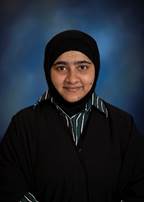
[cid:image001.jpg@01D9BAFE.E7D70BF0] BME Summer Seminar Series Wednesday, July 26th, 2023 9:30-10:30 AM EST Via Zoom Meeting – link below* Evaluation links: Seungbin Park: https://purdue.ca1.qualtrics.com/jfe/form/SV_eeyZsUMAqZq5XkG<https://nam04.safelinks.protection.outlook.com/?url=https%3A%2F%2Fpurdue.ca1.qualtrics.com%2Fjfe%2Fform%2FSV_eeyZsUMAqZq5XkG&data=05%7C01%7Cbmeroundtable-list%40ecn.purdue.edu%7C91aebfd68db2464b136308db8947b1e6%7C4130bd397c53419cb1e58758d6d63f21%7C0%7C0%7C638254713236627807%7CUnknown%7CTWFpbGZsb3d8eyJWIjoiMC4wLjAwMDAiLCJQIjoiV2luMzIiLCJBTiI6Ik1haWwiLCJXVCI6Mn0%3D%7C3000%7C%7C%7C&sdata=GCmJ80hJDXYjnA4PyEomz5kt8i2spTTe%2F7NWYRbayco%3D&reserved=0> Sarwat Amin: https://purdue.ca1.qualtrics.com/jfe/form/SV_0jOTCLLPqdURyiG<https://nam04.safelinks.protection.outlook.com/?url=https%3A%2F%2Fpurdue.ca1.qualtrics.com%2Fjfe%2Fform%2FSV_0jOTCLLPqdURyiG&data=05%7C01%7Cbmeroundtable-list%40ecn.purdue.edu%7C91aebfd68db2464b136308db8947b1e6%7C4130bd397c53419cb1e58758d6d63f21%7C0%7C0%7C638254713236627807%7CUnknown%7CTWFpbGZsb3d8eyJWIjoiMC4wLjAwMDAiLCJQIjoiV2luMzIiLCJBTiI6Ik1haWwiLCJXVCI6Mn0%3D%7C3000%7C%7C%7C&sdata=49hXR%2By67PsM1kCLgMjgAXaifJWxsSdSGQKUhm1WJ1I%3D&reserved=0> Decoding Limb Trajectories from 2-Photon Calcium Imaging Using a Recurrent Encoder-Decoder Network Seungbin Park (Maria Dadarlat Makin, advisor) [Seungbin Park] Abstract: Decoding behavioral variables from recorded brain signals is critical for developing applications such as brain-machine interfaces for patients with neurological injury and disease and for understanding the function of brain regions in relation to behavior. Neural decoding accuracy often improves by recording and analyzing large populations of neurons, such as is possible with two-photon calcium imaging; however, decoding from two-photon calcium images has been challenging because of the indirect and nonlinear representation of neural activity, low sampling rates, and slow kinematics of the fluorescent indicators. Here, we present a new approach to decode the limb trajectories of a running mouse from two-photon calcium images using a recurrent encoder-decoder network. Considering the sampling rate of calcium imaging is lower than the speed of natural behavior, encoder-decoder with Long Short-Term Memory in which the output sequence length of the decoder is longer than the input sequence length to the encoder was designed. The model could decode limb coordinates sampled at 30 Hz from two-photon calcium images sampled below 8 Hz with root mean squared errors of 25.35 pixels (3.80 mm). Information about all four limbs including contralateral and ipsilateral front and hind limbs could be decoded from a single cortical hemisphere. Highly important neurons were sparsely distributed across cortical areas including the primary motor cortex and primary somatosensory cortex. A fraction of the most informative neurons yielded higher decoding accuracy than randomly-sampled neurons. Nevertheless, overall accuracy was directly proportional to the number of neurons used to decode. This study validates the feasibility of using calcium imaging to decode continuous behavior variables with a higher sampling rate. Furthermore, the approach gives insight into explainable artificial intelligence and how a deep neural network can be used to understand the brain. Monitoring vaccine reactogenicity using heart rate-derived metrics and physiological signals measured by wearable devices. Sarwat Amin (Matthew Ward, advisor) [Sarwat Amin] Abstract: Vaccination against Covid-19 is a crucial tool in reducing Covid related mortality rates. Vaccinations prevented 14·4 million deaths from COVID-19 in 185 countries and territories between Dec. 8, 2020, and Dec. 8, 2021. Reactogenicity refers to the expected inflammatory response that occurs in the body after vaccination. It is typically mild and temporary, manifesting most commonly locally, at the injection site, and in a smaller number but still significant percentage of patients systemically. In recent years, there has been growing interest in monitoring vaccine reactogenicity using wearable devices, such as smartwatches, fitness trackers, and other health monitoring technologies. While wearable devices present the opportunity for real-time, continuous, and non-invasive monitoring of an individual’s physiological parameters such as heart rate, respiration, temperature, before and after vaccination, the method of effectively utilizing these resources to yield valuable insights into vaccine safety and efficacy requires further exploration. We present the findings of an observational study involving 84 participants aged 18 to 69 years, who received either the first, second, or booster dose of SARS-CoV-2 vaccination mainly from Moderna and Pfizer. The data was collected by our collaborators, PhysIQ Inc. and the Cardiovascular Imaging Research Laboratory at Purdue University. The participants wore a VitalPatch on their chest that continuously monitored their electrocardiogram (ECG) from up to seven days before vaccination to seven days after vaccination. To examine the impact of vaccination on individual changes in heart rate, heart rate variability, as well as other physiological responses like respiration, activity levels, and skin temperature, we tracked a compilation of 21 features derived from cloud-based analytics from PhysIQ and subsequent offline computations. Our objective is to document the changes in heart rate and its associated variability metrics following SARS-CoV-2 vaccination and identify the metric(s) that demonstrates the earliest response to the vaccination (i.e., vaccine reactogenicity). Based on our analysis and results, there is a strong indication that the peak power in the high-frequency (HF) range of the RR interval power spectrum (0.15–0.4 Hz) shows the earliest response (mean: 9.9 hours, 95% Confidence Interval: [8.25, 11.55] hours) following vaccination in most study participants. *Join Zoom Meeting https://purdue-edu.zoom.us/j/98231659969?pwd=T21Oa1B6QzFyQzFvckMzS1doNGlJUT09<https://nam04.safelinks.protection.outlook.com/?url=https%3A%2F%2Fpurdue-edu.zoom.us%2Fj%2F98231659969%3Fpwd%3DT21Oa1B6QzFyQzFvckMzS1doNGlJUT09&data=05%7C01%7Cbmeroundtable-list%40ecn.purdue.edu%7C91aebfd68db2464b136308db8947b1e6%7C4130bd397c53419cb1e58758d6d63f21%7C0%7C0%7C638254713236627807%7CUnknown%7CTWFpbGZsb3d8eyJWIjoiMC4wLjAwMDAiLCJQIjoiV2luMzIiLCJBTiI6Ik1haWwiLCJXVCI6Mn0%3D%7C3000%7C%7C%7C&sdata=JZ2zRaZP%2BOQyl%2Fx6NLexWPxUtt2njJf0yKhqqrn48JA%3D&reserved=0> Meeting ID: 982 3165 9969 Passcode: biomedical Liz Rowen She/Her Graduate Program Assistant Weldon School of Biomedical Engineering Martin C. Jischke Hall of Biomedical Engineering 206 S. Martin Jischke Drive West Lafayette, IN 47907-2032 o: 765-494-1197 [7054E290]<https://www.purdue.edu/?utm_source=signature&utm_medium=email&utm_campaign=purdue> -- Bmeroundtable-list mailing list Bmeroundtable-list@ecn.purdue.edu https://engineering.purdue.edu/ECN/mailman/listinfo/bmeroundtable-list



participants (1)
-
 Gelfand, Johanna K