[Bmeroundtable-list] BME Monday Roundtable - January 23

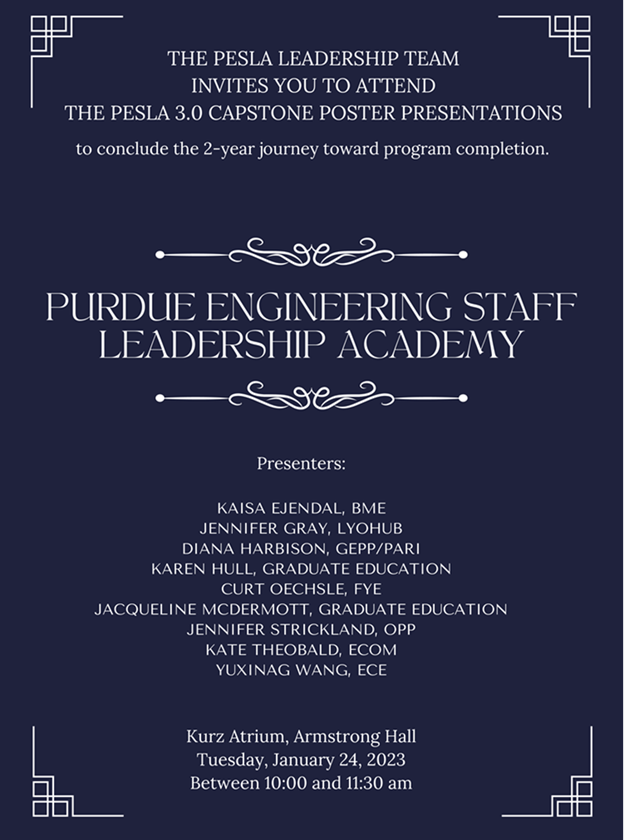
[cid:image005.jpg@01D92F0D.DDAE7AA0] BME MONDAY ROUNDTABLE JANUARY 23, 2023 HEADS NOTE Please note two exciting opportunities happening on Wednesday this week: We have a prospective BME faculty seminar (Sunghee (Estelle) Park) at 9:30 a.m. in MJIS 1001 and via Zoom, and our very own Professor Chi Hwan Lee will be presenting the first of a series of Westwood Lectures at 4:30 p.m. (registration required). UPCOMING IMPORTANT DATES Week of January 23 Mon., Jan. 23: Indiana University Center for Diabetes and Metabolic Diseases Research Seminar, 12:00 noon, via Zoom. Bin Gao, MD, PhD, Chief, Laboratory of Liver Diseases, NIAA will present the next Indiana University Center for Diabetes and Metabolic Diseases Research Virtual Seminar on Monday, January 23 at 12:00 noon. "Alcohol Metabolism, Alcohol-associated Liver Disease, and Cancer" will be presented via webinar at the link below: https://iu.zoom.us/j/83951671092?pwd=WC9GNTJaVTRVcEIyako4cHMvN2FXZz09 (Password: 629133). This seminar series is sponsored by the Indiana University School of Medicine's Center for Diabetes and Metabolic Diseases (CDMD). Tues., Jan. 24: Special Guest Lecture: Former U.S. Surgeon General Dr. Jerome Adams<https://www.purdue.edu/provost/health/adams.html> will be guest lecturing in the course BME395/HONR399: Engineering Health Equity from 3:00-4:00 p.m. in RHPH 172. As this is an incredible opportunity to hear from a world-renowned expert in public health and health policy. We will be opening up the class to other students who may be interested in attending his lecture, "Perspectives on Health Equity from the 20th Surgeon General of the United States." Please feel free to attend; seating will be first come, first served. Dr. Adams is a Distinguished Professor of Practice in Pharmacy and is the Presidential Fellow and Executive Director of Purdue's Health Equity Initiatives. During his time leading the Indiana State Department of Health before becoming US Surgeon General Dr. Adams led initiatives for legalizing syringe services programs, reducing infant mortality, and pandemic/outbreak responses. Tues., Jan. 24: Purdue Engineering Staff Leadership Academy (PESLA) 3.0 Capstone Poster Presentations, 10:00-11:30 a.m., Kurz Atrium, Armstrong Hall. The poster presentations will conclude the 2-year journey toward program completion for participants. Come support BME's own Kaisa Ejendal and help her celebrate this milestone. Wed., Jan. 25: Prospective BME Faculty Seminar, 9:30 a.m. in MJIS 1001 and via Zoom. Sunghee (Estelle) Park, PhD Candidate and CEMB Fellow, Department of Bioengineering at the University of Pennsylvania will present "Engineering Stem Cells and Organoids on a Chip." (Note: Students registered for credit for the seminar are expected to attend in-person.) Wed., Jan. 25: BME PhD Preliminary Exam announcement for Luke Brennan (J. Linnes and N. Rodriguez, co-advisors), 11:00 a.m., MJIS 2001 and via Zoom. Title of presentation: HPV Rapid Diagnostic Test Development Through Human-Centered Design. Wed., Jan. 25: Westwood Lecture, Westwood, 4:30 p.m. Chi Hwan Lee, the Leslie A. Geddes Associate Professor of Biomedical Engineering, Associate Professor of Mechanical Engineering, and by courtesy, Materials Engineering, and Speech Language and Hearing Sciences, will present "Sticker-like Electronics for Wearable Healthcare" as the first in a series of Westwood Lectures on Wednesday, January 25th at 4:30 p.m. Space is limited to the first 75 faculty who register. Thurs., Jan. 26: Seminars in Hearing Research at Purdue (SHRP), 10:30 a.m., LYLE 1150. Aditi Gargeshwari, PhD Student SLHS, will present "Threshold Determination Using Binaural Simultaneous Multifrequency Auditory Brainstem Evoked Response." Remote access via Zoom. Upcoming important deadlines and info. Wed., Feb. 1: Prospective BME Faculty Seminar, 9:30 a.m. in MJIS 1001 and via Zoom. Wei Ouyang, Postdoctoral Fellow, Bioelectronics, Northwestern University will present "Integrated Bioelectronic Systems for Biomedical Research and Healthcare: Materials, Electronics, and Computing." (Note: Students registered for credit for the seminar are expected to attend in-person.) Fri., Feb. 3: The Great Lakes NSF I-Corps Hub and Purdue I-Corps are offering various workshops in Spring 2023 that can significantly increase the chances of securing federal proof of concept & commercialization grants like SBIR/STTR, PFI-TT that range from $500k to $1.6 million. The historical success rate for Purdue Faculty, who complete the NSF I-corps workshops, and apply for these competitive NSF research commercialization grants is over 90%. Please find details of the workshops below. STEM Jumpstart<https://www.greatlakesicorps.org/event/winter-2023-stem-jumpstart/>: Feb 3 - March 24 Medical Jumpstart<https://www.greatlakesicorps.org/event/winter-2023-medical-jumpstart-i-corps-course/>: Feb 3 - March 24 Purdue I-Corps Discovery, Discovery+<https://www.greatlakesicorps.org/event/winter-2023-purdue-i-corps-discovery/>: Feb 17-March 24; March 31-April 7 Gain new insights about your research, explore the commercial potential, learn about NSF funding opportunities, and increase your industry and professional network. Learn from our NSF-certified instructors, experienced entrepreneurs, and mentors. If a student/Post-doc in your lab is interested in this opportunity and would like to learn more, please reach out to Geetali Pradhan at gpradhan@purdue.edu<mailto:gpradhan@purdue.edu> Mon., Feb. 6: BME PhD defense announcement for Sean M. Rothenberger (V. Rayz, advisor), 3:00 p.m., MJIS 2001 and via Zoom. Title of presentation: Statistical Models of 4D flow MRI Velocity Error using Principles of Fluid Dynamics and Imaging Physics Wed., Feb. 8: Prospective BME Faculty Seminar, 9:30 a.m. in MJIS 1001 and via Zoom. Yiyang Gong, Assistant Professor of Biomedical Engineering, Duke University will present "Traditional and computational development of fluorescence imaging tools for neuroscience." (Note: Students registered for credit for the seminar are expected to attend in-person.) Fri., Feb. 17: Clinical and Translational Sciences (CTSI) Winter Retreat, 9:30 a.m. - 3:00 p.m., Purdue University West Lafayette campus, Hall for Discovery Learning and Research, Room 131. Agenda includes: * Introduction from Indiana CTSI * Keynote Speakers on women's health research * Janine Austin Clayton, MD, FARVO, NIH Associate Director for Research on Women's Health and Director, NIH Office of Research on Women's Health * Lindsay Weaver, MD, FACEP, Chief Medical Officer, Indiana Department of Health * Discussion panels including topics on: o Maternal and child health o Obesity and chronic diseases o Neurodegenerative disorder and aging o Women's health in rural areas Full agenda and registration links at https://engineering.purdue.edu/BME/CTSI/Winter-Retreat . This event is sponsored by the Purdue University Women's Global Health Institute and the Indiana CTSI. Registration closes February 14. PURDUE ADVERSE WINTER WEATHER POLICY If adverse weather conditions necessitate that a wind chill, snow or ice emergency be declared for the West Lafayette campus, special procedures pertaining to classes, operations, parking, pay and/or attendance will become effective. Jay Wasson, vice president for physical facilities and chief public safety officer, describes procedures for adverse winter weather in this memo<https://www.purdue.edu/ehps/emergency-preparedness/docs/adverse-winter-weather.pdf>. Committee Updates Graduate Office Update Spring 2023 BME Seminar Schedule (Wednesdays, 9:30 a.m. in MJIS 1001). Full schedule below. New Course for Fall 2023: BME 69500 Pediatric Medical Devices (CRN 14011). Details below. Congratulations to Andrew Sivaprakasam (MSTP) on getting his F30 NRSA Fellowship funded from NIH (NIDCD - National Institute on Deafness and Other Communication Disorders). His 3-year fellowship, entitled "Place and Time Processing of Pitch in the Context of Cochlear Dysfunction," started its funding January 1, 2023. His academic sponsors are Profs. Michael Heinz and Hari Bharadwaj, and his Clinical Sponsor is Dr. Rick Nelson in Otolaryngology-HNS at IUSM. Way to go Andrew!!! Graduate Admissions Update Fall 2022 (Fall 2023 Admit Term) BME Graduate Admissions DateDATE Activity Jan 26 Agendas for all invited students due from faculty to Tammy and sent to student. Feb 2-4 Weldon School Visitation Days (Hybrid) Feb 8 Last chance for Research Areas / Faculty to remove students from fellowship consideration Feb 10 Fellowship offers announced and complete rankings list made available to BME faculty; BME Graduate Office will notify students by email (offer letters distributed as soon as signed by BME Head and COE Dean) Mar 10 DUE: All Master's students to be decisioned as either admit, deny or hold Mar 31 Due: All PhD students to be decisioned as either admit, deny or hold April 15 Graduate applicant acceptance deadline BME Faculty Search Update The Faculty Search Committee has invited four faculty candidates to campus for interviews. If you are interested in meeting with any of the candidates, please contact Jo Gelfand (jo@purdue.edu<mailto:jo@purdue.edu>). All candidates will give a research seminar in MJIS 1001 at 9:30 a.m. on the Wednesday of their visit. Jan. 18-19 - Jacob Rosenstein, Associate Professor of Engineering, Brown University Jan. 25-26 - Sunghee Estelle Park, PhD Candidate and CEMB Fellow, Bioengineering, Univ. of PA Feb. 1-2 - Wei Ouyang, Postdoctoral Fellow, Bioelectronics, Northwestern Univ. Feb. 8-9 - Yiyang Gong, Assistant Professor of Biomedical Engineering, Duke Univ. Resources and further information [cid:image006.png@01D92F0D.DDAE7AA0] Prospective BME Faculty Seminar, Wed., Jan. 25, 9:30 a.m. in MJIS 1001 and via Zoom. Sunghee (Estelle) Park, PhD Candidate and CEMB Fellow, Department of Bioengineering at the University of Pennsylvania will present "Engineering Stem Cells and Organoids on a Chip." Abstract: Organ development is a complex process that involves highly coordinated, dynamic changes in the structural organization and mechanical environment of developing tissues. Recent advances in our understanding of stem cells have led to the development of human adult stem cell or pluripotent stem cell-derived organoids that follow the developmental trajectories of living human organs in vitro and create multicellular tissue constructs that recapitulate the key structural and functional aspects of human organs with greater biological and cellular complexity. In parallel, organ-on-a-chip technology allows us to engineer human organ-like tissue constructs by enabling precise control over their culture conditions and microenvironment. Inspired by the potential of combining these two approaches, we are interested in creating microfabricated devices and developing stem cell-based tissue engineering approaches to investigate the biochemical and biomechanical cues that are responsible for guiding organoid growth and maturation. I will discuss how we synergistically combine organoids and organ-on-a-chip technology, so called organoids-on-a-chip, to create in vitro replicas of living human organs with unprecedented levels of maturity and complexity. Using these platforms, I will also describe efforts to uncover the critical roles of different biophysical mechanisms in fetal lung development. Bio: Estelle Park is a PhD candidate in Bioengineering at the University of Pennsylvania. Her research focuses on using engineered tissues and organoid models to understand how biomechanical and biochemical cues direct stem cell differentiation, maturation, and function during development and disease progression, with a particular emphasis on the lung and intestine. Her research is best known for growing stem cell-derived organoids in physiologically relevant microenvironments through microengineered organ-chip devices to study tissue morphogenesis and identify biomarkers in diseases of the intestine and lung. When she's not thinking about her research, Estelle enjoys walking her dog, planning her next hike, or trying out new restaurants. ~BME Host: Hugh Lee~ Zoom link: https://purdue-edu.zoom.us/j/94442813985?pwd=VlppMzBRV2ZSWlVJQll4NElyb2dnQT0... BME PhD Preliminary Exam announcement for Luke Brennan (J. Linnes and N. Rodriguez, co-advisors), Wed., Jan. 25, 11:00 a.m., MJIS 2001 and via Zoom. Title of presentation: HPV Rapid Diagnostic Test Development Through Human-Centered Design. Everyone is invited to attend the public presentation. Advisory Committee: Jacqueline Linnes Ph.D., Co-Chair; Natalia Rodriguez Ph.D., Co-Chair; Aaron Ermel M.D.; Monica Kasting Ph.D.; Mohit Verma Ph.D. Abstract: Almost every case of cervical cancer in the United States is medically preventable with proper screening, yet many Americans are insufficiently screened. Over 12 thousand American women suffered from cervical cancer in 2018 causing 4 thousand deaths, with over a third in women who had never received a routine screening test. New, sensitive testing techniques have started to facilitate self-sampling at outpatient clinics and mail-in testing, which ameliorate some barriers to screening. Screening with a rapid diagnostic test (RDT), which can be performed in a variety of settings to deliver results in minutes, could further increasing screening uptake and follow-up care delivery. The goal of this project is to create a sample-to-answer RDT for cervical cancer screening. In the first aim we use interviews and a survey to explore clinician perspectives on current and newly proposed cervical screening methods such as self-sampling, RDTs, and home-based screening. This will result in a user-informed set of technical specifications for device design. The second aim augments a recombinase polymerase assay that isothermally amplifies any of 13 high-risk human papillomavirus (hrHPV) strains with an endogenous *-globin sample control and a simple colorimetric lateral flow assay (LFA) readout. The third aim incorporates this assay onto a paper-based device with a simple resistive heater, lysis buffer, and timers. The resulting test will accept vaginal fluid samples, buffer and lyse the samples, copy any hrHPV DNA present, and report copied DNA through a colorimetric LFA. Zoom link: https://iu.zoom.us/j/5867035107 Westwood Lecture, Wed., Jan. 25, Westwood, 4:30 p.m. Chi Hwan Lee, the Leslie A. Geddes Associate Professor of Biomedical Engineering, Associate Professor of Mechanical Engineering, and by courtesy, Materials Engineering, and Speech Language and Hearing Sciences, will present "Sticker-like Electronics for Wearable Healthcare" as the first in a series of Westwood Lectures on Wednesday, January 25th at 4:30 p.m. Space is limited to the first 75 faculty who register. As one of the actions to continue enhancing the intellectual vibrancy of the Purdue West Lafayette campus, President Mung Chiang has announced the Westwood Lecture Series, an opportunity for Purdue faculty to interact with colleagues on scholarly work from a wide range of fields, and the first three of the monthly speakers. The Westwood Lecture Series started in the past decade and is now resumed post-COVID-19. As before, each lecture will take place 4:30-5:30 p.m. at Westwood, the Purdue president's residence. Space is limited to the first 75 faculty who register. Registration will open for each lecture one week in advance. Registration for the Jan. 25 lecture is available online<https://purdue.ca1.qualtrhttps/purdue.ca1.qualtrics.com/jfe/form/SV_3XlwHF4bsPI7Sjsics.com/jfe/form/SV_3XlwHF4bsPI7Sjs>. The next two lectures are: Feb. 23: Robert Stahelin, the Retter Professor of Pharmacy, on "Host Lipid-dependent Assembly and Budding of Emerging Viral Pathogens." March 1: Mara Faccio, the Tom and Patty Hefner Chair in Finance and Professor of Management, on "Politics and Finance: International Evidence." Seminars in Hearing Research at Purdue (SHRP), Thurs., Jan. 26, 10:30 a.m., LYLE 1150. Aditi Gargeshwari, PhD Student SLHS, will present "Threshold Determination Using Binaural Simultaneous Multifrequency Auditory Brainstem Evoked Response." Remote access via Zoom. Abstract: The auditory brainstem response (ABR) is a gold standard test for objectively estimating hearing thresholds due to its high sensitivity and specificity. The time taken to record frequency-specific ABRs using the conventional single-frequency monaural approach is typically 45-60 minutes. Methods previously used to reduce testing time using increased rate, or chained stimuli have not been popular in clinical settings due to additional hardware and software requirements. We propose a multifrequency chained stimuli approach which presents several stimuli of different frequency to the two ears in an interleaved manner to maximize acquisition efficiency, significantly reduce test time, and minimize response adaptation. This paradigm can be easily generated in most commercial ABR systems currently used in clinics. Our novel method and stimuli together create a recording paradigm that can yield robust and lower binaural ABR thresholds, resulting in a quick and effective clinical tool. This presentation will discuss data recorded from 30 normal hearing young adults will be presented. The ongoing implementation of automatic peak detection will also be discussed during the presentation. Zoom link for remote attendees: https://purdue-edu.zoom.us/j/4326340458 Meeting ID: 432 634 0458 The working schedule is available here: https://purdue.edu/TPAN/hearing/shrp_schedule<http://ogww.mj.am/lnk/AU8AAEukm7AAAchk2HAAALFJlZgAAYCsFQMAnDnUAATD7ABh_T90ybQipdUVQZ20y9CAzjYFPgAEkSo/5/VzPUtXKo0Dowllp_TK_BrQ/aHR0cHM6Ly9wdXJkdWUuZWR1L1RQQU4vaGVhcmluZy9zaHJwX3NjaGVkdWxl> The titles and abstracts of the talks will be added here: https://purdue.edu/TPAN/hearing/shrp_abstracts<http://ogww.mj.am/lnk/AU8AAEukm7AAAchk2HAAALFJlZgAAYCsFQMAnDnUAATD7ABh_T90ybQipdUVQZ20y9CAzjYFPgAEkSo/6/a2vUEcd_J6SQbZdR8Ley5Q/aHR0cHM6Ly9wdXJkdWUuZWR1L1RQQU4vaGVhcmluZy9zaHJwX2Fic3RyYWN0cw> Prospective BME Faculty Seminar, Wed., Feb. 1, 9:30 a.m. in MJIS 1001 and via Zoom. Wei Ouyang, Postdoctoral Fellow, Bioelectronics, at Northwestern University will present "Integrated Bioelectronic Systems for Biomedical Research and Healthcare: Materials, Electronics, and Computing." Abstract: Probing and modulating life processes in the native state represents a key capability in our quest for a better understanding of life and a higher quality of life. In this talk, I will present implantable and wearable forms of flexible bioelectronic devices developed through a systems approach combining materials, electronics, and computing that open up new opportunities for fundamental biomedical research in unperturbed, naturally behaving animal models and for continuous, ambulatory monitoring of human health. I will first present a new class of wireless, battery-free, fully implantable devices that offer multimodalities and closed-loop functionalities in neuroscience research and the use of this technology for studying auditory-evoked potentials, sleep-wake regulations, seizure treatment, cardiology, and social interactions. Then I will present the translation of this technology in human healthcare using a wearable mechano-acoustic sensing device deployed to about 500 patients as an example, with an emphasis on data analytics for continuous monitoring of COVID-19 and vocal health. I will conclude by discussing future opportunities of my research in both fundamental and translational biomedicine. Bio: Wei Ouyang is currently a postdoctoral fellow supervised by Prof. John A. Rogers at the Querrey Simpson Institute for Bioelectronics, Northwestern University. He received his S.M. degree in Electrical Engineering and Computer Science and Ph.D. degree in Electrical Engineering from the Massachusetts Institute of Technology under the supervision of Prof. Jongyoon Han. He received his B.S. degree in Microelectronics from Peking University, China. His research interests include implantables, wearables, neural engineering, digital health, bioMEMS, and microfluidics. He is a recipient of several prestigious awards, including the Dimitris N. Chorafas Foundation Award, Siebel Scholar (Class of 2016), the Peake Research Prize at MIT, and the Ernst A. Guillemin Thesis Award at MIT. ~BME Host: Hugh Lee~ Zoom link: https://purdue-edu.zoom.us/j/91331613591?pwd=dnY3M1pqTXVVZGdOeklpc2pSR0svUT0... The Great Lakes NSF I-Corps Hub and Purdue I-Corps are offering various workshops in Spring 2023 that can significantly increase the chances of securing federal proof of concept & commercialization grants like SBIR/STTR, PFI-TT that range from $500k to $1.6 million. The historical success rate for Purdue Faculty, who complete the NSF I-corps workshops, and apply for these competitive NSF research commercialization grants is over 90%. Please find details of the workshops below. STEM Jumpstart<https://www.greatlakesicorps.org/event/winter-2023-stem-jumpstart/>: Feb 3 - March 24 Medical Jumpstart<https://www.greatlakesicorps.org/event/winter-2023-medical-jumpstart-i-corps-course/>: Feb 3 - March 24 Purdue I-Corps Discovery, Discovery+<https://www.greatlakesicorps.org/event/winter-2023-purdue-i-corps-discovery/>: Feb 17-March 24; March 31-April 7 Gain new insights about your research, explore the commercial potential, learn about NSF funding opportunities, and increase your industry and professional network. Learn from our NSF-certified instructors, experienced entrepreneurs, and mentors. If a student/Post-doc in your lab is interested in this opportunity and would like to learn more, please reach out to Geetali Pradhan at gpradhan@purdue.edu<mailto:gpradhan@purdue.edu> Purdue I-Corps Great Lakes hub I-Corps (Jumpstart) Discovery Discovery+ STEM specific Medical specific Duration 4 workshops 2 workshops 5 workshops 5 workshops Schedule Feb 17 - March 24, online March 31, April 7, online Feb 3 - March 24, online Feb 3 - March 24, online Team requirement 2-4 2-4 2-4 Affiliation Purdue Univ, any Midwest Univ Purdue Univ, any Midwest Univ Hub-affiliated institutions and other Midwest teams Hub-affiliated institutions and other Midwest teams Prerequisite None Discovery None None Instructors 2-3 2-3 3-6 3-6 Learnings Customer Discovery, Product-Market Fit, and Market Assessment Market size, Commercialization pathway, Commercialization grants Customer Discovery, Product-Market Fit, Market Assessment, Commercialization Pathway Customer Discovery, Product-Market Fit, Market Assessment, Commercialization Pathway Learn more Purdue I-Corps<https://www.greatlakesicorps.org/event/winter-2023-purdue-i-corps-discovery/> STEM Jumpstart<https://www.greatlakesicorps.org/event/winter-2023-stem-jumpstart/> Medical Jumpstart<https://www.greatlakesicorps.org/event/winter-2023-medical-jumpstart-i-corps-course/> BME PhD defense announcement for Sean M. Rothenberger, Mon., Feb. 6, 3:00 p.m., MJIS 2001 and via Zoom. Title of presentation: Statistical Models of 4D flow MRI Velocity Error using Principles of Fluid Dynamics and Imaging Physics. Everyone is invited to attend the public presentation. Advisory Committee: Vitaliy L. Rayz, Chair; Pavlos P. Vlachos; Craig J. Goergen; Michael Markl Abstract: 4D flow magnetic resonance imaging (MRI) has emerged as an imaging modality capable of assessing cardiovascular flow non-invasively. Despite interest in using these in vivo measurements for cardiovascular disease diagnostics and progression assessment, there are no adequate models of 4D flow MRI's measurement error. Error models are essential in evaluating accurate hemodynamic biomarkers and judging the quality of 4D flow MRI scans. Here, we present a comprehensive error model of 4D flow MRI velocity measurements using fluid dynamics and imaging physics principles. 4D flow MRI velocity error is described as a multivariate normal distribution which is a function of space and time. The error distribution's scale is assessed using the principle of conservation of mass, and error correlations are assessed using the novel standardized difference of means (SDM) velocity metric. We define the SDM velocity as the difference between the local mean velocity and the global background mean velocity relative to the standard error of the local mean velocity. We also demonstrate the SDM velocity's utility in segmenting vessels in 4D flow MRI measurements. This work also introduces a bias error model, which accounts for insufficient spatial resolution and partial volume effects. These bias error estimates serve as one means of validating our proposed 4D flow MRI error model. All algorithms presented are validated in 4D flow MRI measurements in scaled in vitro cerebral aneurysms and in vivo 4D flow measurements. This work ultimately supports the development of reliable biomarkers indicative of cardiovascular disease progression. Zoom link: https://purdue-edu.zoom.us/j/99467282487 Prospective BME Faculty Seminar, Wed., Feb. 8, 9:30 a.m. in MJIS 1001 and via Zoom. Yiyang Gong, Assistant Professor of Biomedical Engineering, Duke University will present "Traditional and computational development of fluorescence imaging tools for neuroscience" Abstract: Modern basic research in neuroscience aims to dissect neural activity from genetically identifiable neuron populations within dense neural circuits. Such research has relied increasingly on tools that perform optical imaging and optical stimulation. In this area, my lab develops a diverse toolbox that employs multiple engineering disciplines simultaneously. In this talk, I will highlight our recent gains in protein engineering, optical microscopy, and data analysis. The protein tools will attempt to enable multi-channel optical experiments by increasing spectral separation between fluorescent protein sensors and actuators. The microscopy tools will attempt to support fast volumetric imaging experiments that accurately capture neural activity. The data analysis tools will attempt to find neurons and calculate their neural activity from the large datasets resulting from optical imaging experiments quickly and accurately. Lastly, this talk will touch on the future of the protein engineering pipeline seen through the lens of protein tools in neuroscience. Bio: Yiyang Gong obtained his B.S. in Electrical Engineering from the California Institute of Technology. He then obtained his M.S. and Ph.D. in Electrical Engineering from Stanford University, training with Prof. Jelena Vuckovic on plasmonic and photonic crystal optical devices. He trained with Prof. Mark Schnitzer at Stanford University as a postdoc in Biology, developing genetically encoded voltage sensors that are advancing the current generation of neuroscience experiments. His current work focuses on imaging neural activity with a combination of engineered protein sensors, optical microscopes, and computational algorithms. His work has been supported by the Beckman Young Investigator Award, the BRAIN initiative, NIH New Innovator Award, NSF CAREER Award, Sloan Fellowship, and Vallee Young Investigator Award. ~BME Host: Hugh Lee~ Zoom link: https://purdue-edu.zoom.us/j/97275864534?pwd=UFNhaDBadVVxRjVxdE5UOTRlT0trUT0... New Course for Fall 2023: BME 69500 Pediatric Medical Devices (CRN 14011). Fall 2023, 3.0 credit hours Wednesdays 11:30-2:20 in MJIS 1083 (in person attendance only) Prerequisite: BME Graduate Standing Course Description: The unique medical needs of pediatric patients in the context of current and emerging clinical technologies are presented in this novel course. Anatomical, physiological, and pathophysiological underpinnings of diseases in infants and children are studied. Unique aspects of pediatric device design, regulation, and translation, including clinical studies and ethical considerations, are explored. Numerous clinical sub specialties such as cardiology, surgery, nephrology, pulmonology, and gastroenterology are examined in terms of technology adoption and remaining clinical needs. Future directions in device development and emerging trends in patient care are considered throughout. Weekly Course Topics: August 23 Pediatrics Introduction August 30 Neonatology Introduction September 6 Pediatric Device Design and Development I September 13 Pediatric Device Design and Development II September 20 Pediatric Device Regulation September 27 Pediatric Clinical Studies October 4 Pediatric Cardiology October 18 Pediatric Cardiovascular Surgery October 25 Pediatric Nephrology November 1 Pediatric Pulmonology November 8 Pediatric Wound Healing November 15 Pediatric Gastroenterology November 29 Ethical Considerations in Pediatrics December 6 Future Directions and Trends Primary Instructor: George Wodicka, MJIS 3036, wodicka@purdue.edu Numerous experts from the Indiana University School of Medicine Department of Pediatrics, Riley Hospital for Children, and Cook Medical, Inc. will actively participate. Spring 2023 BME Seminar Schedule (Wednesdays, 9:30 a.m. in MJIS 1001) Week Date Speaker Host Week 2 1/18/2023 BME Faculty candidate Dr. Jacob K. Rosenstein, Associate Professor of Engineering, Brown University Dr. Hugh Lee Week 3 1/25/2023 Faculty candidate Sunghee Estelle Park, PhD Candidate and CEMB Fellow, Bioengineering, University of Pennsylvania Dr. Hugh Lee Week 4 2/1/2023 Faculty candidate Dr. Wei Ouyang, Postdoctoral Fellow, Bioelectronics, Northwestern University Dr. Hugh Lee Week 5 2/8/2023 Faculty candidate Dr. Yiyang Gong, Assistant Professor of Biomedical Engineering, Duke University Dr. Hugh Lee Week 6 2/15/2023 Dr. Ken Yoshida Professor of BME at IUPUI Dr. Young Kim Week 7 2/22/2023 Dr. Rita Patel Associate Professor, Speech & Hearing Sciences + Associate Professor of Otolaryngology-Head & Neck Surgery at IUSM Dr. Young Kim Week 8 3/1/2023 Dr. Joey Wallace Chair and Professor of BME at IUPUI Dr. Young Kim Week 9 3/8/2023 Dr. Hubert Lim Professor, Department of Biomedical Engineering, Otolaryngology, Institute for Translational Neuroscience Scholar, University of Minnesota Dr. Hugh Lee Week 10 3/22/2023 Dr. Daniel DiLorenzo, Assistant Professor, Neurosurgery and Biomedical Sciences, Loma Linda University; Attending Neurosurgeon, Loma Linda VA Medical Center; President Barinetics Corporation Dr. Matthew Ward Week 11 3/29/2023 Dr. Nimmi Ramanujam Robert W. Carr Professor of Biomedical Engineering, Department of Pharmacology and Cell Biology, Director of The Center for Global Women's Health Technologies, Duke University Dr. Jackie Linnes Week 12 4/5/2023 Dr. Junhong Chen Crown Family Professor of Molecular Engineering and Lead Water Strategist at Argonne National Laboratory Dr. Chi Hwan Lee Week 13 4/12/2023 Dr. Chien-Chi Lin Thomas J. Linnemeier Guidant Foundation Endowed Chair & Professor of BME at IUPUI Dr. Young Kim Week 14 4/19/2023 Dr. Rachel Surowiec Assistant Professor of BME at IUPUI Dr. Young Kim Week 15 4/26/2023 Dr. James Moon J. G. Searle Professor, Pharmaceutical Sciences Professor, Biomedical Engineering at Michigan Dr. Chi Hwan Lee The titles and abstracts of the talks will be added here: https://purdue.edu/TPAN/hearing/shrp_abstracts<http://ogww.mj.am/lnk/AU8AAEukm7AAAchk2HAAALFJlZgAAYCsFQMAnDnUAATD7ABh_T90ybQipdUVQZ20y9CAzjYFPgAEkSo/6/a2vUEcd_J6SQbZdR8Ley5Q/aHR0cHM6Ly9wdXJkdWUuZWR1L1RQQU4vaGVhcmluZy9zaHJwX2Fic3RyYWN0cw> Attachments 2023 CTSI Winter Retreat Flyer v2.pdf -- Bmeroundtable-list mailing list Bmeroundtable-list@ecn.purdue.edu https://engineering.purdue.edu/ECN/mailman/listinfo/bmeroundtable-list
participants (1)
-
 Gelfand, Johanna K