[Bmeroundtable-list] BME 3rd year PhD Seminar Series: Friday 10-11

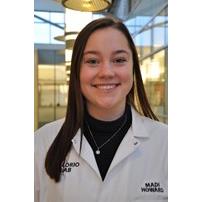
[cid:image001.jpg@01DB05C3.B4BD0650] BME 3rd Year Seminar Series Friday, October 11th, 2024 1:30 - 2:30 PM EST MJIS 1001 Evaluation links: Madison Howard: https://purdue.ca1.qualtrics.com/jfe/form/SV_08MDhFxgPW67Mgu<https://nam04.safelinks.protection.outlook.com/?url=https%3A%2F%2Fpurdue.ca1.qualtrics.com%2Fjfe%2Fform%2FSV_08MDhFxgPW67Mgu&data=05%7C02%7Cbmeroundtable-list%40ecn.purdue.edu%7Ced6680c4fce04b1f177008dce9fae5a9%7C4130bd397c53419cb1e58758d6d63f21%7C0%7C0%7C638642511297296667%7CUnknown%7CTWFpbGZsb3d8eyJWIjoiMC4wLjAwMDAiLCJQIjoiV2luMzIiLCJBTiI6Ik1haWwiLCJXVCI6Mn0%3D%7C0%7C%7C%7C&sdata=MPnXqj14DwBpiyRc0QGKf9KOLIu2%2FvZ6dwpALFHWUnI%3D&reserved=0> Rahaf Salim: https://purdue.ca1.qualtrics.com/jfe/form/SV_9vLNLXxKSAPUenI<https://nam04.safelinks.protection.outlook.com/?url=https%3A%2F%2Fpurdue.ca1.qualtrics.com%2Fjfe%2Fform%2FSV_9vLNLXxKSAPUenI&data=05%7C02%7Cbmeroundtable-list%40ecn.purdue.edu%7Ced6680c4fce04b1f177008dce9fae5a9%7C4130bd397c53419cb1e58758d6d63f21%7C0%7C0%7C638642511297296667%7CUnknown%7CTWFpbGZsb3d8eyJWIjoiMC4wLjAwMDAiLCJQIjoiV2luMzIiLCJBTiI6Ik1haWwiLCJXVCI6Mn0%3D%7C0%7C%7C%7C&sdata=JwFdxQnxyLwxmYEE3ZMt0qa1Uffdy8HjdPzjABtjCtM%3D&reserved=0> Evaluation surveys should only be completed after the seminar has taken place, and only by those who attended the seminar. Stretching the Limits: Unveiling Key Matrix Factors and Survival Mechanisms in the Metastatic Tumor Microenvironment Madison Howard (Luis Solorio, advisor) [cid:image005.jpg@01DB1BC2.3B1F6440] Abstract: Breast cancer (BC) often metastasizes to organs experiencing high mechanical stress, including the lungs. Despite this knowledge, the effect that dynamic forces native to the lungs have on early disseminated tumor cells is a currently under explored area of the metastatic cascade. Recent in vitro findings suggest BC cells enter a dormant state in response to tensile stress, yet the mechanisms by which these cells adapt to the dynamic conditions at metastatic sites remain unclear. In vitro cell stretching experiments and ex vivo tissue characterization could help uncover the mechanisms behind this mechanical adaptation, but the capabilities of existing testing platforms are limited. Here, we developed a simple and cost-effective in-plane actuation platform with high-resolution force sensing and simultaneous imaging capabilities. We will demonstrate the device utility for ex vivo tissue characterization by analyzing transient mechanical changes in murine metastatic lung tissue. Given that the extracellular matrix (ECM) is a main driver of tissue stiffness, this study will be paired with a proteomic analysis to identify transient changes in ECM composition throughout disease progression. To further investigate BC dormancy at the cellular level, an existing magnetic actuation platform will also be used to investigate how varying levels of strain energy affect the proliferation and mechanotransduction signaling of BC cells. Together, these aims will address gaps in current testing systems and provide insight into the mechanical adaptation mechanisms driving metastatic BC at both the tissue and cellular levels.
From Injury to Innervation: Investigating the spatiotemporal dynamics of CGRP in OA Rahaf Salim (Deva Chan/Matthew Ward, advisors)
[A person wearing a head scarf Description automatically generated] Abstract: Calcitonin gene-related peptide (CGRP) is a neuropeptide expressed in sensory nerve fibers that innervate joint tissues, where it plays a significant role in mediating pain and inflammation. While CGRP's involvement in osteoarthritis (OA) pain is increasingly recognized, there remain significant gaps in our understanding of how CGRP-expressing nerve fibers change over time and space within the joint during disease progression. Most studies to date have relied on traditional histological sectioning, which restrict the ability to examine the complete architecture of joints and the intact distribution of neural networks that innervate them in a spatially accurate manner. This knowledge gap is particularly important in the context of post-traumatic osteoarthritis (PTOA), where joint degeneration and pain often progress rapidly. In this study, we utilize a non-invasive ACL rupture (ACLR) mouse model of PTOA to investigate how CGRP-expressing nerve fibers respond to joint injury and how their distribution and morphology evolve as the disease progresses. This research leverages advanced optical clearing techniques to render joint tissues transparent, allowing for the visualization and in-depth evaluation of CGRP-expressing nerve fibers in intact joint structures-an approach that contrasts with traditional histological sectioning. Furthermore, this study integrates assessments of bone remodeling and pain behavior to establish functional links between sensory nerve fiber dynamics and structural changes in the joint. Through this work, we aim to uncover critical insights about the interplay between CGRP expression and joint pathology, with the potential to guide the development of spatially targeted interventions. Liz Rowen She/Her Graduate Program Assistant Weldon School of Biomedical Engineering Martin C. Jischke Hall of Biomedical Engineering 206 S. Martin Jischke Drive West Lafayette, IN 47907-2032 o: 765-494-1197 [7054E290]<https://www.purdue.edu/?utm_source=signature&utm_medium=email&utm_campaign=purdue> -- Bmeroundtable-list mailing list Bmeroundtable-list@ecn.purdue.edu https://engineering.purdue.edu/ECN/mailman/listinfo/bmeroundtable-list



participants (1)
-
 Rowen, Elizabeth Pearl