Weldon BME Seminar Announcement: September 22 at 9:30 AM in MJIS 1001

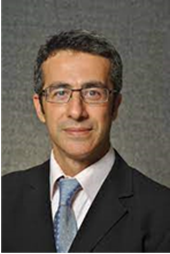
[cid:image001.jpg@01D7ABA9.5A84BBF0] Weldon School of Biomedical Engineering Seminar Series Wednesday, September 22, 2021 9:30-10:20am MJIS 1001 https://purdue-edu.zoom.us/j/95028921977 A Journey from Single-Woxel to Whole Brain Noninvasive Molecular and Myeloarchitectonic Imaging [cid:image002.png@01D7ABA9.5A84BBF0] Uzay E Emir, Ph.D. Assistant Professor School of Health Sciences Purdue University Abstract: Magnetic resonance imaging (MRI) is a powerful, non-invasive tool for biomedical imaging. MRI offers remarkably flexible "contrast" because it is sensitive to local molecular and myelin content. The ability to measure these noninvasively in living subjects would represent a significant leap forward in neuroscience. Methods of this kind would allow scientists to: study the formation of myelin, an essential aspect of development; disentangle complicated disease dynamics such as demyelination, neuronal loss, and gliosis. Thus, this talk will introduce and demonstrate Magnetic Resonance Imaging and Spectroscopy techniques, providing flexible structural and molecular contrast to probe human organs noninvasively within a clinically feasible acquisition time at 3T and 7T. The methods have been validated in a series of phantom experiments, and their feasibility was assessed in healthy volunteers. Experiments qualitatively demonstrate the advantage of the proposed methods in terms of their improved temporal and spatial resolution, reduced contamination from neighboring voxels, and further acceleration with novel reconstruction techniques. Bio: Dr. Uzay E Emir is currently an Assistant Professor in the School of Health Sciences at Purdue University. Having received his PhD degree from Bogazici University, Turkey, in which he studied BOLD fMRI signal transients with different neuro imaging modalities, he broadened his scientific expertise further by undertaking postdoctoral training in the field of ultra-high field (UHF) magnetic resonance spectroscopy (MRS) methods. Following this extensive training period, he worked at the FMRIB Centre, University of Oxford, from 2013-2017 as a Head of Magnetic Resonance Spectroscopy. Dr. Emir's expertise lies in the development and clinical translation of magnetic resonance spectroscopy (MRS) techniques at clinical (3T) and ultra-high field (UHF>3T) magnetic fields. He has used these systems at both 3T and 7T to quantify various brain metabolites, including neurotransmitters (γ-amino butyric acid, GABA, and glutamate, Glu) in Parkinson's Disease (PD); antioxidants (glutathione, GSH, and ascorbate, Asc) in aging; and oncometabolites (2 hydroxyglutarate, 2-HG, and lactate, Lac) in patients with glioma. ~BME Faculty Host: Dr. Matthew Ward~ Sincerely, Cindy Holderbaum Senior Administrative Assistant & Schedule Deputy Weldon School of Biomedical Engineering Martin C. Jischke Hall of Biomedical Engineering, (MJIS) Rm. 1021 206 S. Martin Jischke Dr. West Lafayette, IN 47907 o: 765-494-2995<tel:7654942995> cholderb@purdue.edu<mailto:cholderb@purdue.edu> www.purdue.edu/bme<http://www.purdue.edu/bme> myStrengths: Harmony | Consistency | Analytical | Deliberative| Maximizer "Things turn out best for those who make the best of the way things turn out." - John Wooden

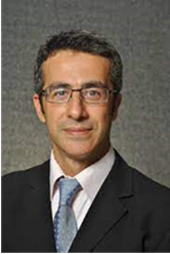
Please note slight title change. [cid:image003.jpg@01D7ABAD.A1A58470] Weldon School of Biomedical Engineering Seminar Series Wednesday, September 22, 2021 9:30-10:20am MJIS 1001 https://purdue-edu.zoom.us/j/95028921977 A Journey from Single-Voxel to Whole Brain Noninvasive Molecular and Myeloarchitectonic Imaging [cid:image004.png@01D7ABAD.A1A58470] Uzay E Emir, Ph.D. Assistant Professor School of Health Sciences Purdue University Abstract: Magnetic resonance imaging (MRI) is a powerful, non-invasive tool for biomedical imaging. MRI offers remarkably flexible "contrast" because it is sensitive to local molecular and myelin content. The ability to measure these noninvasively in living subjects would represent a significant leap forward in neuroscience. Methods of this kind would allow scientists to: study the formation of myelin, an essential aspect of development; disentangle complicated disease dynamics such as demyelination, neuronal loss, and gliosis. Thus, this talk will introduce and demonstrate Magnetic Resonance Imaging and Spectroscopy techniques, providing flexible structural and molecular contrast to probe human organs noninvasively within a clinically feasible acquisition time at 3T and 7T. The methods have been validated in a series of phantom experiments, and their feasibility was assessed in healthy volunteers. Experiments qualitatively demonstrate the advantage of the proposed methods in terms of their improved temporal and spatial resolution, reduced contamination from neighboring voxels, and further acceleration with novel reconstruction techniques. Bio: Dr. Uzay E Emir is currently an Assistant Professor in the School of Health Sciences at Purdue University. Having received his PhD degree from Bogazici University, Turkey, in which he studied BOLD fMRI signal transients with different neuro imaging modalities, he broadened his scientific expertise further by undertaking postdoctoral training in the field of ultra-high field (UHF) magnetic resonance spectroscopy (MRS) methods. Following this extensive training period, he worked at the FMRIB Centre, University of Oxford, from 2013-2017 as a Head of Magnetic Resonance Spectroscopy. Dr. Emir's expertise lies in the development and clinical translation of magnetic resonance spectroscopy (MRS) techniques at clinical (3T) and ultra-high field (UHF>3T) magnetic fields. He has used these systems at both 3T and 7T to quantify various brain metabolites, including neurotransmitters (γ-amino butyric acid, GABA, and glutamate, Glu) in Parkinson's Disease (PD); antioxidants (glutathione, GSH, and ascorbate, Asc) in aging; and oncometabolites (2 hydroxyglutarate, 2-HG, and lactate, Lac) in patients with glioma. ~BME Faculty Host: Dr. Matthew Ward~ Sincerely, Cindy Holderbaum Senior Administrative Assistant & Schedule Deputy Weldon School of Biomedical Engineering Martin C. Jischke Hall of Biomedical Engineering, (MJIS) Rm. 1021 206 S. Martin Jischke Dr. West Lafayette, IN 47907 o: 765-494-2995<tel:7654942995> cholderb@purdue.edu<mailto:cholderb@purdue.edu> www.purdue.edu/bme<http://www.purdue.edu/bme> myStrengths: Harmony | Consistency | Analytical | Deliberative| Maximizer "Things turn out best for those who make the best of the way things turn out." - John Wooden -- Bmeonering-list mailing list Bmeonering-list@ecn.purdue.edu https://engineering.purdue.edu/ECN/mailman/listinfo/bmeonering-list

participants (1)
-
 Holderbaum, Cynthia L