[Bmeroundtable-list] BME 3rd Year PhD Student Seminar Series: Friday 11-22

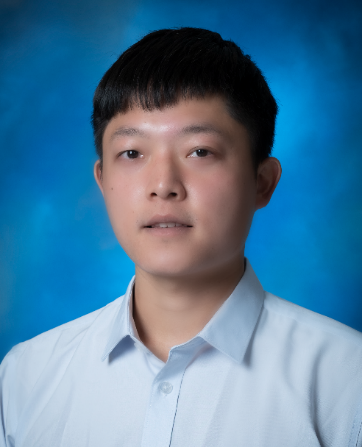
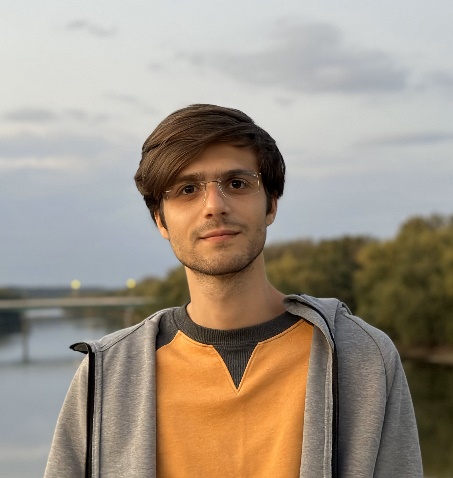
[cid:image001.jpg@01DB05C3.B4BD0650] BME 3rd Year Seminar Series Friday, November 22nd, 2024 1:30 - 2:30 PM EST MJIS 1001 Evaluation links: Shen Chang: https://purdue.ca1.qualtrics.com/jfe/form/SV_af6g9cIoztLdgeq<https://nam04.safelinks.protection.outlook.com/?url=https%3A%2F%2Fpurdue.ca1.qualtrics.com%2Fjfe%2Fform%2FSV_af6g9cIoztLdgeq&data=05%7C02%7Cbmeroundtable-list%40ecn.purdue.edu%7C4bbffc464efd45d03d5608dd0b0bf22f%7C4130bd397c53419cb1e58758d6d63f21%7C0%7C0%7C638678868174891821%7CUnknown%7CTWFpbGZsb3d8eyJFbXB0eU1hcGkiOnRydWUsIlYiOiIwLjAuMDAwMCIsIlAiOiJXaW4zMiIsIkFOIjoiTWFpbCIsIldUIjoyfQ%3D%3D%7C0%7C%7C%7C&sdata=hP5eix%2BlGeyXoGvrcd0mNf6DgOvwntG9PQHDAs2cY1w%3D&reserved=0> Shahriar Zeynali: https://purdue.ca1.qualtrics.com/jfe/form/SV_0vVmSMn7xBjuebA<https://nam04.safelinks.protection.outlook.com/?url=https%3A%2F%2Fpurdue.ca1.qualtrics.com%2Fjfe%2Fform%2FSV_0vVmSMn7xBjuebA&data=05%7C02%7Cbmeroundtable-list%40ecn.purdue.edu%7C4bbffc464efd45d03d5608dd0b0bf22f%7C4130bd397c53419cb1e58758d6d63f21%7C0%7C0%7C638678868174891821%7CUnknown%7CTWFpbGZsb3d8eyJFbXB0eU1hcGkiOnRydWUsIlYiOiIwLjAuMDAwMCIsIlAiOiJXaW4zMiIsIkFOIjoiTWFpbCIsIldUIjoyfQ%3D%3D%7C0%7C%7C%7C&sdata=C%2BbJD62fgPW42rq4U1nuhAHBRcTosubX8QidfqSqasY%3D&reserved=0> Evaluation surveys should only be completed after the seminar has taken place, and only by those who attended the seminar. We appreciate those who are able to attend and provide feedback; These surveys will help us determine the recipient of the 2024 Fearnot Prize for the best presentation! Advancing Human Situational Awareness Assessment in Medical Intervention Shen Chang (Nan Kong/Renran Tian, advisors) [cid:image002.png@01DB3996.3E4A3590] Abstract: Situational awareness (SA) is a critical cognitive process that fundamentally shapes human performance in complex environments. A significant challenge exists in accurately measuring and evaluating SA, particularly in scenarios where untrained individuals must interact with advanced technologies during critical situations. Our initial research demonstrated this through analysis of human-drone interactions (HDI) in simulated emergency medical responses, where we developed an AI framework leveraging computer vision and graph embeddings to capture spatial-temporal relationships between humans, drones, and their environment. This work revealed both the power and limitations of behavior-based SA measures. Building upon these insights, we propose extending our framework through evidential learning techniques, using the NurViD dataset of nursing procedures as a validation domain. By modeling expert behavior patterns and their associated uncertainties, our proposed approach aims to quantify both the inherent variability in task execution and knowledge gaps in performance. This uncertainty-aware framework would enable objective comparison between expert and novice performance, providing a more standardized method for SA assessment. The implications of this research extend far beyond theoretical advancement-real-time SA assessment could enable adaptive coaching systems that dynamically respond to individual performance levels, transforming how we approach emergency response training and healthcare delivery. By bridging the gap between novice and expert performance through intelligent assessment and feedback, our work aims to enhance the safety and effectiveness of human-technology interactions in life-critical situations, potentially saving lives through improved emergency response capabilities and healthcare outcomes. T1 sensitivity to ferumoxytol at 3T versus 0.55T field strengths Shahriar Zeynali (Behzad Sharif/Craig Goergen, advisors) [cid:image005.jpg@01DB3996.3E4A3590] Abstract: Ferumoxytol-enhanced cardiac MRI (FE CMRI) has the potential to detect myocardial ischemia by enabling accurate assessment of changes in intra-myocardial blood volume (MBV). However, in-vivo comparison of ferumoxytol behavior at different field strengths is lacking. We analyzed and compared (a) relative myocardial and blood T1 changes in response to a range of ferumoxytol doses, (b) artifact severity on MOLLI T1 maps, in a relatively large cohort of animal studies at 0.55T and 3T. FE CMRI at 0.55T demonstrated 2.5-fold greater myocardial T1 sensitivity to ferumoxytol dose compared to 3T, with significantly reduced susceptibility image artifacts. The observed increase in ferumoxytol sensitivity at 0.55T enables dose reduction while maintaining diagnostic quality, offering a more cost-effective platform for FE CMRI. This could particularly benefit stress/rest T1 reactivity mapping where detecting subtle MBV changes is crucial. Liz Rowen She/Her Graduate Program Assistant Weldon School of Biomedical Engineering Martin C. Jischke Hall of Biomedical Engineering 206 S. Martin Jischke Drive West Lafayette, IN 47907-2032 o: 765-494-1197 [7054E290]<https://www.purdue.edu/?utm_source=signature&utm_medium=email&utm_campaign=purdue> -- Bmeroundtable-list mailing list Bmeroundtable-list@ecn.purdue.edu https://engineering.purdue.edu/ECN/mailman/listinfo/bmeroundtable-list


participants (1)
-
 Rowen, Elizabeth Pearl