[Bmeroundtable-list] BME Distinguished Research Seminar - Wed., October 30

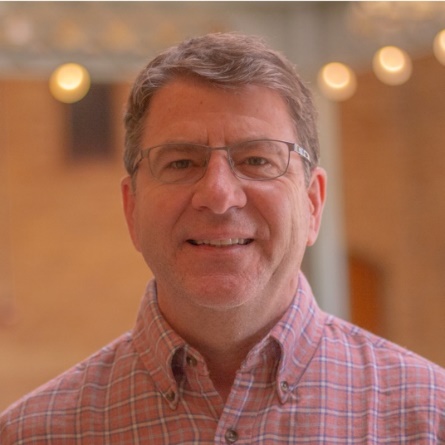
[A screen shot of a message Description automatically generated] BME DISTINGUISHED RESEARCH SEMINAR SERIES Wednesday, October 30, 2024 9:30 - 10:20 am, MJIS 1001 ZOOM LINK: https://purdue-edu.zoom.us/j/95419101730<https://nam04.safelinks.protection.outlook.com/?url=https%3A%2F%2Fpurdue-edu.zoom.us%2Fj%2F95419101730&data=05%7C02%7Cbmeroundtable-list%40ecn.purdue.edu%7C7c9ac60290664811cbc608dcf39d3c98%7C4130bd397c53419cb1e58758d6d63f21%7C0%7C0%7C638653103853374744%7CUnknown%7CTWFpbGZsb3d8eyJWIjoiMC4wLjAwMDAiLCJQIjoiV2luMzIiLCJBTiI6Ik1haWwiLCJXVCI6Mn0%3D%7C0%7C%7C%7C&sdata=zOuzR1OfhLMQYhntOWb7IIq7Vfw098%2BA0ViTeGh8wI8%3D&reserved=0> *Note: Students enrolled in the seminar course are expected to attend in person. "Water-Triggered Polymerization of a-Lipoic Acid for Surgical Adhesion" [Professor Phillip Messersmith Co-Authors Paper on Drug-Induced Tissue Regeneration - Materials Science & Engineering] Phillip Messersmith Professor & Chair of Bioengineering Class of 1941 WWII Memorial Chair in Bioengineering and Materials Science and Engineering University of California, Berkeley Abstract: Polymer adhesives play an important role in many medical, consumer and industrial products. Polymers of *-lipoic acid (aLA) have the potential to fulfill the need for versatile and environmentally friendly adhesives, but their performance is plagued by spontaneous depolymerization. In this talk, I will describe a facile method for rapid catalyst-free *LA polymerization induced by contact with water. Application of the monomer to a wet tissue surface afforded rapid solidification of a strong and elastomeric polymer adhesive that is resistant to spontaneous depolymerization. Fetal anomalies are increasingly being addressed with surgical interventions performed in the second or third trimester. Because the fetal membranes that enclose the womb are mechanically fragile and nonhealing, the defect created by the intervention increases the likelihood of preterm premature rupture of the membranes (PPROM), which is associated with increased risk of fetal morbidity and mortality. Adhesive biomaterials are being explored to seal fetal membrane defects, providing mechanical stability to the membranes, reducing amniotic fluid loss, and extending gestation. I will describe our efforts to use our new surgical adhesive to seal fetal membrane defects; preclinical experiments with our aLA surgical glue increased fetal survival from 0% to 100%. Biography: Phillip Messersmith is a Professor of Bioengineering and Materials Science and Engineering at UC Berkeley, where he is currently chair of the Department of Bioengineering. He earned his BS and PhD degrees from the University of Illinois at Urbana. After a postdoctoral fellowship at Cornell University, he was a faculty member at University of Illinois at Chicago and Northwestern University. Dr. Messersmith has published over 220 papers. Dr. Messersmith is a fellow of the Royal Society of Chemistry, the Materials Research Society and the American Institute for Medical and Biological Engineering. His awards and honors include a MERIT award from the National Institutes of Health, the Langmuir Lecture Award from the American Chemical Society, and the Clemson Award for Basic Research from the Society for Biomaterials. His academic research is focused on bioinspired materials, biointerfacial phenomena, and regenerative medicine. He has 47 US patents awarded and is a cofounder of three startups. ~ BME Host: Taimoor H. Qazi ~ -- Bmeroundtable-list mailing list Bmeroundtable-list@ecn.purdue.edu https://engineering.purdue.edu/ECN/mailman/listinfo/bmeroundtable-list

participants (1)
-
 Gelfand, Johanna K