[Bmeroundtable-list] Prospective BME Faculty Seminar - Mon., Feb. 28

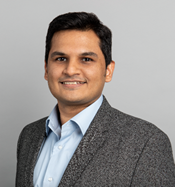
[cid:image001.jpg@01D82A25.FF343E00] Weldon School of Biomedical Engineering Prospective Faculty Seminar Monday, February 28, 2022 9:30-10:20am MJIS 2001 or Via Zoom: https://purdue-edu.zoom.us/j/93209391583?pwd=NDFVZWpUSzd4UmNWT1FyeGQrdWVpdz0... Engineered Biomaterials to Enhance Cellular and Acellular Therapies For Tissue Repair [cid:image002.png@01D82A25.FF343E00] Taimoor Qazi, Ph.D. Postdoctoral Fellow, Burdick Polymeric Biomaterials Laboratory Department of Bioengineering, University of Pennsylvania Abstract: Traumatic injury to soft tissues like skeletal muscle causes aberrant fibrosis and a decline in function that can compromise quality of life and prolong disability if left untreated. A major challenge in regenerating complex tissues after severe injury lies in restoring endogenous biological activity e.g., the proliferation and differentiation of tissue-resident cells and revascularization of the injury site. In this seminar, I will describe two distinct biomaterials-based strategies that harness biophysical and biochemical design features to guide cellular behavior and tissue repair. In the first approach, cell-laden microporous scaffolds amplified the paracrine function of mesenchymal stromal cells (MSCs) by promoting cell-cell interactions and enhancing sensitivity to growth factor stimulation. These implantable constructs stimulated myofiber regeneration, reduced muscle fibrosis and improved contractile function in a clinically relevant model of traumatic muscle injury. In the second example, I will detail recent work in designing injectable, modular, and inherently porous particle-based granular hydrogels as an acellular therapy for endogenous repair. Changing particle shape from isotropic spheres to anisotropic rods using a microfluidics approach resulted in granular hydrogels with improved pore interconnectivity that supported robust endothelial cell sprouting in vitro and rapid invasion of cells and blood vessels in vivo. Together, these applications highlight the versatility of hydrogels for translational applications. Bio: Dr. Taimoor Qazi is a postdoctoral fellow in the Bioengineering Department at the University of Pennsylvania, where he works on designing injectable granular hydrogels for biomedical applications in the group of Dr. Jason Burdick. Taimoor received his Ph.D. at the Technical University of Berlin (Germany), where he investigated paracrine mechanisms of mesenchymal stromal cell-based therapies for muscle regeneration under the co-advisement of Dr. Georg Duda and Dr. David Mooney. His work has been recognized through several awards, notably the Society for Biomaterials (SFB) Postdoctoral Recognition Award, the German Society for Orthopedics and Traumatology (DGOU) Basic Research Award, and the Charité Medical University Young Investigator Award. Taimoor is interested in harnessing biomaterials to address challenges in the treatment of musculoskeletal ailments, and his future research program will combine concepts of polymer chemistry, microscale engineering tools, drug delivery, stem cell biology, and tissue engineering to establish translational regenerative approaches for musculoskeletal repair. ~BME Faculty Host: Dr. Vitaliy Rayz ~ -- Bmeroundtable-list mailing list Bmeroundtable-list@ecn.purdue.edu https://engineering.purdue.edu/ECN/mailman/listinfo/bmeroundtable-list

participants (1)
-
 Gelfand, Johanna K