[Bmeroundtable-list] BME 3rd Year PhD Seminar Series: Friday 11-8

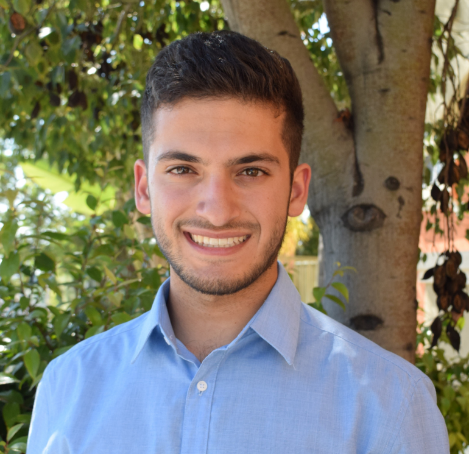
[cid:image001.jpg@01DB05C3.B4BD0650] BME 3rd Year Seminar Series Friday, November 8th, 2024 1:30 - 2:30 PM EST MJIS 1001 Evaluation links: Alexander Donabedian: https://purdue.ca1.qualtrics.com/jfe/form/SV_8kPRBEQ9RLT9WXI<https://nam04.safelinks.protection.outlook.com/?url=https%3A%2F%2Fpurdue.ca1.qualtrics.com%2Fjfe%2Fform%2FSV_8kPRBEQ9RLT9WXI&data=05%7C02%7Cbmeroundtable-list%40ecn.purdue.edu%7C679e2ba0815b4678c1fd08dcfcd8edb0%7C4130bd397c53419cb1e58758d6d63f21%7C0%7C0%7C638663256371986121%7CUnknown%7CTWFpbGZsb3d8eyJWIjoiMC4wLjAwMDAiLCJQIjoiV2luMzIiLCJBTiI6Ik1haWwiLCJXVCI6Mn0%3D%7C0%7C%7C%7C&sdata=3eVTa96tTJOoC0qfZkzPqQ%2FuIdRKgcKYx%2BERHCVxJt0%3D&reserved=0> Jee Hyun Park: https://purdue.ca1.qualtrics.com/jfe/form/SV_24T8XAvaQCb4fqe<https://nam04.safelinks.protection.outlook.com/?url=https%3A%2F%2Fpurdue.ca1.qualtrics.com%2Fjfe%2Fform%2FSV_24T8XAvaQCb4fqe&data=05%7C02%7Cbmeroundtable-list%40ecn.purdue.edu%7C679e2ba0815b4678c1fd08dcfcd8edb0%7C4130bd397c53419cb1e58758d6d63f21%7C0%7C0%7C638663256371986121%7CUnknown%7CTWFpbGZsb3d8eyJWIjoiMC4wLjAwMDAiLCJQIjoiV2luMzIiLCJBTiI6Ik1haWwiLCJXVCI6Mn0%3D%7C0%7C%7C%7C&sdata=kdtxWmBJcKVZb28A4ZixnjNWcUIsZLMdxGk31W11zyI%3D&reserved=0> Evaluation surveys should only be completed after the seminar has taken place, and only by those who attended the seminar. We appreciate those who are able to attend and provide feedback; These surveys will help us determine the recipient of the 2024 Fearnot Prize for the best presentation! Sensitivity of Finite Element Models to Relationship Between T2 Relaxation and Modulus in Articular Cartilage Alex Donabedian (Deva Chan/Craig Goergen, advisors) [cid:image005.png@01DB2E97.82B71EA0] Abstract: Osteoarthritis (OA) is a disabling joint disease that continues to prevail among the US population. Without a true noninvasive cure, total joint replacement surgery is a likely outcome that is costly for the healthcare system and individual. To shift treatment towards prevention and away from palliation, computational models can be a tool to study articular cartilage at risk of degradation, a hallmark sign of OA progression, before reaching severe disease states. Due to the complex microstructure of articular cartilage, generalized models cannot reliably provide subject-specific information about the underlying tissue. Finite element (FE) models can be tailored to the patient with magnetic resonance imaging (MRI) providing an individualized risk assessment. MRI-informed models exist today; however, very few of them address the spatially varying properties of articular cartilage hindering their accuracy. Here, we use MRI to inform an FE model of articular cartilage where the stiffness varies spatially. We employ an established linear relationship between MRI T2 relaxation and the dynamic modulus of articular cartilage to inform the stiffness of each element within our model. Due to the inter- and intra-material variability of cartilage, we alter this relationship by (1) shifting the dynamic modulus range while maintaining the same slope relationship to T2 and (2) altering the slope relationship to assess the change in the computed outputs. Additionally, computed areas of high stress and strain will be compared with regional cartilage health data to assess the model's potential to predict regional degradation. Tailoring the model's material properties to the patient suggests an improved individual risk assessment of developing OA compared to generalized models. APOE4 Mouse to Human Alzheimer's Disease Translational Modeling Reveals Therapeutic Perturbagen Signature Associations Jee Hyun Park (Douglas Brubaker, advisor) [cid:image002.jpg@01DB2E97.E0F65120] Abstract: Alzheimer's Disease (AD) impacts the brain by hindering behavior and cognitive function. Coupled with tau tangles and amyloid plaque, increased synapse and neuron death are features in AD patients. Numerous aspects, such as age and genetics, specifically apolipoprotein E e4 (APOE4), increase susceptibility to AD development. APOE is a carrier of lipids in the brain. There is a heightened risk of AD by expressing the APOE e4 allele due to increased levels of plaque aggregates compared to e3 carriers with dysfunctional lipid metabolism. However, how APOE4 aggravates AD has not been fully characterized. In addition, insufficient effective human therapies from mice studies and drug screenings are a challenge due to models not fully encompassing AD pathology. Thus, we used a cross-species translational model by integrating APOE4 knock-in mouse and human gene expression with demographic and clinical factors to predict human AD states. Our model determined axon guidance downregulation in AD and inflammatory pathways upregulated in AD. We also performed a Spearman correlation to identify gene signatures of drugs that resemble or reverse AD features based on mouse principal components predictive of AD. We discovered drugs used for diabetes treatment to resemble the control signatures. Our study revealed biological mechanisms dysregulated by APOE4 in mice that could be potential therapeutic targets for treating AD in humans. Future work will validate results with human datasets carrying the APOE4 allele. Liz Rowen She/Her Graduate Program Assistant Weldon School of Biomedical Engineering Martin C. Jischke Hall of Biomedical Engineering 206 S. Martin Jischke Drive West Lafayette, IN 47907-2032 o: 765-494-1197 [7054E290]<https://www.purdue.edu/?utm_source=signature&utm_medium=email&utm_campaign=purdue> -- Bmeroundtable-list mailing list Bmeroundtable-list@ecn.purdue.edu https://engineering.purdue.edu/ECN/mailman/listinfo/bmeroundtable-list



participants (1)
-
 Rowen, Elizabeth Pearl