[Bmeroundtable-list] FW: Summer Seminar Announcement

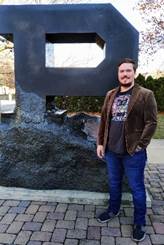
[cid:image001.jpg@01D9AAA1.6C8CE590] BME Summer Seminar Series Wednesday, July 5th, 2023 9:30-10:30 AM EST Via Zoom Meeting - link below* Evaluation links: Grigorii Rudakov: https://purdue.ca1.qualtrics.com/jfe/form/SV_2rjC90vn9ZYFw0K<https://nam04.safelinks.protection.outlook.com/?url=https%3A%2F%2Fpurdue.ca1.qualtrics.com%2Fjfe%2Fform%2FSV_2rjC90vn9ZYFw0K&data=05%7C01%7Cbmeroundtable-list%40ecn.purdue.edu%7C014e9bc9b97d44c9c71c08db79833a33%7C4130bd397c53419cb1e58758d6d63f21%7C0%7C0%7C638237376739819465%7CUnknown%7CTWFpbGZsb3d8eyJWIjoiMC4wLjAwMDAiLCJQIjoiV2luMzIiLCJBTiI6Ik1haWwiLCJXVCI6Mn0%3D%7C3000%7C%7C%7C&sdata=JBsGxcdZFlb0I1Z3p0l8QbyNysIZW8cnolukWWazWAo%3D&reserved=0> Ankit Shah: https://purdue.ca1.qualtrics.com/jfe/form/SV_8GrFpXuRHzrgy2O<https://nam04.safelinks.protection.outlook.com/?url=https%3A%2F%2Fpurdue.ca1.qualtrics.com%2Fjfe%2Fform%2FSV_8GrFpXuRHzrgy2O&data=05%7C01%7Cbmeroundtable-list%40ecn.purdue.edu%7C014e9bc9b97d44c9c71c08db79833a33%7C4130bd397c53419cb1e58758d6d63f21%7C0%7C0%7C638237376739819465%7CUnknown%7CTWFpbGZsb3d8eyJWIjoiMC4wLjAwMDAiLCJQIjoiV2luMzIiLCJBTiI6Ik1haWwiLCJXVCI6Mn0%3D%7C3000%7C%7C%7C&sdata=cUDkTi7oT1uska4zTbjYfyIrj0P7OPUsstgEvlWuqSw%3D&reserved=0> Drug Delivery Through Blood-Brain Barrier: DNA Nano Lego for Grown-Ups Grigorii Rudakov (Chengde Mao/Tamara Kinzer-Ursem, advisors) [cid:image007.jpg@01D9AAA1.7176D4D0] Abstract: Treating brain-related diseases non-invasively poses a significant challenge, primarily due to the highly impermeable nature of the Blood-Brain Barrier (BBB). The BBB acts as a filter, preventing the passage of most artificial materials larger than 100 nm. Additionally, the substantial proton gradient between the brain and blood flow further complicates drug delivery. However, the field of nanomaterials offers promising solutions to overcome these obstacles, thanks to their small sizes and extensive research spanning over 50 years. Numerous approaches and materials have been investigated to enhance BBB permeability, including polymeric, organic, and inorganic nanoparticles, as well as composite nanomaterials. Despite these efforts, achieving efficient drug transport through the BBB remains a significant challenge. In this study, we focus on utilizing DNA nanomaterials, known for their exceptional biocompatibility, to facilitate the delivery of dyes into the brain. Specifically, we employ DNA tetrahedra, which are extensively studied and possess excellent physical rigidity. Our research investigates the impact of various factors, such as size, structure, receptor-mediated endocytosis pathway, and DNA chirality, on the efficiency of drug delivery. Our ultimate goal is to optimize this approach and achieve maximum delivery efficiency while ensuring high biocompatibility. To assess efficiency, we consider factors such as stability (both biological and physical), toxicity, and the quantity of dye delivered through both passive and active diffusion. The outcomes of this study hold significant potential. Firstly, we aim to gain insights into the most efficient method of drug delivery through the BBB using the most biocompatible material available. Additionally, our research contributes to the advancement of DNA bionanotechnology, paving the way for further developments in this field. Ultimately, our work represents a crucial milestone towards effectively treating brain-related diseases by enabling efficient drug delivery to the brain. The text was edited with chatGPT. Advancing Smart Catheter Technology: Development of a 4-Axis 3D Printer for Direct Printing of Electronics on Curvilinear Surfaces Ankit Shah (Hyowon Lee, advisor) [Ankit Shah] Abstract: The demand for flexible conformal electronics on curvilinear surfaces for health monitoring and therapeutic applications has emerged due to the curvilinear nature of human anatomy. This research focuses on developing a 4-axis 3D printer designed specifically to address challenges associated with the conformal manufacturing of electronics on catheter surfaces for smart catheter applications. The goal is to eliminate complex lithography transfer techniques and overcome issues related to adhesion, surface geometry mismatch, material wastage, and other common problems in traditional fabrication methods. The key innovation of this device is its ability to directly print electronics on the catheter surface, transforming the catheter into a print bed. Leveraging the catheter's rotational movement and automatic height detection with specialized control system algorithms, the printer ensures precise nozzle positioning regardless of the catheter's surface geometry. Directly printing electronics onto catheters enables the development of advanced functionalities, including integrated sensors, wireless communication modules, and therapeutic devices. Additive manufacturing and the versatility of different inks and nanomaterials allow for incorporating a wide range of functionalities into these conformal medical devices. We have demonstrated printing encrypted chipless RFID antennas, microheaters, flow sensors, pH sensors, strain sensors, and flexible conducting traces directly on catheters, unlocking the potential for smart implantable catheters. This advancement enhances monitoring, diagnostics, and treatment capabilities while reducing the complexity and costs associated with traditional manufacturing techniques. The 4-axis printing approach provides customization and adaptability, allowing for patient-specific and tailored electronic devices on catheters. *Join Zoom Meeting https://purdue-edu.zoom.us/j/98231659969?pwd=T21Oa1B6QzFyQzFvckMzS1doNGlJUT09<https://nam04.safelinks.protection.outlook.com/?url=https%3A%2F%2Fpurdue-edu.zoom.us%2Fj%2F98231659969%3Fpwd%3DT21Oa1B6QzFyQzFvckMzS1doNGlJUT09&data=05%7C01%7Cbmeroundtable-list%40ecn.purdue.edu%7C014e9bc9b97d44c9c71c08db79833a33%7C4130bd397c53419cb1e58758d6d63f21%7C0%7C0%7C638237376739819465%7CUnknown%7CTWFpbGZsb3d8eyJWIjoiMC4wLjAwMDAiLCJQIjoiV2luMzIiLCJBTiI6Ik1haWwiLCJXVCI6Mn0%3D%7C3000%7C%7C%7C&sdata=3KBieYUvlozkyQvruf2nogGK7kcZBzdrWTEd1I4Le%2Bc%3D&reserved=0> Meeting ID: 982 3165 9969 Passcode: biomedical Liz Rowen She/Her Graduate Program Assistant Weldon School of Biomedical Engineering Martin C. Jischke Hall of Biomedical Engineering 206 S. Martin Jischke Drive West Lafayette, IN 47907-2032 o: 765-494-1197 [7054E290]<https://www.purdue.edu/?utm_source=signature&utm_medium=email&utm_campaign=purdue> -- Bmeroundtable-list mailing list Bmeroundtable-list@ecn.purdue.edu https://engineering.purdue.edu/ECN/mailman/listinfo/bmeroundtable-list



participants (1)
-
 Gelfand, Johanna K