[Bmeroundtable-list] BME 3rd year PhD Seminar Series: Friday 10-18

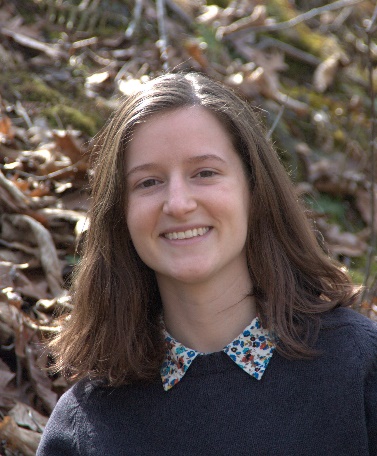
[cid:image001.jpg@01DB05C3.B4BD0650] BME 3rd Year Seminar Series Friday, October 18th, 2024 1:30 - 2:30 PM EST MJIS 1001 Evaluation links: Nissa Larson: https://purdue.ca1.qualtrics.com/jfe/form/SV_1XhCjsnzlmKuqgK<https://nam04.safelinks.protection.outlook.com/?url=https%3A%2F%2Fpurdue.ca1.qualtrics.com%2Fjfe%2Fform%2FSV_1XhCjsnzlmKuqgK&data=05%7C02%7Cbmeroundtable-list%40ecn.purdue.edu%7C464dd7c2db274f94c3e508dcec556040%7C4130bd397c53419cb1e58758d6d63f21%7C0%7C0%7C638645098943947695%7CUnknown%7CTWFpbGZsb3d8eyJWIjoiMC4wLjAwMDAiLCJQIjoiV2luMzIiLCJBTiI6Ik1haWwiLCJXVCI6Mn0%3D%7C0%7C%7C%7C&sdata=gikf7QesnFjwf113OuyI6czE0oBnVg%2F4sxORZ4E55Mc%3D&reserved=0> Samuel Senneka: https://purdue.ca1.qualtrics.com/jfe/form/SV_ezZvPZtnADh3578<https://nam04.safelinks.protection.outlook.com/?url=https%3A%2F%2Fpurdue.ca1.qualtrics.com%2Fjfe%2Fform%2FSV_ezZvPZtnADh3578&data=05%7C02%7Cbmeroundtable-list%40ecn.purdue.edu%7C464dd7c2db274f94c3e508dcec556040%7C4130bd397c53419cb1e58758d6d63f21%7C0%7C0%7C638645098951604278%7CUnknown%7CTWFpbGZsb3d8eyJWIjoiMC4wLjAwMDAiLCJQIjoiV2luMzIiLCJBTiI6Ik1haWwiLCJXVCI6Mn0%3D%7C0%7C%7C%7C&sdata=bpQKdRvtG80eQR7LvYBioM%2BnUEWR5Tp23frtCiB1ms4%3D&reserved=0> Evaluation surveys should only be completed after the seminar has taken place, and only by those who attended the seminar. Signal processing and robustness of the BMP network during zebrafish embryogenesis Nissa Larson (David Umulis, advisor) [cid:image003.jpg@01DB1E1C.B59AA4D0] Abstract: In developing tissues, signal transduction from morphogen gradients conveys positional information to cells, resulting in cell specification and differentiation. One such morphogen is bone morphogenetic protein (BMP), of the TGF-β superfamily, whose network is highly conserved across many species. In zebrafish species Danio rerio, this signaling pathway directs dorsoventral axis formation during early embryogenesis. Many of the molecules that play a role in this network are known; however, the mechanisms through which they achieve noise attenuation and gradient robustness have not been defined. Specifically, the heterodimer heterotetramer complex has been shown to be required for signal transduction, but deterministic modeling of the BMP membrane receptors at this stage has not given any insight into evolutionary drivers of the requirement. Building and developing a stochastic, multiscale model of this process will allow us to mechanistically assess zebrafish phenotype variability related to the distributions of noise and stochasticity. We can also analyze time-dependent signaling and frequency metrics that are not available in traditional, deterministic modeling. Fast Fourier Transform and cumulative energy spectral density visualization show that the heterodimer-heterotetramer complex may function as a low-pass filter in the dorsal-ventral axis formation process, specifically tuned to the noise of the system. To further probe this system, we are working to develop an experimental optogenetics protocol to genetically manipulate dorsoventral signal transduction in vivo and collect and analyze fluorescence intensity of the downstream pSmad gradient. Through these multiscale modeling efforts and experimental coupling, we hope to further understand the noise origins and signal processing of this network. As the BMP signaling pathway is highly conserved and has been implicated in human bone growth and wound healing, its study in simpler systems such as zebrafish stands to accelerate our comprehension of BMP network structure and molecular mechanisms with application in regenerative medical studies. Learning and integration of artificial and natural sensory stimuli Samuel Senneka (Maria Dadarlat Makin/Ed Bartlett, advisors) [cid:image005.jpg@01DB1E1C.B59AA4D0] Abstract: Our senses are the primary channels through which we collect information about the world around us, and our brains constantly assess similarities and differences in sensory signals through a host of functions collectively known as multisensory processing. Losing one or multiple sensory modalities has a drastic impact on our ability to interact with our environment and how information from remaining sensory modalities is processed. Devices aimed at restoring lost sensation are already being developed, however, these devices have a wide variability in patient outcomes and are not effective therapies for all forms of sensory loss pathologies. Recent methods using intracortical microstimulation (ICMS) have shown that many animal models can use ICMS as a form of sensory feedback but whether this feedback unifies with existing perception is unclear and the most efficacious methods for learning novel sensory modalities have yet to be identified. To further study ICMS as a form of sensory feedback, mice were trained to navigate to an arbitrary region of their training cage indicated by a visual target and closed-loop ICMS feedback. Probe trials were introduced to assess subjects' understanding of the ICMS signal and compare their performance against natural sensation. Subjects were able to learn this task to a high degree of accuracy in a very short time and performance with ICMS rivaled performance with a dim visual target. Metrics including success rate, average speed, time taken, and path efficiency also showed a significantly higher performance on combined visuo-ICMS trials than unimodal ICMS or visual trials indicating integration of the two signals. In future work, this behavior will allow the testing of a wide variety of ICMS parameters and interactions with natural sensory modalities to develop a stronger understanding of the brain's ability to learn novel sensory modalities and how new sensations interact with existing ones. Liz Rowen She/Her Graduate Program Assistant Weldon School of Biomedical Engineering Martin C. Jischke Hall of Biomedical Engineering 206 S. Martin Jischke Drive West Lafayette, IN 47907-2032 o: 765-494-1197 [7054E290]<https://www.purdue.edu/?utm_source=signature&utm_medium=email&utm_campaign=purdue> -- Bmeroundtable-list mailing list Bmeroundtable-list@ecn.purdue.edu https://engineering.purdue.edu/ECN/mailman/listinfo/bmeroundtable-list



participants (1)
-
 Rowen, Elizabeth Pearl