[Bmeroundtable-list] BME Weekly Roundtable

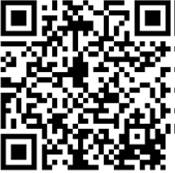
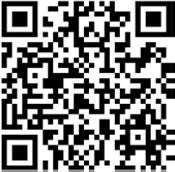
[cid:image011.jpg@01D9BE11.68181330] BME WEEKLY ROUNDTABLE July 24, 2023 INTERIM HEAD’S NOTE Continue to enjoy your summer! MJIS ALERTS Materials Management and Distribution is providing shipping guidance ahead of potential UPS inbound and outbound service disruptions and/or delays due to a potential strike. Beginning today (July 24), Materials Management and Distribution encourages those who are shipping materials via UPS to make sure the estimated delivery date is July 31 or before. If the estimated delivery date is Aug. 1 or after, Materials Management and Distribution recommends switching the carrier to FedEx before printing the shipping label. The estimated delivery date should be shown on the shipping label. Materials Management and Distribution will advise when service disruptions are resolved and normal shipping and receiving operations can resume. Questions may be directed to Patty Turner, shipping and receiving clerk, at 765-494-7103 or MMDCshipping@purdue.edu<mailto:MMDCshipping@purdue.edu>. UPCOMING IMPORTANT DATES Week of July 24 Mon., July 24: Final Grade Entry Begins. (Ends promptly at 5:00 p.m., Tues., August 8th). Wed., July 26: BME Summer Seminar Series, 9:30 a.m. via Zoom. Seungbin Park (Maria Dadarlat, advisor) will present “Decoding Limb Trajectories from 2-Photon Calcium Imaging Using a Recurrent Encoder-Decoder Network and Sarwat Amin (Matthew Ward, advisor) will present “Monitoring vaccine reactogenicity using heart rate-derived metrics and physiological signals measured by wearable devices.” Wed., July 26: Trailblazers in Engineering Keynote Lecture, 8:30-9:30 a.m., The Convergence Center, 101 Foundry Dr., Suite 120. Cato T. Laurencin, University Professor at the University of Connecticut and Chief Executive Officer of the Cato T. Laurencin Institute for Regenerative Engineering at the University of Connecticut will present “Regenerative Engineering: Chemistry and Materials Science in Regeneration.” Wed., July 26: Trailblazers in Engineering Keynote Lecture, 10:15-11:15 a.m., The Convergence Center, 101 Foundry Dr., Suite 120. Cecilia Aragon, Professor and Director of the Human-Centered Data Science Lab, University of Washington, Seattle, will present “What Flying Upside Down Taught Me About Engineering AI.” Wed., July 26 through Friday, July 28: MJIS vacuum pumps will be shut down for replacement and repairs. During this three day period, there will be NO vacuum exhausting available in any of the lab hoods, as the vacuum lines to the building will be shut down in order to do needed repairs and install new piping and motors. Please plan ahead! Contact Susan Hardy (hardy13@purdue.edu<mailto:hardy13@purdue.edu>) with any questions or concerns. Important deadlines and information Mon., July 31: Prospective BME Faculty Seminar, 9:30 a.m., MJIS 1083 or via Zoom. Cheen Euong Ang, Postdoctoral Researcher, Department of Chemistry and Chemical Biology, Harvard University, will present “Illuminating neurobiology and pathology by cellular reprogramming and spatial omics.” Tues., Aug. 1: BME PhD Preliminary Exam Announcement for Yilun Li (Fang Huang, advisor), 10:30 a.m., MJIS 2001 and via Zoom. Title of presentation: Cloud-SMLM: An Online Computation Platform for Seamless Super-Resolution Image Reconstruction. Wed., Aug. 9: Poster Presentation Applications Deadline. Registration<https://nam04.safelinks.protection.outlook.com/?url=https%3A%2F%2Fclick.e.iu.edu%2F%3Fqs%3D64a48a732b411d0c2653914a9390c9700ef88f4838882aed7cec562770f30bf0fdadcbbca8663e39d457feedcfe52a22b62640b2b638169e&data=05%7C01%7Cbmeroundtable-list%40ecn.purdue.edu%7C157ac2ea2f4046735bce08db8c4a12c6%7C4130bd397c53419cb1e58758d6d63f21%7C0%7C0%7C638258021999772126%7CUnknown%7CTWFpbGZsb3d8eyJWIjoiMC4wLjAwMDAiLCJQIjoiV2luMzIiLCJBTiI6Ik1haWwiLCJXVCI6Mn0%3D%7C3000%7C%7C%7C&sdata=60l2n2XlwaeiCeQLB97Wgyc8eWvOD7oQFUlXL7HZ884%3D&reserved=0> is open for this year's Indiana CTSI Annual Meeting to be held in-person, with virtual option, 2023 Indiana CTSI Annual Meeting on September 22, 2023. As you know, this year's 2023 August M. Watanabe Prize in Translational Research Awardee<https://nam04.safelinks.protection.outlook.com/?url=https%3A%2F%2Fclick.e.iu.edu%2F%3Fqs%3D64a48a732b411d0cff0679d5f37ecfaaa90dd5c13901928a73b80cf3aac5c8667cd6a5b819902927e76d0fe5584ad38994e5a413c48f2fa1&data=05%7C01%7Cbmeroundtable-list%40ecn.purdue.edu%7C157ac2ea2f4046735bce08db8c4a12c6%7C4130bd397c53419cb1e58758d6d63f21%7C0%7C0%7C638258021999772126%7CUnknown%7CTWFpbGZsb3d8eyJWIjoiMC4wLjAwMDAiLCJQIjoiV2luMzIiLCJBTiI6Ik1haWwiLCJXVCI6Mn0%3D%7C3000%7C%7C%7C&sdata=DWCCwphlStkeIdmSdB1lufjPvUbTueje2NBCttUdUmM%3D&reserved=0>, Huda Y. Zoghbi, MD, is our keynote speaker. Dr. Zoghbi<https://nam04.safelinks.protection.outlook.com/?url=https%3A%2F%2Fclick.e.iu.edu%2F%3Fqs%3D64a48a732b411d0c1bc62022c033a88a3c2165789225fd8c6537727e5cb9a9e848b9482b31989500dab72de55ebb6bed567e1380f6afa587&data=05%7C01%7Cbmeroundtable-list%40ecn.purdue.edu%7C157ac2ea2f4046735bce08db8c4a12c6%7C4130bd397c53419cb1e58758d6d63f21%7C0%7C0%7C638258021999772126%7CUnknown%7CTWFpbGZsb3d8eyJWIjoiMC4wLjAwMDAiLCJQIjoiV2luMzIiLCJBTiI6Ik1haWwiLCJXVCI6Mn0%3D%7C3000%7C%7C%7C&sdata=dj79aDoXgghLsK5fdiCa0xKCHNU5MQNaFEr8ZRl1go4%3D&reserved=0>is a Distinguished Service Professor at Baylor College of Medicine, director of the Jan and Dan Duncan Neurological Research Institute at Texas Children’s Hospital and an investigator with Howard Hughes Medicine Institute. In honor of this year’s Watanabe Awardee, Dr. Zoghbi, our annual meeting theme will focus on translational neuroscience. Thus we will be showcasing the Indiana CTSI’s cutting-edge research in neuroscience and related topics from across all our campuses. Importantly, as part of the day's agenda, we responded to your feedback and have dedicated a separate poster session along with more opportunities for networking and building collaborations. Our complete program is being finalized so please view the <https://nam04.safelinks.protection.outlook.com/?url=https%3A%2F%2Fclick.e.iu.edu%2F%3Fqs%3D64a48a732b411d0c9425fbd69c88e0407a4176fa51d886515d157c174b4d5902068cb57902b265f2657339b3f7626fd8ef208e725d865283&data=05%7C01%7Cbmeroundtable-list%40ecn.purdue.edu%7C157ac2ea2f4046735bce08db8c4a12c6%7C4130bd397c53419cb1e58758d6d63f21%7C0%7C0%7C638258021999772126%7CUnknown%7CTWFpbGZsb3d8eyJWIjoiMC4wLjAwMDAiLCJQIjoiV2luMzIiLCJBTiI6Ik1haWwiLCJXVCI6Mn0%3D%7C3000%7C%7C%7C&sdata=xb88ozBdoppwfl7nUOodf0PrveG1jTF8pw%2FBIW6ASnA%3D&reserved=0> website<https://nam04.safelinks.protection.outlook.com/?url=https%3A%2F%2Fclick.e.iu.edu%2F%3Fqs%3D64a48a732b411d0cb627b0938d5a5cd61b3b774bd7b2f513df295ec6354a7440c8dbff237cec31ec5ff8dccbde38651b0aaf8d16a64b7694&data=05%7C01%7Cbmeroundtable-list%40ecn.purdue.edu%7C157ac2ea2f4046735bce08db8c4a12c6%7C4130bd397c53419cb1e58758d6d63f21%7C0%7C0%7C638258021999772126%7CUnknown%7CTWFpbGZsb3d8eyJWIjoiMC4wLjAwMDAiLCJQIjoiV2luMzIiLCJBTiI6Ik1haWwiLCJXVCI6Mn0%3D%7C3000%7C%7C%7C&sdata=ddEzwewqYSiJqyhQ1oGDfFpqyZEnnGmqZ7IQJ%2FckRss%3D&reserved=0> to stay informed. We are accepting submissions for in-person poster presentations. Research topics across the translational spectrum are welcome. Come showcase your research that is making a difference! The deadline for submitting poster presentation applications is 5:00 pm EDT on Wednesday, August 9th. More information is available via the registration link above – please note that you must register first in order to receive poster submission details. We look forward to seeing you on September 22 as we highlight the great work and people of the Indiana CTSI, and celebrate our efforts to advance health research in Indiana and beyond. Wed., Sept. 6: BMES Early Bird Registration Deadline! Register now to lock in savings with early-bird pricing for the 2023 BMES Annual Meeting (to be held in Seattle, WA, October 11-14). Thousands of biomedical engineers will attend this year’s meeting to learn, collaborate, and network. As a BMES member, you can save more than 10% with reduced early bird rates, so if you’re not already a member, now would be a good time to join! Click here for details: https://mailchi.mp/e3958bb463f2/o8cvhb9q5x-9335625?e=ea10e317a2<https://nam04.safelinks.protection.outlook.com/?url=https%3A%2F%2Fmailchi.mp%2Fe3958bb463f2%2Fo8cvhb9q5x-9335625%3Fe%3Dea10e317a2&data=05%7C01%7Cbmeroundtable-list%40ecn.purdue.edu%7C157ac2ea2f4046735bce08db8c4a12c6%7C4130bd397c53419cb1e58758d6d63f21%7C0%7C0%7C638258021999772126%7CUnknown%7CTWFpbGZsb3d8eyJWIjoiMC4wLjAwMDAiLCJQIjoiV2luMzIiLCJBTiI6Ik1haWwiLCJXVCI6Mn0%3D%7C3000%7C%7C%7C&sdata=qwCY%2BMmIuRc3i18%2Bee2nlNVhXJ%2BndTwpZbPgsL8%2Fjf0%3D&reserved=0> NOTE: We recommend booking your room at the Hyatt Regency Seattle because it’s closer to the convention center AND it’s where university receptions will be held (in addition to some being held inside the convention center). Here’s the link to reserve with the $259 discount rate. This rate only lasts until the allotted number of rooms have been sold. https://www.hyatt.com/en-US/group-booking/SEARS/G-BMES<https://nam04.safelinks.protection.outlook.com/?url=https%3A%2F%2Fwww.hyatt.com%2Fen-US%2Fgroup-booking%2FSEARS%2FG-BMES&data=05%7C01%7Cbmeroundtable-list%40ecn.purdue.edu%7C157ac2ea2f4046735bce08db8c4a12c6%7C4130bd397c53419cb1e58758d6d63f21%7C0%7C0%7C638258021999772126%7CUnknown%7CTWFpbGZsb3d8eyJWIjoiMC4wLjAwMDAiLCJQIjoiV2luMzIiLCJBTiI6Ik1haWwiLCJXVCI6Mn0%3D%7C3000%7C%7C%7C&sdata=tA9n5HstmKHR6WxcKL07E%2BDuXOoCMr8v2a65PBmP2js%3D&reserved=0> Fri., Sept. 8: Abstract Submission Deadline for The Trauma THOMPSON Challenge. The primary goal of The Trauma THOMPSON Challenge is to encourage research to build better algorithms for autonomous instruction systems in uncontrolled and austere environments, especially for life-saving procedures. The envisioned algorithms include action recognition, action anticipation, procedure recognition, and visual question answering (VQA). The challenge participation details are below. Committee Updates Academic Programs Update Summer Grading Deadlines: 1. Final Grading windows are found here<https://www.purdue.edu/registrar/faculty/grading/index.html>: * Full 12-week summer session (includes all undergrad and grad-level research students) * Grade entry begins at 8 a.m. Monday July 24th and ends promptly at 5 p.m. Tuesday August 8th. 2. [cid:image012.png@01D9BE11.68181330] Guidance on Final grading<https://nam04.safelinks.protection.outlook.com/ap/w-59584e83/?url=https%3A%2F%2Fpurdue0.sharepoint.com%2F%3Aw%3A%2Fr%2Fsites%2FRecordsandRegistration%2FShared%2520Documents%2FGrading%2FGuidance%2520on%2520Final%2520Grade%2520Submission.docx%3Fd%3Dw8127c83fcd414c56b8b5c5757dce517e%26csf%3D1%26web%3D1%26e%3D0ciUhC&data=05%7C01%7Cbmeroundtable-list%40ecn.purdue.edu%7C157ac2ea2f4046735bce08db8c4a12c6%7C4130bd397c53419cb1e58758d6d63f21%7C0%7C0%7C638258021999772126%7CUnknown%7CTWFpbGZsb3d8eyJWIjoiMC4wLjAwMDAiLCJQIjoiV2luMzIiLCJBTiI6Ik1haWwiLCJXVCI6Mn0%3D%7C3000%7C%7C%7C&sdata=CiZPSZOOvEel4wRUISVWEv7EPYWbvOPa4C%2FIx9HMrnI%3D&reserved=0> 3. Now is the perfect time for faculty to take the 15 minutes to get all your required certifications up to date BEFORE the deadline approaches. * FERPA * GLBA * Data Handling * Protecting SSNs 4. This page<https://www.purdue.edu/registrar/faculty/grading/PWL-grade-entry-update.html#_blank> provides myPurdue grade entry instructions. 5. This page<https://www.purdue.edu/brightspace/Docs/Grades/SubmitFinalGradesToBanner.php#_blank> provides BrightSpace final grade submission instructions. * Those not making the deadline must use the Grade Change Workflow to submit a grade for each student. * Instructions may be found here<https://www.purdue.edu/registrar/faculty/grading/Grade_Change_Workflow.html#_blank>. Resources and further information BME Summer Seminar Series, Wed., July 26, 9:30 a.m. via Zoom. Seungbin Park (Maria Dadarlat, advisor) will present “Decoding Limb Trajectories from 2-Photon Calcium Imaging Using a Recurrent Encoder-Decoder Network and Sarwat Amin (Matthew Ward, advisor) will present “Monitoring vaccine reactogenicity using heart rate-derived metrics and physiological signals measured by wearable devices.” Decoding Limb Trajectories from 2-Photon Calcium Imaging Using a Recurrent Encoder-Decoder Network, Seungbin Park (Maria Dadarlat Makin, advisor) Abstract: Decoding behavioral variables from recorded brain signals is critical for developing applications such as brain-machine interfaces for patients with neurological injury and disease and for understanding the function of brain regions in relation to behavior. Neural decoding accuracy often improves by recording and analyzing large populations of neurons, such as is possible with two-photon calcium imaging; however, decoding from two-photon calcium images has been challenging because of the indirect and nonlinear representation of neural activity, low sampling rates, and slow kinematics of the fluorescent indicators. Here, we present a new approach to decode the limb trajectories of a running mouse from two-photon calcium images using a recurrent encoder-decoder network. Considering the sampling rate of calcium imaging is lower than the speed of natural behavior, encoder-decoder with Long Short-Term Memory in which the output sequence length of the decoder is longer than the input sequence length to the encoder was designed. The model could decode limb coordinates sampled at 30 Hz from two-photon calcium images sampled below 8 Hz with root mean squared errors of 25.35 pixels (3.80 mm). Information about all four limbs including contralateral and ipsilateral front and hind limbs could be decoded from a single cortical hemisphere. Highly important neurons were sparsely distributed across cortical areas including the primary motor cortex and primary somatosensory cortex. A fraction of the most informative neurons yielded higher decoding accuracy than randomly-sampled neurons. Nevertheless, overall accuracy was directly proportional to the number of neurons used to decode. This study validates the feasibility of using calcium imaging to decode continuous behavior variables with a higher sampling rate. Furthermore, the approach gives insight into explainable artificial intelligence and how a deep neural network can be used to understand the brain. Evaluation link for Seungbin Park: https://purdue.ca1.qualtrics.com/jfe/form/SV_eeyZsUMAqZq5XkG<https://nam04.safelinks.protection.outlook.com/?url=https%3A%2F%2Fpurdue.ca1.qualtrics.com%2Fjfe%2Fform%2FSV_eeyZsUMAqZq5XkG&data=05%7C01%7Cbmeroundtable-list%40ecn.purdue.edu%7C157ac2ea2f4046735bce08db8c4a12c6%7C4130bd397c53419cb1e58758d6d63f21%7C0%7C0%7C638258021999772126%7CUnknown%7CTWFpbGZsb3d8eyJWIjoiMC4wLjAwMDAiLCJQIjoiV2luMzIiLCJBTiI6Ik1haWwiLCJXVCI6Mn0%3D%7C3000%7C%7C%7C&sdata=855Vx2e2CMBitb8zAJ5heteDCI0nrmKcLNHp447ZxCk%3D&reserved=0> Monitoring vaccine reactogenicity using heart rate-derived metrics and physiological signals measured by wearable devices, Sarwat Amin (Matthew Ward, advisor) Abstract: Vaccination against Covid-19 is a crucial tool in reducing Covid related mortality rates. Vaccinations prevented 14·4 million deaths from COVID-19 in 185 countries and territories between Dec. 8, 2020, and Dec. 8, 2021. Reactogenicity refers to the expected inflammatory response that occurs in the body after vaccination. It is typically mild and temporary, manifesting most commonly locally, at the injection site, and in a smaller number but still significant percentage of patients systemically. In recent years, there has been growing interest in monitoring vaccine reactogenicity using wearable devices, such as smartwatches, fitness trackers, and other health monitoring technologies. While wearable devices present the opportunity for real-time, continuous, and non-invasive monitoring of an individual’s physiological parameters such as heart rate, respiration, temperature, before and after vaccination, the method of effectively utilizing these resources to yield valuable insights into vaccine safety and efficacy requires further exploration. We present the findings of an observational study involving 84 participants aged 18 to 69 years, who received either the first, second, or booster dose of SARS-CoV-2 vaccination mainly from Moderna and Pfizer. The data was collected by our collaborators, PhysIQ Inc. and the Cardiovascular Imaging Research Laboratory at Purdue University. The participants wore a VitalPatch on their chest that continuously monitored their electrocardiogram (ECG) from up to seven days before vaccination to seven days after vaccination. To examine the impact of vaccination on individual changes in heart rate, heart rate variability, as well as other physiological responses like respiration, activity levels, and skin temperature, we tracked a compilation of 21 features derived from cloud-based analytics from PhysIQ and subsequent offline computations. Our objective is to document the changes in heart rate and its associated variability metrics following SARS-CoV-2 vaccination and identify the metric(s) that demonstrates the earliest response to the vaccination (i.e., vaccine reactogenicity). Based on our analysis and results, there is a strong indication that the peak power in the high-frequency (HF) range of the RR interval power spectrum (0.15–0.4 Hz) shows the earliest response (mean: 9.9 hours, 95% Confidence Interval: [8.25, 11.55] hours) following vaccination in most study participants. Evaluation link for Sarwat Amin: https://purdue.ca1.qualtrics.com/jfe/form/SV_0jOTCLLPqdURyiG<https://nam04.safelinks.protection.outlook.com/?url=https%3A%2F%2Fpurdue.ca1.qualtrics.com%2Fjfe%2Fform%2FSV_0jOTCLLPqdURyiG&data=05%7C01%7Cbmeroundtable-list%40ecn.purdue.edu%7C157ac2ea2f4046735bce08db8c4a12c6%7C4130bd397c53419cb1e58758d6d63f21%7C0%7C0%7C638258021999928339%7CUnknown%7CTWFpbGZsb3d8eyJWIjoiMC4wLjAwMDAiLCJQIjoiV2luMzIiLCJBTiI6Ik1haWwiLCJXVCI6Mn0%3D%7C3000%7C%7C%7C&sdata=nAL85BAwOk01djIcQO0gB9X1zOkLgAJbWca5dbQN%2BOQ%3D&reserved=0> *Join Zoom Meeting: https://purdue-edu.zoom.us/j/98231659969?pwd=T21Oa1B6QzFyQzFvckMzS1doNGlJUT09<https://nam04.safelinks.protection.outlook.com/?url=https%3A%2F%2Fpurdue-edu.zoom.us%2Fj%2F98231659969%3Fpwd%3DT21Oa1B6QzFyQzFvckMzS1doNGlJUT09&data=05%7C01%7Cbmeroundtable-list%40ecn.purdue.edu%7C157ac2ea2f4046735bce08db8c4a12c6%7C4130bd397c53419cb1e58758d6d63f21%7C0%7C0%7C638258021999928339%7CUnknown%7CTWFpbGZsb3d8eyJWIjoiMC4wLjAwMDAiLCJQIjoiV2luMzIiLCJBTiI6Ik1haWwiLCJXVCI6Mn0%3D%7C3000%7C%7C%7C&sdata=1fu1ANqF8bKwQ%2BnMSuGX7SJwp4UjYXSd0yPdKx1uAeQ%3D&reserved=0> Meeting ID: 982 3165 9969 Passcode: biomedical Trailblazers in Engineering Keynote Lecture, Wed., July 26, 8:30-9:30 a.m., The Convergence Center, 101 Foundry Dr., Suite 120. Cato T. Laurencin, University Professor at the University of Connecticut and Chief Executive Officer of the Cato T. Laurencin Institute for Regenerative Engineering at the University of Connecticut will present “Regenerative Engineering: Chemistry and Materials Science in Regeneration.” Abstract: We define the field of Regenerative Engineering as the Convergence of Advanced Materials Science, Stem Cell Science, Physics, Developmental Biology, and Clinical Translation for the regeneration of complex tissues and organ systems. Work in the area of musculoskeletal tissue regeneration has focused on a number of technologies. Polymeric nanofiber systems create the prospect for biomimetics that recapitulate connective tissue ultrastructure allowing for the design of biomechanically functional matrices, and next generation matrices that create a niche for stem cell activity. Polymer and polymer-ceramic systems can be utilized for the regeneration of bone. Through the use of inducerons, small molecules fostering induction, the design of regeneration-inducing materials can be realized. Hybrid matrices possessing micro and nano architecture can create advantageous systems for regeneration, while the use of classic principles of chemistry, materials science, and engineering can lead to the development of three-dimensional systems suitable for functional regeneration of tissues. Work in the creation of synthetic artificial stem cells present prospects for joint restoration. Through convergence of a number of technologies, we believe the prospect of engaging future grand challenges is possible. Biography: Cato T. Laurencin, M.D., Ph.D. earned his B.S.E. in Chemical Engineering from Princeton, his M.D., Magna Cum Laude, from the Harvard Medical School, and his Ph.D. in Biochemical Engineering/Biotechnology from M.I.T. He is the pioneer of the field of Regenerative Engineering. In receiving the Spingarn Medal, he was named the world's foremost engineer-physician-scientist. Dr. Laurencin pioneered the novel use of polymeric biomaterials for treating musculoskeletal conditions. In recognition of his breakthrough achievements, the American Institute of Chemical Engineers created the Cato T. Laurencin Regenerative Engineering Founder's Award. Dr. Laurencin's work spans fundamental science, applied science, engineering and technology translation. He has received the highest honors in all areas including Chemistry (Priestley Medal), Materials Science (Von Hippel Award), Chemical Engineering (Founder's Award). Biological Engineering (Jay Bailey Award), Biomedical Engineering (Pritzker Lectureship Award), Medical and Biological Engineering (Pierre Galletti Award) and Surgery (Nicolas Andry Award). In science, engineering, medicine, and innovation, he is an elected member of the National Academy of Sciences, the National Academy of Engineering, the National Academy of Medicine, and an elected Fellow of the National Academy of Inventors. He is the first surgeon in history to be elected to all four national academies. Dr. Laurencin received the Philip Hague Abelson Prize, the highest honor of the American Association for the Advancement of Science, for "signal contributions to the advancement of science in the United States" for his work in Regenerative Engineering. He is the first person to receive both the oldest/highest award from the National Academy of Engineering (the Simon Ramo Founder's Award) and one of the oldest/highest awards of the National Academy of Medicine (the Walsh McDermott Medal). In innovation, Dr. Laurencin was awarded the National Medal of Technology and Innovation, America's highest honor for technological advancement, by President Barack Obama in ceremonies at the White House. Dr. Laurencin is the University Professor and Albert and Wilda Van Dusen Distinguished Endowed Professor at the University of Connecticut. He is Professor of Chemical and Biomolecular Engineering, Professor of Materials Science and Engineering and Professor of Biomedical Engineering at UConn. He is the Chief Executive Officer of the Cato T. Laurencin Institute for Regenerative Engineering at UConn. His autobiography has been published by Elsevier. It is entitled "Success is What You Leave Behind''. Please scan the QR code to register. After registering, you will receive a confirmation email containing information about joining the meeting. [cid:image013.png@01D9BE11.68181330] Hosted by the College of Engineering. Trailblazers in Engineering Keynote Lecture, Wed., July 26, 10:15-11:15 a.m., The Convergence Center, 101 Foundry Dr., Suite 120. Cecilia Aragon, Professor and Director of the Human-Centered Data Science Lab, University of Washington, Seattle, will present “What Flying Upside Down Taught Me About Engineering AI.” Abstract: In this talk, Cecilia Aragon describes her journey from extremely fearful daughter of immigrants to daredevil airshow pilot - and then to using supercomputers and human-centered artificial intelligence to solve some of the greatest mysteries of the universe. She'll present examples from a 30-year career in data science, artificial intelligence, and aviation and talk about how using math to face her fears enabled her to become the first Latina pilot on the US Unlimited Aerobatic Team. She scaffolded that courage to build a career in data science and Al, developing the new field of human-centered data science and becoming the first Latina to achieve the rank of Full Professor in the College of Engineering at the University of Washington in its 100-year history. Biography: Dr. Cecilia Aragon is an award-winning author, airshow pilot, and the first Latina to earn the rank of Full Professor in the College of Engineering at the University of Washington in its 100-year history. She earned her Ph.D. in Computer Science from UC Berkeley in 2004, and her B.S. in Mathematics from the California Institute of Technology. She's worked with Nobel Prize winners and has taught astronauts to fly. Her innovative research, and a stint at NASA designing software for Mars missions, led President Obama to call her "one of the top scientists and engineers in the country:' In addition to her love of math and science, she's passionate about helping others face their own fears and challenges to achieve their goals. Her award-winning memoir, Flying Free (2020), shares her journey of breaking past her own fears to become a champion aerobatic pilot. It debuted on five bestseller lists and is a TODAY Show and Hip Latina Recommended Read, and winner of the 2021 Nancy Pearl Award from the Pacific Northwest Writers Association and the International Latino Book Award Gold Medal for Most Inspirational Nonfiction in English .. Her 2019 book, Writers in the Secret Garden, takes a close look at the fascinating world of fanfiction to explore how young people express themselves. Her latest book, Human-Centered Data Science (2022), is an accessible guide to best practices for addressing bias and inequality in data science and artificial intelligence. Learn more at CeciliaAragonAuthor.com. Please scan the QR code to register. After registering, you will receive a confirmation email containing information about joining the meeting. [cid:image014.png@01D9BE11.68181330] Hosted by the College of Engineering. Prospective BME Faculty Seminar, Mon., July 31, 9:30 a.m., MJIS 1083 or via Zoom. Cheen Euong Ang, Postdoctoral Researcher, Department of Chemistry and Chemical Biology, Harvard University, will present “Illuminating neurobiology and pathology by cellular reprogramming and spatial omics.” Abstract: Genome-wide association studies have revealed single nucleotide polymorphism and copy number variants associated with neurological diseases. Generally, mutations in the coding genes are decipherable based on our knowledge of splicing and the genetic code. However, how mutations in the regulatory elements or non-coding RNAs contribute to neurological diseases remain an open area of investigation. Elucidating how non-coding regions contribute to pathogenesis is hindered by: (a) the lack of access to healthy or diseased human brain tissue samples and (b) the lack of tools to visualize the spatial activity of regulatory elements and non-coding RNAs within the nucleus and across brain tissue and how their spatial activity regulates gene expression. In the first part of my talk, I will describe the development of reprogramming protocols to obtain human neurons via direct conversion of somatic or embryonic stem cells into induced neurons and the use of those neurons to model a non-coding RNA mutation found in autism spectrum disorder patients. Additionally, I will present my recent work in developing spatial transcriptomic and epigenomic imaging methods to shed light on gene regulation and enhancer dynamics during nervous system development. The research presented showcases the promise of using neuronal reprogramming and spatial imaging to deepen our understanding of neurodevelopmental processes and the role of non-coding mutations in neurological diseases, potentially informing the future development of new therapeutic strategies. 1. Tanabe, K.*, Ang, C.E.*, Chanda, S., Levinson, D., Sudhof, T.C., & Wernig, M. Transdifferentiation of human adult peripheral blood T cells into neurons. PNAS. 115 (25) 6470-6475. (2018). 2. Ang, C.E.*, Wapinski, O.*, Ma, Q.*, Fan, S., Coe, B., Onoguchi, M., Do, B.T., Dukes-Rimsky, L., Xu, J., Lee, Q.Y., Wang, L., Eichler, E.E., Srivastava, A., Elling, U., Penninger, J., Wernig, M., & Chang, H.Y. The novel lncRNA lnc-NR2F1 is pro-neurogenic and mutated in human neurodevelopmental disorders. eLife. 2019;8: e41770 (2019) 3. Lu, T.*, Ang, C.E.*, Zhuang, X. Spatially resolved epigenomic profiling of single cells in complex tissues. Cell. 185, 117. (2022). 4. Wang, G., Ang, C.E., Fan, J., Wang, A., Moffitt, J.R., Zhuang, X. Spatial organization of the transcriptome in individual neurons. In revision. https://www.biorxiv.org/content/10.1101/2020.12.07.414060v1.abstract<https://nam04.safelinks.protection.outlook.com/?url=https%3A%2F%2Fwww.biorxiv.org%2Fcontent%2F10.1101%2F2020.12.07.414060v1.abstract&data=05%7C01%7Cbmeroundtable-list%40ecn.purdue.edu%7C157ac2ea2f4046735bce08db8c4a12c6%7C4130bd397c53419cb1e58758d6d63f21%7C0%7C0%7C638258021999928339%7CUnknown%7CTWFpbGZsb3d8eyJWIjoiMC4wLjAwMDAiLCJQIjoiV2luMzIiLCJBTiI6Ik1haWwiLCJXVCI6Mn0%3D%7C3000%7C%7C%7C&sdata=YVJ2jKbK09K%2BHBg%2BKLvgrfG8xsNTbawPyPINhHNIkl4%3D&reserved=0> Zoom link: https://purdue-edu.zoom.us/j/95037790369<https://nam04.safelinks.protection.outlook.com/?url=https%3A%2F%2Fpurdue-edu.zoom.us%2Fj%2F95037790369&data=05%7C01%7Cbmeroundtable-list%40ecn.purdue.edu%7C157ac2ea2f4046735bce08db8c4a12c6%7C4130bd397c53419cb1e58758d6d63f21%7C0%7C0%7C638258021999928339%7CUnknown%7CTWFpbGZsb3d8eyJWIjoiMC4wLjAwMDAiLCJQIjoiV2luMzIiLCJBTiI6Ik1haWwiLCJXVCI6Mn0%3D%7C3000%7C%7C%7C&sdata=%2BQBvfb967x5KfCmLrOY2rj2xR1UrnEkv3jsDlUhbzfc%3D&reserved=0> BME PhD Preliminary Exam Announcement for Yilun Li (Fang Huang, advisor), Tues., Aug. 1, 10:30 a.m., MJIS 2001 and via Zoom. Title of presentation: Cloud-SMLM: An Online Computation Platform for Seamless Super-Resolution Image Reconstruction. Thesis Committee Members: Fang Huang (chair), Daniel M. Suter, Steven T. Wereley, Xiaohui Song Abstract: Single-molecule localization microscopy (SMLM) leverages the detection and localization of individual fluorescently tagged molecules to visualize cellular and tissue samples at a nanometer resolution. The reconstruction of a super-resolution image via SMLM, however, involves intricate algorithms that may require hours to achieve a single high-quality 3D image. Additionally, the image generation process calls for specialized expertise and resources, such as knowledge of image processing and massively parallel computing. To address these challenges, we are developing an integrated cloud-based SMLM suite named "cloud-SMLM". This suite combines key algorithms from each stage of single molecule analysis, integrating with high levels of parallelization and modularization. Deployable on cloud-based computational services like Amazon Elastic Compute Cloud (Amazon EC2), cloud-SMLM interacts with its users through a dedicated, easy-to-use drag-and-drop webpage. This design eliminates the prerequisite for hardware such as GPU and reduces the knowledge barrier for users of single molecule nanoscopy. Accessible from any web-browser equipped device, it enables users to initiate and modify data reconstruction. Furthermore, it provides visualization and data mining tools for users to explore the reconstructed three-dimensional ultra-high-resolution cellular and tissue volumes. We expect that this project will democratize existing and new single molecule super-resolution imaging capacities by integrating them into computational pipelines for a wide range of biological model systems. We believe that the success of cloud-SMLM will represent a significant step towards unlocking the full potential of ultra-high resolution optical imaging in biological and biomedical research. Zoom link: https://purdue-edu.zoom.us/j/91402648534<https://nam04.safelinks.protection.outlook.com/?url=https%3A%2F%2Fpurdue-edu.zoom.us%2Fj%2F91402648534&data=05%7C01%7Cbmeroundtable-list%40ecn.purdue.edu%7C157ac2ea2f4046735bce08db8c4a12c6%7C4130bd397c53419cb1e58758d6d63f21%7C0%7C0%7C638258021999928339%7CUnknown%7CTWFpbGZsb3d8eyJWIjoiMC4wLjAwMDAiLCJQIjoiV2luMzIiLCJBTiI6Ik1haWwiLCJXVCI6Mn0%3D%7C3000%7C%7C%7C&sdata=bDtxrq3tW6gBmga1uOPaMIi6zn40DEc73XGyKrE0jZs%3D&reserved=0> [Indiana CTSI logo and co-directors logo] REGISTRATION NOW OPEN FOR THE 2023 INDIANA CTSI ANNUAL MEETING PLEASE JOIN US ON FRIDAY, SEPTEMBER 22, 2023! Dear Indiana CTSI Colleagues, As announced today in a communication to our Indiana CTSI newsletter subscribers, registration<https://nam04.safelinks.protection.outlook.com/?url=https%3A%2F%2Fclick.e.iu.edu%2F%3Fqs%3D64a48a732b411d0c2653914a9390c9700ef88f4838882aed7cec562770f30bf0fdadcbbca8663e39d457feedcfe52a22b62640b2b638169e&data=05%7C01%7Cbmeroundtable-list%40ecn.purdue.edu%7C157ac2ea2f4046735bce08db8c4a12c6%7C4130bd397c53419cb1e58758d6d63f21%7C0%7C0%7C638258021999928339%7CUnknown%7CTWFpbGZsb3d8eyJWIjoiMC4wLjAwMDAiLCJQIjoiV2luMzIiLCJBTiI6Ik1haWwiLCJXVCI6Mn0%3D%7C3000%7C%7C%7C&sdata=W7nzNnhghtxR9b8OMP8iWe4jnTpgBqRN0zFF7%2F3NAZE%3D&reserved=0> is open for this year's Indiana CTSI Annual Meeting to be held in-person, with virtual option, 2023 Indiana CTSI Annual Meeting on September 22, 2023. As you know, this year's 2023 August M. Watanabe Prize in Translational Research Awardee<https://nam04.safelinks.protection.outlook.com/?url=https%3A%2F%2Fclick.e.iu.edu%2F%3Fqs%3D64a48a732b411d0cff0679d5f37ecfaaa90dd5c13901928a73b80cf3aac5c8667cd6a5b819902927e76d0fe5584ad38994e5a413c48f2fa1&data=05%7C01%7Cbmeroundtable-list%40ecn.purdue.edu%7C157ac2ea2f4046735bce08db8c4a12c6%7C4130bd397c53419cb1e58758d6d63f21%7C0%7C0%7C638258021999928339%7CUnknown%7CTWFpbGZsb3d8eyJWIjoiMC4wLjAwMDAiLCJQIjoiV2luMzIiLCJBTiI6Ik1haWwiLCJXVCI6Mn0%3D%7C3000%7C%7C%7C&sdata=N66Q71yA6IrSlyFHBeMuKsJweu69eVCUgLe4b00XTb8%3D&reserved=0>, Huda Y. Zoghbi, MD, is our keynote speaker. Dr. Zoghbi<https://nam04.safelinks.protection.outlook.com/?url=https%3A%2F%2Fclick.e.iu.edu%2F%3Fqs%3D64a48a732b411d0c1bc62022c033a88a3c2165789225fd8c6537727e5cb9a9e848b9482b31989500dab72de55ebb6bed567e1380f6afa587&data=05%7C01%7Cbmeroundtable-list%40ecn.purdue.edu%7C157ac2ea2f4046735bce08db8c4a12c6%7C4130bd397c53419cb1e58758d6d63f21%7C0%7C0%7C638258021999928339%7CUnknown%7CTWFpbGZsb3d8eyJWIjoiMC4wLjAwMDAiLCJQIjoiV2luMzIiLCJBTiI6Ik1haWwiLCJXVCI6Mn0%3D%7C3000%7C%7C%7C&sdata=78NSM%2FYS8XqYlFRJcmeNWEdd2JT6adTbAEx1uIgRQR4%3D&reserved=0>is a Distinguished Service Professor at Baylor College of Medicine, director of the Jan and Dan Duncan Neurological Research Institute at Texas Children’s Hospital and an investigator with Howard Hughes Medicine Institute. In honor of this year’s Watanabe Awardee, Dr. Zoghbi, our annual meeting theme will focus on translational neuroscience. Thus we will be showcasing the Indiana CTSI’s cutting-edge research in neuroscience and related topics from across all our campuses. Importantly, as part of the day's agenda, we responded to your feedback and have dedicated a separate poster session along with more opportunities for networking and building collaborations. Our complete program is being finalized so please view the <https://nam04.safelinks.protection.outlook.com/?url=https%3A%2F%2Fclick.e.iu.edu%2F%3Fqs%3D64a48a732b411d0c9425fbd69c88e0407a4176fa51d886515d157c174b4d5902068cb57902b265f2657339b3f7626fd8ef208e725d865283&data=05%7C01%7Cbmeroundtable-list%40ecn.purdue.edu%7C157ac2ea2f4046735bce08db8c4a12c6%7C4130bd397c53419cb1e58758d6d63f21%7C0%7C0%7C638258021999928339%7CUnknown%7CTWFpbGZsb3d8eyJWIjoiMC4wLjAwMDAiLCJQIjoiV2luMzIiLCJBTiI6Ik1haWwiLCJXVCI6Mn0%3D%7C3000%7C%7C%7C&sdata=kZwtr0iuuks0nshQeJdA0lovXku9kWC%2BvoKo16Ge8Zk%3D&reserved=0> website<https://nam04.safelinks.protection.outlook.com/?url=https%3A%2F%2Fclick.e.iu.edu%2F%3Fqs%3D64a48a732b411d0cb627b0938d5a5cd61b3b774bd7b2f513df295ec6354a7440c8dbff237cec31ec5ff8dccbde38651b0aaf8d16a64b7694&data=05%7C01%7Cbmeroundtable-list%40ecn.purdue.edu%7C157ac2ea2f4046735bce08db8c4a12c6%7C4130bd397c53419cb1e58758d6d63f21%7C0%7C0%7C638258021999928339%7CUnknown%7CTWFpbGZsb3d8eyJWIjoiMC4wLjAwMDAiLCJQIjoiV2luMzIiLCJBTiI6Ik1haWwiLCJXVCI6Mn0%3D%7C3000%7C%7C%7C&sdata=La3uwZfocgXvqspJefkFB7GXUGE4GUtFdXoq23SqmZc%3D&reserved=0> to stay informed. We are accepting submissions for in-person poster presentations. Research topics across the translational spectrum are welcome. Come showcase your research that is making a difference! The deadline for submitting poster presentation applications is 5:00 pm EDT on Wednesday, August 9th. More information is available via the registration link above – please note that you must register first in order to receive poster submission details. We look forward to seeing you on September 22 as we highlight the great work and people of the Indiana CTSI, and celebrate our efforts to advance health research in Indiana and beyond. Please register now and encourage others to do so! Sarah and Sharon Co-directors, Indiana Clinical and Translational Sciences Institute ictsi@iupui.edu<mailto:ictsi@iupui.edu?subject=> -- Bmeroundtable-list mailing list Bmeroundtable-list@ecn.purdue.edu https://engineering.purdue.edu/ECN/mailman/listinfo/bmeroundtable-list


participants (1)
-
 Gelfand, Johanna K